 Save
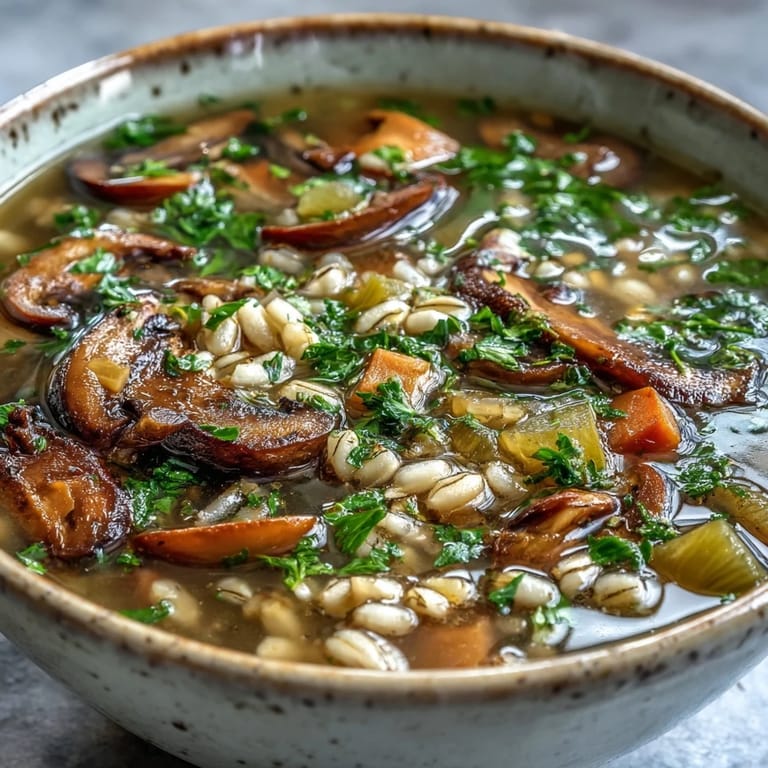
Save My neighbor Sarah showed up at my door one winter evening with a container of mushroom barley soup, still warm from her kitchen, and it changed how I think about comfort food. The broth was so rich and deep, the barley had this perfect chewy texture, and I could taste umami from mushrooms I didn't even know were in there. I asked her to teach me, and she laughed—said it was just old deli-counter wisdom, the kind of soup that sits in the back of your mind until you need it most. Now when the weather turns cold, this is the first thing I make.
I made this soup for my sister when she was going through a rough patch, and she called me halfway through her bowl to say it was exactly what she needed. There's something about mushroom barley that feels both simple and intentional, like someone actually cared about what you were eating. She's made it three times since then, and now it's part of her regular rotation.
Ingredients
- Dried shiitake mushrooms (1 oz): These are the secret ingredient that gives the entire soup its sophisticated, umami-rich flavor; don't skip them even if you're tempted, because the soaking liquid is liquid gold for your broth.
- White mushrooms (8 oz): Fresh mushrooms add body and a lighter counterpoint to the deep shiitakes; slice them fairly thick so they don't disappear into the soup.
- Pearl barley (3/4 cup): Always rinse barley first to remove surface starch, which prevents the soup from becoming gluey as it cooks.
- Olive oil (2 tbsp): Good quality oil matters here since it's not competing with heavy cream or meat; it carries flavor throughout.
- Onion, carrots, and celery (the holy trinity): Dice these fairly uniformly so they cook at the same rate and create an aromatic base that smells like a proper kitchen.
- Garlic (3 cloves): Mince it fine and add after the vegetables have softened so it doesn't burn and turn bitter.
- Low-sodium vegetable broth (8 cups): Low-sodium lets you control the salt and taste the actual vegetables, not just salt water.
- Bay leaves, thyme, and parsley: These dried herbs are your backbone; they're humble but they transform the broth into something that tastes intentional.
- Salt and black pepper: Taste as you go; you'll need more than you think because barley absorbs seasoning.
- Fresh parsley (optional garnish): A bright finish that reminds you this soup is alive and worth the small effort.
Tired of Takeout? 🥡
Get 10 meals you can make faster than delivery arrives. Seriously.
One email. No spam. Unsubscribe anytime.
Instructions
- Wake up the shiitakes:
- Pour boiling water over your dried shiitakes and walk away for 20 minutes—you'll smell them opening up, releasing that deep forest-floor aroma. Drain them carefully, slice them into bite-sized pieces, and strain the soaking liquid through a fine sieve to catch any grit hiding in there.
- Build your aromatic base:
- Heat olive oil in a large pot over medium heat, then add onion, carrots, and celery; let them soften for about 5 minutes, stirring occasionally so they cook evenly and start to caramelize at the edges. You want them tender but not mushy, with just a little color.
- Coax out the garlic:
- Add minced garlic and stir constantly for about 1 minute until the smell fills your kitchen in the best way. Don't let it sit too long or it'll burn and taste acrid.
- Introduce the mushrooms:
- Add both fresh and soaked shiitakes to the pot and cook for 5 minutes, stirring occasionally, until the mushrooms start releasing their juices and everything smells earthy and rich. This is when you know you're on the right track.
- Combine everything:
- Stir in the rinsed barley, then pour in the reserved mushroom soaking liquid and the vegetable broth; add bay leaves, thyme, parsley, a good pinch of salt, and several grinds of pepper. Give it all a good stir so nothing settles to the bottom.
- Let it simmer low and slow:
- Bring the pot to a boil, then immediately turn the heat down to low, cover it, and let it bubble gently for 50 to 60 minutes, stirring every 15 minutes or so. The barley will gradually soften and the broth will deepen in color and flavor.
- Finish and serve:
- Fish out the bay leaves with a spoon, taste the soup, and adjust the salt and pepper until it tastes right to you. Ladle into bowls, scatter fresh parsley on top if you're feeling fancy, and serve while it's still steaming.
 Save
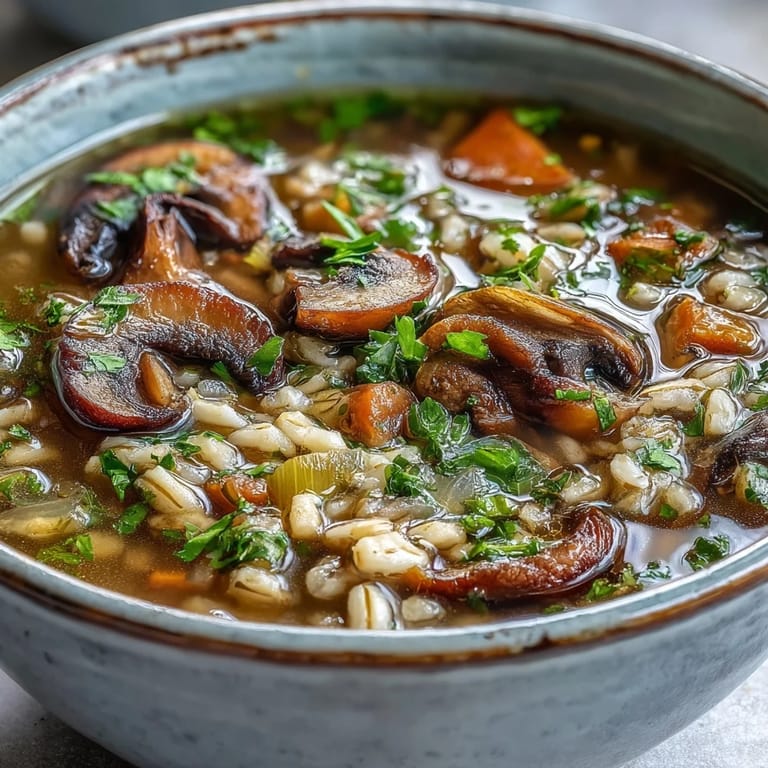
Save There's a moment about halfway through cooking when the kitchen fills with this unmistakable mushroom-and-thyme smell, and that's when I know the soup is going to be good. It's become my signal that something thoughtful is happening, that the ingredients are transforming into something greater than their parts.
Why Dried Shiitakes Are Worth the Extra Step
The first time I made this soup with only fresh mushrooms, it tasted fine but forgettable—like a regular vegetable soup that happened to have mushrooms in it. When I added dried shiitakes the second time, my whole family paused mid-spoonful and asked what I'd changed. Dried shiitakes have this concentrated umami that fresh mushrooms alone can't deliver; they create a savory depth that makes people think you've been cooking something more complicated. The soaking step isn't extra work, it's the actual secret, and the liquid you soak them in becomes part of the broth itself.
The Barley Question: Why Pearl and Not Another Grain
Barley has this specific texture—chewy but not gritty, substantial but not heavy—that makes sense in a deli-style soup in a way that rice or farro wouldn't. Pearl barley (which is the polished version) cooks faster and more predictably than whole barley, and it creates a slight creaminess as its starch softens into the broth. I tried hulled barley once thinking it would be more nutritious, but it took nearly twice as long and made the soup feel cloudy rather than clear. Stick with pearl barley for this particular soup unless you have time and patience for an extra hour of simmering.
Make It Your Own
This soup is a canvas that welcomes additions without complaining. I've added diced potatoes or parsnips in the fall when I have them on hand, and they soften into the broth and make it even more filling. Some people add a splash of balsamic vinegar at the very end for depth, or a pinch of smoked paprika if they want it to feel slightly different. The base is solid enough that you can play around.
- For extra heartiness, add 1 cup of diced potato or parsnip with the aromatics and let them cook down into the broth.
- Finish with a tiny splash of balsamic vinegar or a small squeeze of lemon juice if the soup tastes flat after seasoning.
- Serve with rye bread to channel old-school deli energy, or crusty sourdough if that's what you have.
 Save
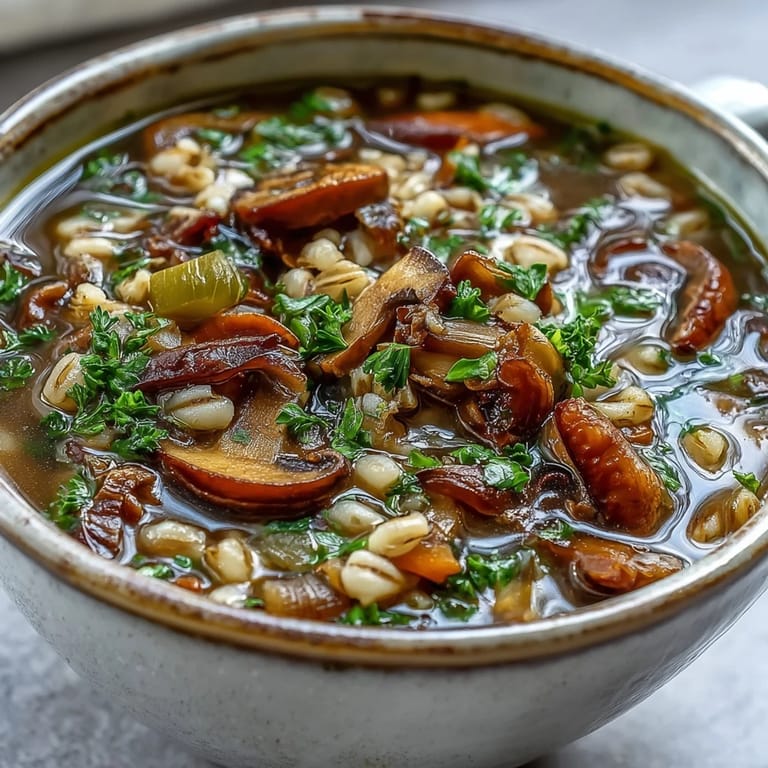
Save This soup is the kind of thing you make when you want your kitchen to smell like care, and your table to feel like someone thought about what you needed. It's been my answer to a lot of things—cold days, tough moments, lazy weekends, and the simple desire to eat something that tastes like it matters.
Recipe FAQ
- → Can I make this soup in advance?
Absolutely. This soup actually tastes better the next day as flavors meld together. Store in the refrigerator for up to 4 days, adding extra broth when reheating since the barley continues to absorb liquid.
- → Can I freeze mushroom barley soup?
Yes, freeze for up to 3 months in airtight containers. Note that barley may become slightly softer after freezing. Thaw overnight in the refrigerator and reheat with additional broth or water.
- → What can I substitute for pearl barley?
Pearl barley is traditional, but you can use farro, wheat berries, or brown rice. Adjust cooking time accordingly as these grains may require different simmering times to become tender.
- → Is the mushroom soaking liquid necessary?
The soaking liquid contains intense umami flavor from the dried shiitakes. Strain it well to remove any grit, then add it to the soup for depth. If unavailable, substitute with additional vegetable broth.
- → How do I prevent the soup from becoming too thick?
Barley absorbs liquid as it sits. When reheating, simply add more vegetable broth or water until you reach your desired consistency. Start with a half cup and adjust from there.
- → Can I add protein to make it more filling?
Yes, add diced tofu, white beans, or shredded chicken during the last 15 minutes of cooking. For a non-vegetarian version, simply substitute vegetable broth with chicken broth.