 Save
Save My neighbor Farida taught me this soup on a cold afternoon when she noticed I was struggling to make something hearty enough to justify turning on the oven. She arrived at my kitchen door with a bag of fresh herbs that smelled like a garden, and within minutes she was explaining how her family made this in Tehran during winters. The way she talked about it—not with ceremony, but with the ease of someone who'd made it hundreds of times—told me everything I needed to know about comfort food.
I made this for my book club one February, and everyone arrived expecting something lighter. Instead, they found themselves scraping bowls clean and asking for the recipe before they'd even finished eating. One person admitted she'd been skeptical about barley until that night—now she buys it in bulk.
Ingredients
- Beef stew meat (500 g, cubed): Cuts that are meant to braise give you tender, almost melting pieces. Don't skip the browning step—it creates depth you can taste.
- Pearl barley (1/2 cup, rinsed): This grain thickens the broth naturally and adds a nutty sweetness. Rinsing removes excess starch so the soup doesn't become gluey.
- Dried lentils (1/2 cup, rinsed): They cook down into the broth, adding protein and earthiness without falling apart completely.
- White beans or cannellini beans (1/2 cup, soaked overnight and drained): Soaking is non-negotiable—it helps them cook evenly and reduces the bloating some people experience.
- Onion (1 large, finely chopped): Golden onions are your flavor foundation. Don't rush this step or you'll taste the difference.
- Carrots and celery (2 medium carrots and 2 stalks): These build the aromatic base that makes the kitchen smell incredible while it simmers.
- Garlic (2 cloves, minced): Fresh garlic added early mellows into the background; it shouldn't punch you in the nose.
- Fresh herbs (parsley, cilantro, dill, chives, 1/2 cup to 1/4 cup each): Add these near the end so they stay bright and don't turn into an olive-colored mush.
- Dried mint (2 tbsp): For the fried onions—dried mint has a sharper profile than fresh, which is exactly what you want here.
- Sour cream (200 g): Or kashk if you can find it—the acid cuts through the richness and adds a creamy dimension.
- Olive oil (2 tbsp) and butter (1 tbsp): Olive oil for browning, butter for the fried onions. They serve different purposes.
- Turmeric (1 tsp), black pepper (1/2 tsp), salt (1 1/2 tsp): These spices are understated on purpose—they should enhance, not overtake, the natural flavors.
- Beef or vegetable stock (2 liters): Good stock makes the soup; mediocre stock makes it taste like a cooking task.
Tired of Takeout? 🥡
Get 10 meals you can make faster than delivery arrives. Seriously.
One email. No spam. Unsubscribe anytime.
Instructions
- Brown the beef, don't just cook it:
- Heat olive oil until it shimmers slightly, then add beef in a single layer. Let each piece sit undisturbed for a minute or two so it develops a golden crust. This takes about 5 minutes and creates the foundation of flavor everything else builds on.
- Build your flavor base with onions and spices:
- After removing the beef, add the remaining oil and let the onions turn golden and soft—this takes around 6 minutes. Stir in the garlic, turmeric, pepper, and salt, and cook just until fragrant, which is faster than you think.
- Add the vegetables and let them soften:
- Carrots and celery need about 3 minutes to begin breaking down and releasing their sweetness into the oil.
- Combine everything and let time do the work:
- Return the beef to the pot, add the barley, lentils, beans, and stock. Bring it to a rolling boil, then cover and drop the heat to a gentle simmer. This is where patience matters—1 hour and 30 minutes allows the beans to soften completely and the beef to become tender enough to break with a spoon.
- Finish with fresh herbs and a taste check:
- When the grains and beans are nearly soft, add all the fresh herbs and let them simmer uncovered for 10 minutes. Taste the soup now and adjust salt or pepper—this is your only chance before serving.
- Prepare the mint-fried onions while the soup finishes:
- Melt butter over medium-low heat, add thinly sliced onion, and cook slowly until the edges are deep golden and crisp—this takes about 10 minutes. Stir in dried mint for just 1 minute so it releases its aroma without burning.
- Serve with a flourish:
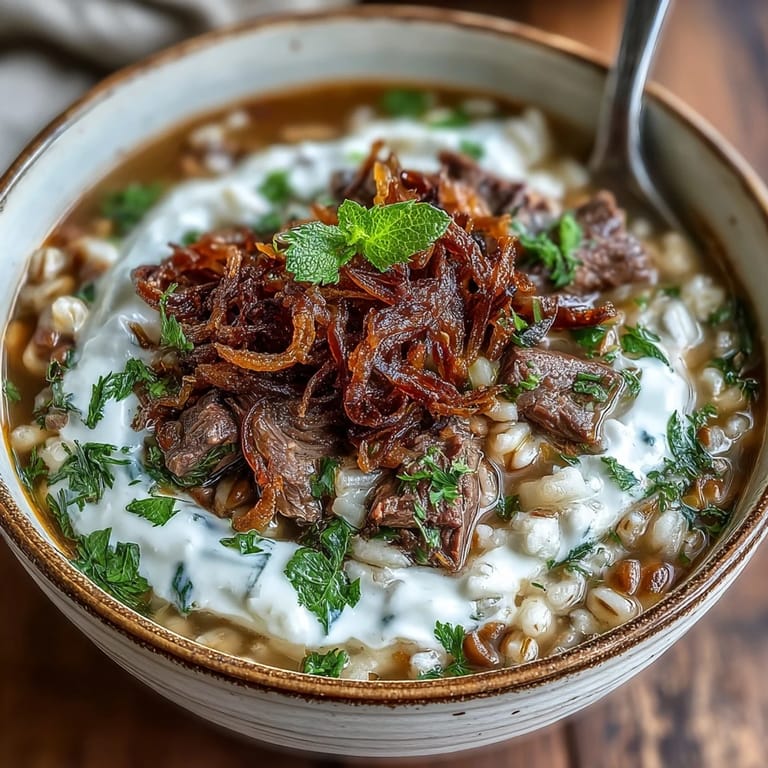
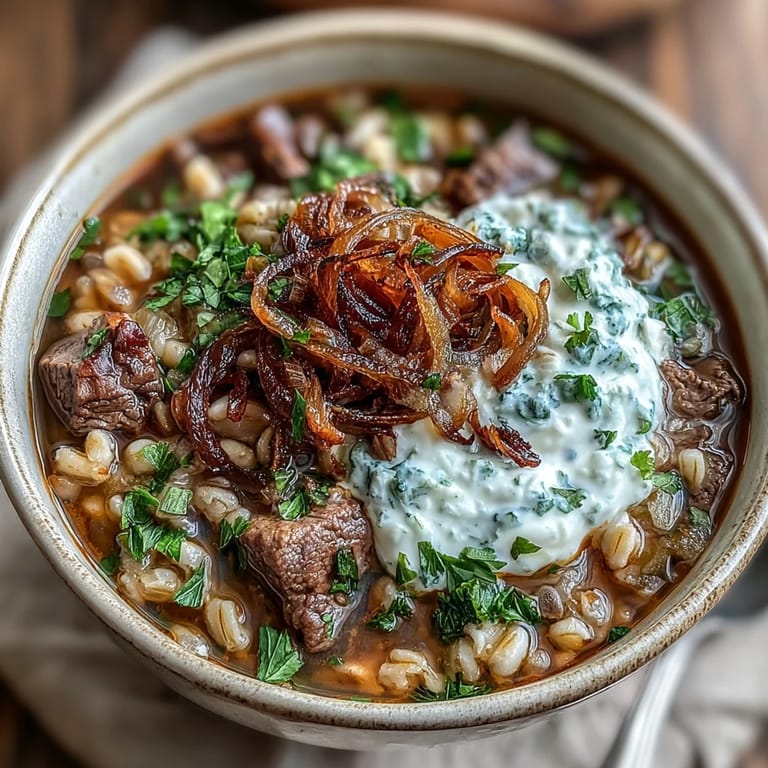
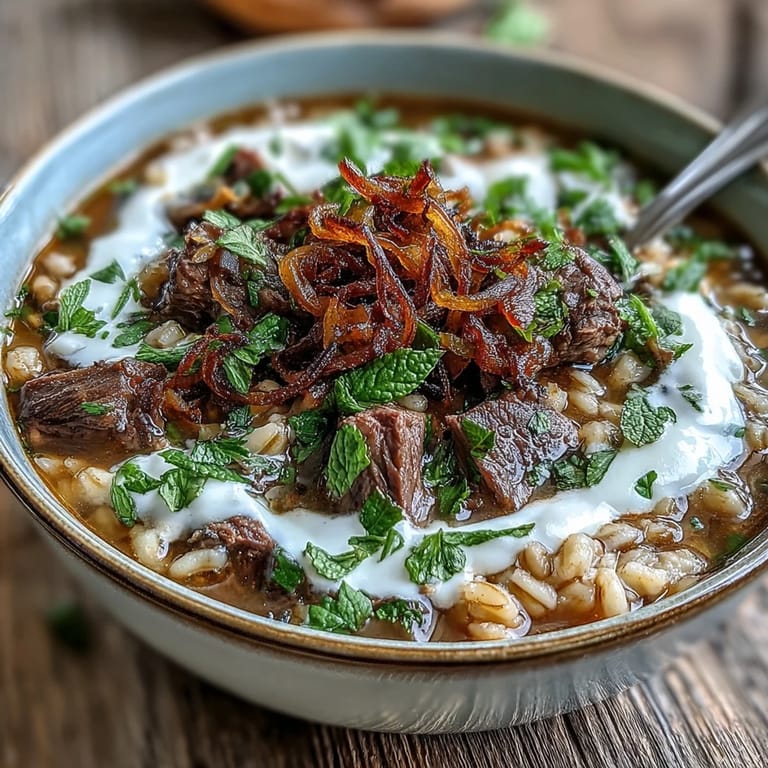
- Ladle hot soup into bowls, swirl in sour cream, and top generously with mint-fried onions and their butter. The contrast of temperatures and textures is what makes this dish sing.
 Save
Save A friend who grew up in Azerbaijan ate this and got quiet for a moment, then told me it reminded her of her mother's kitchen. That's when I understood that soups like this aren't just meals—they're vessels for memory and belonging.
Why This Soup Feels Different
Most hearty soups are built on a single star ingredient—usually chicken or beef. This one spreads the richness across so many elements that no single flavor dominates. The barley and lentils add earthiness, the beans provide creaminess, the beef brings depth, and the herbs bring light. It's balanced in a way that lets you eat a full bowl without feeling weighed down.
The Philosophy Behind the Spicing
Persian cuisine whispers rather than shouts. A teaspoon of turmeric shouldn't make anyone ask what it is—it should simply make them think the soup tastes more like itself. The black pepper and salt are there to draw out the sweetness in the carrots and the umami in the beef and beans. If your first thought while tasting is a specific spice, dial it back next time.
Make It Your Own
This recipe has a structure, but it's flexible enough to bend toward what you have on hand. If dried mint isn't available, fresh mint works fine in the fried onions—just add it at the very last moment. If you can't find kashk, sour cream is genuinely a good substitute, though kashk has a funkier, more interesting depth. Some versions of this soup include spinach, beet greens, or even a handful of dried rose petals for subtle florality.
- For a vegetarian version: Skip the beef and increase the beans and lentils by a third, using vegetable stock instead.
- Storage and reheating: This soup keeps beautifully for three days in the refrigerator and actually tastes better the next day when flavors have melded.
- Make it ahead: Prepare everything through the fresh herbs step, then reheat gently and add sour cream and mint-fried onions just before serving.
 Save
Save Every time I make this soup, someone asks for the recipe, and I always say yes. It's the kind of dish that travels well—it brings people together without pretending to be fancier than it is.
Recipe FAQ
- → What makes this Persian-style soup different from other beef barley soups?
This version incorporates lentils and white beans alongside barley for added protein and texture. The fresh herb blend of parsley, cilantro, dill, and chives creates layers of aromatic flavor. The signature topping of sour cream and mint-fried onions adds tangy, crispy elements that balance the hearty base.
- → Do I need to soak the beans before cooking?
Yes, soak the white beans overnight to ensure they cook through evenly and become tender. This step prevents undercooked beans and helps maintain a consistent texture throughout the soup.
- → Can I make this soup vegetarian?
Simply omit the beef and use vegetable stock instead of beef stock. The barley, lentils, and beans provide ample protein and body. Consider adding additional vegetables like mushrooms or eggplant for extra depth.
- → What is kashk and can I use it instead of sour cream?
Kashk is fermented whey commonly used in Persian cooking. It has a tangy, slightly salty flavor that adds authentic complexity. If available, substitute it 1:1 for sour cream. Otherwise, full-fat sour cream or Greek yogurt work well as alternatives.
- → How long will this soup keep in the refrigerator?
Store cooled soup in an airtight container for up to 4 days. The flavors often improve after resting. Reheat gently on the stove, adding a splash of water or stock if needed. Store the mint-fried onions separately to maintain their crispiness.
- → Can I freeze this soup?
This soup freezes well for up to 3 months. Cool completely before transferring to freezer-safe containers. Thaw overnight in the refrigerator and reheat on the stove. Note that barley may soften slightly after freezing, though the texture remains enjoyable.