 Save
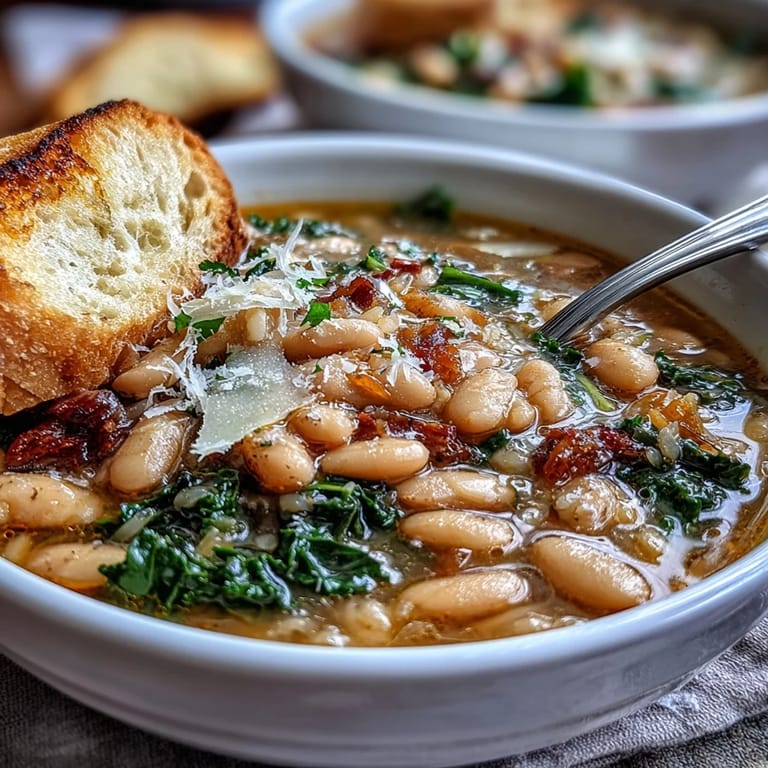
Save My neighbor Maria stopped by on a gray November afternoon with a container of her grandmother's Tuscan white bean soup, and I watched her ladle it into bowls with the kind of casual confidence that only comes from making something a hundred times. The broth was silky, the kale tender but still with a whisper of bite, and the Parmesan melted into golden ribbons across the top. She told me the secret was patience and good olive oil, then refused to leave until I promised to make it myself before winter ended. That soup changed how I thought about simple ingredients working together.
I made this soup for my sister during her first week in a new apartment, serving it in mismatched bowls because she hadn't unpacked the good ones yet. She sat at her empty kitchen table with a spoon in one hand and her phone in the other, and halfway through the bowl, she put the phone down. That's when I knew it was the kind of dish that reminds you why cooking matters, not because it's fancy, but because it's real.
Ingredients
- Olive oil: Use a good quality bottle for both cooking and the final drizzle, the difference is noticeable and worth it.
- Yellow onion, carrots, and celery: This trio is the foundation of so much Italian cooking, and taking time to dice them evenly means they soften at the same rate.
- Garlic cloves: Mince them fresh rather than using jarred, the smell alone tells you you're on the right track.
- Kale: Remove those tough stems unless you enjoy crunching them like you're eating a salad, then chop the leaves into rough 2-inch pieces.
- Diced tomatoes: Drain them well so the soup doesn't become watery, this one detail matters more than you'd think.
- Cannellini beans: Always rinse canned beans under cold water to remove excess sodium and that metallic taste.
- Vegetable broth and water: Low-sodium broth gives you control over the final salt level, which is essential for a balanced bowl.
- Dried thyme and rosemary: These herbs are the backbone of the flavor, don't skip them or substitute with fresh without adjusting quantities.
- Bay leaf: One is enough, and remember to fish it out before serving or you'll have an awkward moment with your dinner guest.
- Red pepper flakes: Optional but recommended, a gentle warmth that wakes up all the other flavors.
- Salt and black pepper: Taste as you go, the final seasoning should happen at the very end when you know what you're working with.
- Parmesan cheese: Freshly grated from a block tastes worlds better than pre-shredded, and the effort takes about 30 seconds.
- Extra virgin olive oil for drizzling: This is the finishing touch that makes people ask for the recipe, use something you actually love the taste of.
- Fresh parsley: Optional but the bright green color and fresh flavor are worth grabbing a bunch.
Tired of Takeout? 🥡
Get 10 meals you can make faster than delivery arrives. Seriously.
One email. No spam. Unsubscribe anytime.
Instructions
- Build your base:
- Heat the olive oil in a large pot over medium heat until it shimmers, then add your onion, carrots, and celery. Stir them occasionally for 5 to 6 minutes, watching as they soften and the onion becomes translucent.
- Wake up the garlic:
- Add your minced garlic and cook for just about 1 minute, stirring constantly so it doesn't brown and turn bitter. The aroma will fill your kitchen and tell you you're exactly on time.
- Add the kale:
- Stir in your chopped kale and let it soften in the oil for 2 to 3 minutes, it will seem like too much kale at first but it wilts down beautifully.
- Bring it together:
- Add the drained tomatoes, rinsed beans, broth, water, thyme, rosemary, bay leaf, and red pepper flakes if you're using them. Give everything a good stir so nothing sticks to the bottom.
- Simmer with purpose:
- Bring the soup to a boil, then lower the heat and let it simmer uncovered for 25 minutes, stirring occasionally. This is when the flavors deepen and marry together.
- Create creaminess:
- Remove the bay leaf, then use a potato masher to gently crush some of the beans against the side of the pot, you're not making a puree, just breaking them down slightly to thicken the broth. The soup will become silkier without losing its texture.
- Taste and adjust:
- Season with salt and freshly ground pepper, tasting as you go because you need to know how much is right for your palate.
- Serve with intention:
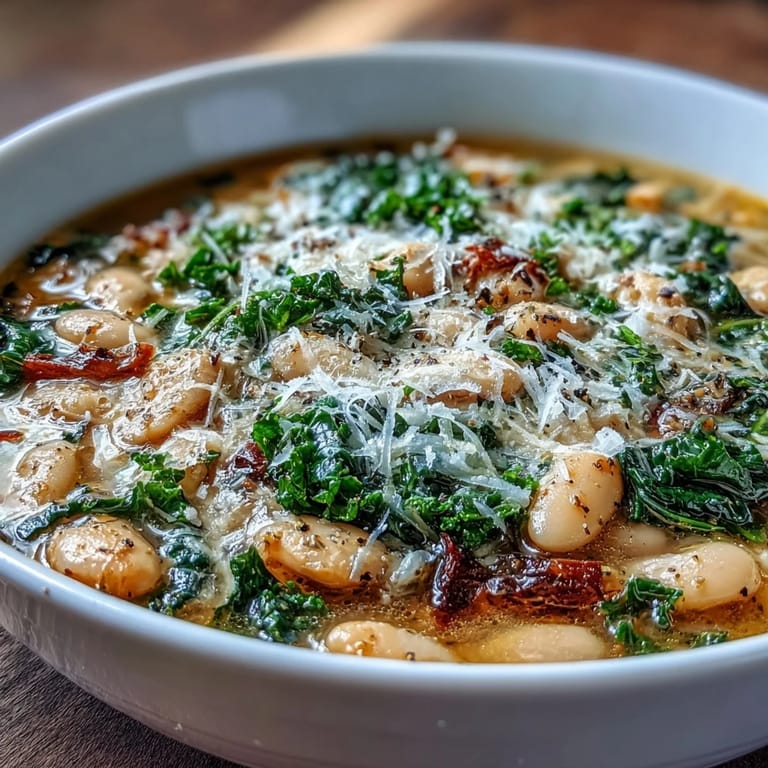
- Ladle the hot soup into bowls, then top each one with grated Parmesan, a generous drizzle of your best olive oil, and a scatter of fresh parsley if you have it.
 Save
Save On a snowy evening, I made this soup for a friend who was going through something difficult, and she ate three bowls. She didn't talk much, just focused on the warmth of the spoon and the comfort of each bite, and I understood then that sometimes the most meaningful meals are the ones that ask nothing of you except to sit and be present. Food can do that when it's made with attention.
The Magic of Simple Italian Cooking
This soup taught me that Italian cooking doesn't require complicated techniques or exotic ingredients, it requires respect for what you're using. Each vegetable, each bean, each herb has a role, and when you honor that role by treating the ingredients well, they reward you with a bowl that tastes far more complex than the sum of its parts. I've learned to stop rushing through the soffritto, those first few minutes when the vegetables release their sweetness into the oil, that foundation matters.
Variations That Keep It Interesting
Once you've made this soup the traditional way, you can play with it knowing you understand the structure. I've added white wine when I had half a bottle lingering in the fridge, fresh spinach instead of kale when that's what needed using, and even a can of white beans mixed with chickpeas for different texture. The soup stays true to itself while bending to what's in your kitchen and what you're craving that day.
Serving and Pairing Wisdom
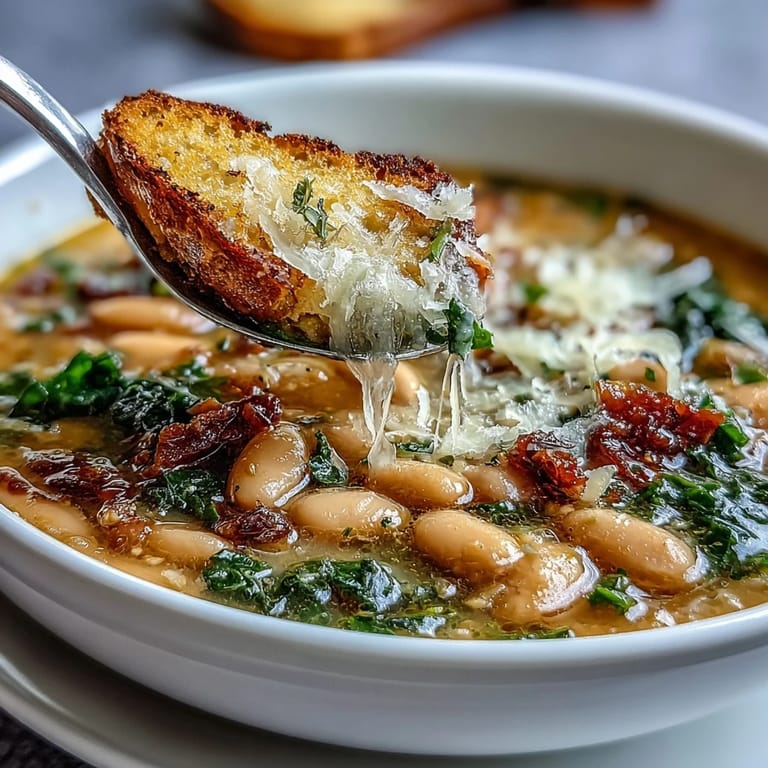
Serve this soup in deep bowls so you can appreciate both the broth and the hearty vegetables and beans, the temperature matters too, ladle it hot enough that the Parmesan begins to melt as soon as it hits the bowl. A hunk of crusty bread is the natural companion, something you can tear and dip, and if you want wine, a crisp Pinot Grigio or a light Chianti will feel right alongside it.
- Make a double batch and freeze half in portions for nights when you need comfort without effort.
- Leftovers thicken as they sit, so add extra broth when reheating to bring back the right consistency.
- This soup tastes even better the next day, the flavors continue developing as it sits in the fridge.
 Save
Save This Tuscan white bean soup has become my answer to the question of what to cook when everything feels uncertain. It's generous, honest, and it fills both your stomach and something quieter inside you.
Recipe FAQ
- → What beans are best for this soup?
Cannellini beans provide a creamy texture and mild flavor, perfectly complementing the kale and herbs.
- → Can I substitute kale with other greens?
Spinach or Swiss chard work well as alternatives, though kale offers a heartier texture.
- → How can I make the soup creamier?
Mash some beans directly in the pot after simmering to thicken the broth naturally.
- → Is Parmesan necessary for finishing the dish?
Parmesan adds a salty richness, but it can be omitted or replaced with a plant-based alternative for dairy-free options.
- → What herbs enhance this soup’s flavor?
Dried thyme and rosemary provide aromatic notes that deepen the savory profile.
- → Can I add protein to this dish?
Cooked chicken or turkey can be stirred in for non-vegetarian variations.