 Save
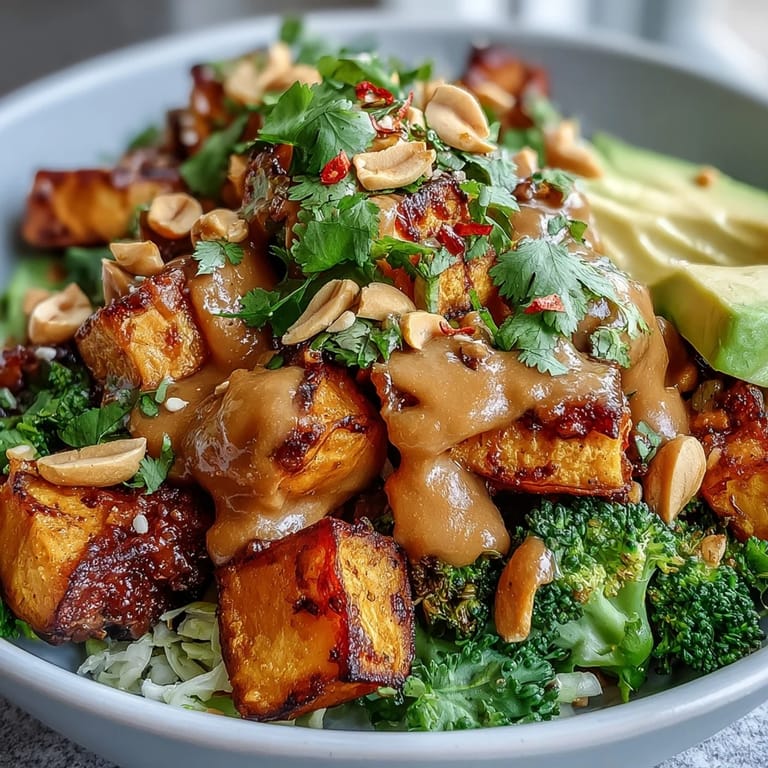
Save There's something about assembling a Buddha bowl that feels like creating edible art on a Tuesday afternoon when you're tired of the same old lunch routine. I discovered this Thai peanut sweet potato version while scrolling through photos of a friend's meal prep—not the most romantic origin story, but it changed how I think about leftovers. The combination of warm roasted sweetness, cool crisp vegetables, and that creamy peanut sauce that somehow tastes both indulgent and wholesome made me want to stop buying sad desk salads forever. Now it's become my go-to when I want something that looks impressive but doesn't require any culinary heroics.
I made this for my sister during a weekend visit, and she kept asking if I'd ordered it from somewhere because nothing that colorful and tidy comes from my kitchen. Watching her eat it with actual enjoyment—not just politeness—while telling me how the textures all worked together, that's when I realized this wasn't just a bowl, it was something I'd actually nailed. She's requested it every time she visits now, which is both flattering and slightly annoying because I can't claim it as my original invention anymore.
Ingredients
- Sweet potatoes: Medium-sized ones roast evenly and won't dry out or stay raw in the middle—learn this and your roasting game changes forever.
- Olive oil: Use regular, not expensive extra virgin, since heat matters more than delicate flavor here.
- Broccoli or cauliflower: Raw florets stay crisp and provide a satisfying bite against the soft potatoes.
- Red or green cabbage: Shredded thin enough to soften slightly but still maintain that pleasant crunch.
- Grated carrots: Fresh grated tastes completely different from pre-shredded—worth the three minutes of effort.
- Avocado: Add it right before serving or it'll brown and look sad, though tahini works beautifully if you need nut-free.
- Peanut butter: Natural works, but stir it first so you're not fighting separated oil in the sauce.
- Soy sauce: The umami backbone that makes everything taste intentional, not just virtuous.
- Maple syrup: That touch of sweetness keeps the sauce from tasting punishingly healthy.
- Lime juice: Fresh lime changes everything—bottled lime juice makes the sauce taste like the supermarket version of itself.
- Sesame oil: Just a tablespoon adds that toasted nuttiness that makes people think you actually know what you're doing.
- Cilantro and peanuts: The garnish isn't optional—it's the difference between a bowl and an actual experience.
Tired of Takeout? 🥡
Get 10 meals you can make faster than delivery arrives. Seriously.
One email. No spam. Unsubscribe anytime.
Instructions
- Heat your oven and prep the stars:
- Preheat to 400°F while you dice your sweet potatoes into roughly half-inch pieces—they should be small enough to cook through in about 25 minutes but big enough that they don't turn into mush. This is where you decide if your bowl will be mostly roasted potato or if you'll balance it with vegetables.
- Get those potatoes golden:
- Toss your diced pieces with olive oil, salt, and pepper, then spread them in a single layer on your baking sheet. They'll look pale and sad for the first 15 minutes, then suddenly transform into caramelized little gems—stir them halfway so nothing gets stuck or overly charred.
- Prepare your raw vegetables while the heat does its work:
- Chop your broccoli into bite-sized florets, shred your cabbage, grate your carrots, and slice your avocado. Having everything ready means assembly becomes meditation rather than stress.
- Whisk together the sauce that makes everything worthwhile:
- In a bowl, combine your peanut butter, soy sauce, maple syrup, lime juice, and sesame oil, whisking until smooth. If it looks thick, add warm water one tablespoon at a time until it reaches that pourable consistency that coats a spoon but isn't soup.
- Build your bowls with intention:
- Divide the warm roasted sweet potatoes among four bowls, then arrange your vegetables around them like you're composing something beautiful. This is the satisfying part where you see the colors come together.
- Finish and serve:
- Drizzle generously with peanut sauce, scatter cilantro and chopped peanuts on top, and eat immediately so everything is at its ideal temperature and texture.
 Save
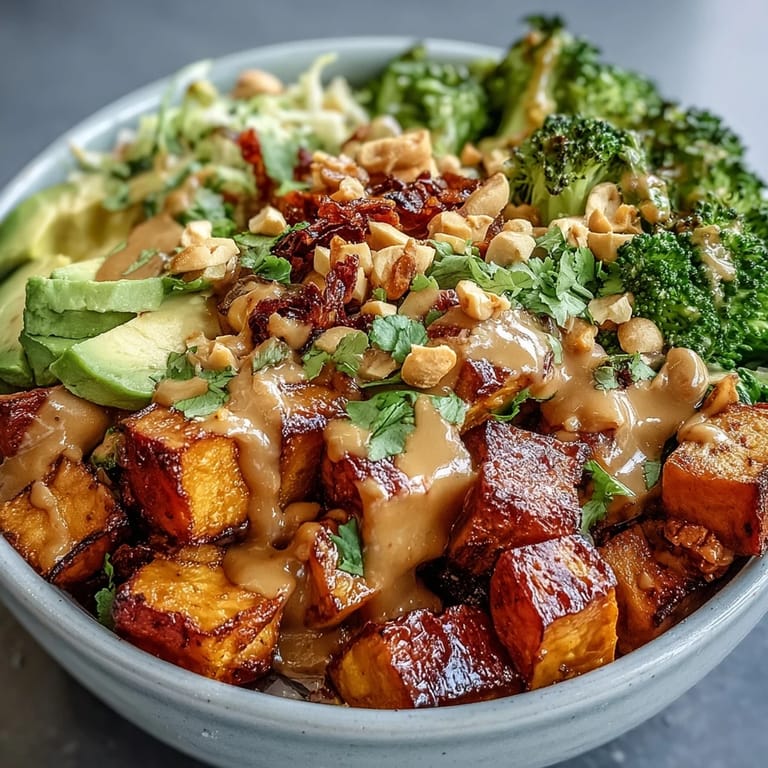
Save The moment that made this recipe stick with me was eating a bowl while sitting in my car before a stressful meeting, and actually feeling calmer afterward—not from any magical ingredient, just from the fact that I'd given myself something nourishing and beautiful. That's when I realized this wasn't just about lunch anymore; it was about choosing myself, one colorful bowl at a time.
Customizing Your Bowl
This bowl is endlessly flexible, which is exactly why I keep making it. You can add chickpeas or baked tofu for extra protein without changing the soul of the dish, and nobody will judge you for adding a handful of quinoa or brown rice if you want something more filling. I've also discovered that roasting chickpeas with the same seasoning as the potatoes creates a crispy, protein-packed version that's somehow even better than the original.
Sauce Strategy and Storage
The sauce is honestly the secret weapon here—it transforms from just another bowl to something that tastes intentional and cared for. I make extra sauce and keep it in a mason jar in my fridge because it stays good for about five days, and knowing I have it on hand means I'm more likely to throw together a impromptu healthy lunch when life gets busy. The sauce also works beautifully drizzled over rice, roasted vegetables, or even as a dipping sauce for spring rolls if you're feeling creative.
Making It Work for Your Dietary Needs
This bowl is naturally vegetarian and incredibly easy to adapt for vegan, nut-free, or gluten-free diets without sacrificing any of its charm or flavor. Sunflower seed butter works brilliantly if peanuts are off the menu, tamari replaces soy sauce for gluten-free, and maple syrup is vegan by default. The beauty is that each substitution feels like a choice rather than a compromise, so nobody sitting at your table will feel like they're eating something less delicious.
- Make the sauce ahead and store it separately from the vegetables to keep everything fresh.
- Roast your sweet potatoes in the morning and reheat gently before serving if you're meal prepping.
- Keep extra peanut sauce on hand because you'll find yourself putting it on things you never expected.
 Save
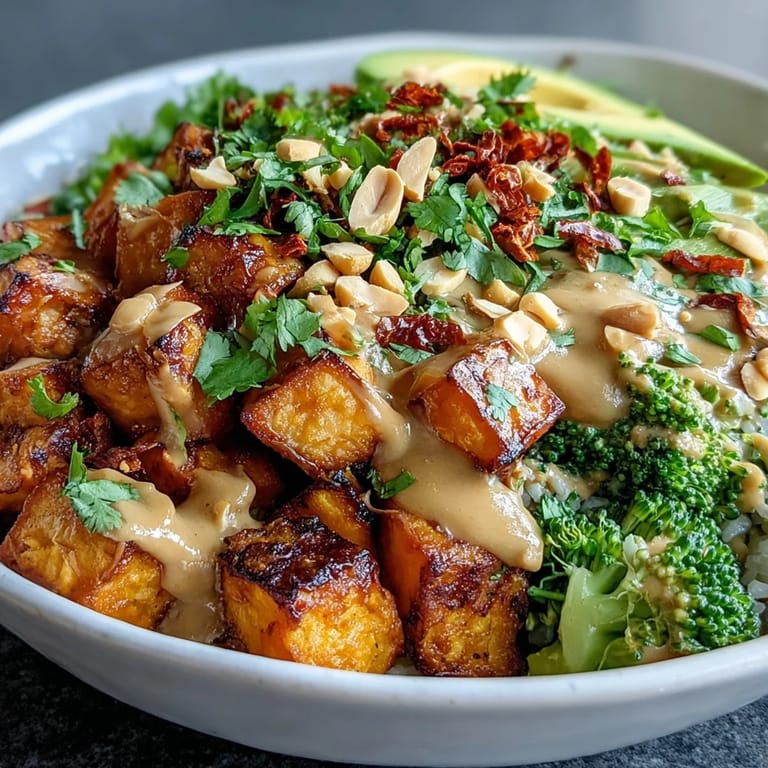
Save This bowl has quietly become the recipe I'm most proud of, not because it's complicated, but because it proves that the best meals are usually the simplest ones made with actual attention. Make one today and see what happens.
Recipe FAQ
- → What can I substitute for peanuts in the sauce?
Use sunflower seed butter as a nut-free alternative. Omit sesame oil and garnish with sunflower seeds to maintain flavor without nuts.
- → How do I make this dish gluten-free?
Replace regular soy sauce with tamari to keep the sauce gluten-free while preserving its savory notes.
- → Can I add protein to this bowl?
Yes, baked tofu or chickpeas can be added for extra protein and texture variety.
- → What vegetables work best in this bowl?
Broccoli florets, shredded cabbage, grated carrots, and avocado offer a mix of colors, crunch, and creaminess that complement the sweet potatoes.
- → How to prepare sweet potatoes for roasting?
Dice them evenly, toss with olive oil, salt, and pepper, then roast at 400°F (200°C) for 25–30 minutes until golden and crisp.