 Save
Save There's something about the smell of onions slowly turning golden in a pot that stops time in your kitchen. Years ago, I stood in a Parisian bistro on a cold November evening, and a bowl of French onion soup arrived with this magical crust of melted cheese on top—it was the moment I understood why people queue for hours in winter for a single bowl. Making this at home taught me patience; those onions need time, not heat, to reveal their sweetness.
I made this for my sister during a snowstorm when we were both stuck inside, and we ended up playing cards for three hours just so we could keep eating bowl after bowl. The soup was still warm, the cheese still melty, and somehow every conversation felt easier with a spoon in hand. That's when I realized this dish has a way of turning an ordinary evening into something worth remembering.
Ingredients
- Yellow onions: Six large ones might seem like overkill until they shrink down to pure, concentrated sweetness—this is where patience creates magic, and slicing them thin matters more than you'd think.
- Unsalted butter and olive oil: The combination gives you a higher smoke point and richer flavor than butter alone, plus it prevents the bottom from burning during that long caramelization.
- Sugar and salt: Just a teaspoon of sugar draws out the onions' natural sweetness without making anything taste dessert-like, while salt helps them release their moisture.
- Garlic: Two minced cloves added near the end keep their brightness from getting lost in the deep caramel flavor.
- All-purpose flour: This creates a subtle thickening agent that makes the soup silky rather than watery, and it helps build flavor through browning.
- Dry white wine: The acidity cuts through the richness and adds complexity; don't skip it or use cooking wine.
- Beef broth: Quality matters here because this soup lives and dies by its broth—use the best you can find, or make your own if you're that kind of person.
- Fresh thyme and bay leaf: These quiet herbs perfume the entire pot without shouting; dried thyme works if that's what you have, but fresh is worth seeking out.
- Sourdough baguette: The tang plays beautifully against sweet onions, and the crust stands up to melted cheese without becoming soggy mush.
- Gruyere cheese: This nutty, slightly sweet cheese is worth the splurge because it doesn't separate or become oily like lesser cheeses do when melted.
Tired of Takeout? 🥡
Get 10 meals you can make faster than delivery arrives. Seriously.
One email. No spam. Unsubscribe anytime.
Instructions
- Gather everything and slice your onions:
- Take your time here—aim for thin, even slices so they cook uniformly. Some people use a mandoline, but I've always trusted my knife and a little meditative focus.
- Begin the butter and oil dance:
- In your heavy-bottomed pot over medium heat, melt the butter into the olive oil until they're bubbling gently. This blend prevents sticking better than butter alone.
- Add onions and let time do the work:
- Scatter in your sliced onions with the sugar, salt, and pepper. Stir them every few minutes for 35 to 45 minutes—yes, it's a long time, but this is where the recipe's soul lives. They'll go from pale and watery to deep caramel gold, and you'll smell something that makes you understand why the French built an entire dish around this moment.
- Introduce garlic and flour:
- Once your onions are that gorgeous deep color, add the minced garlic and cook for just one minute so it loses its raw edge. Sprinkle the flour over everything and stir for two minutes—it will start to smell toasty and brown, which means it's building flavor.
- Deglaze with wine:
- Pour in your white wine and use a wooden spoon to scrape up all those browned, stuck-on bits from the bottom—that's concentrated flavor you don't want to lose. Let it bubble gently for two or three minutes until the wine reduces slightly and the alcohol smell dissipates.
- Build the broth base:
- Add your beef broth, thyme, and bay leaf, then bring everything to a gentle boil before reducing to a low simmer. Leave it uncovered for 25 to 30 minutes so it can develop depth and the flavors can marry together properly.
- Season and refine:
- Taste as you go and adjust salt and pepper to your preference, then remove the thyme sprigs and bay leaf. This is the moment to decide if your soup needs anything else—sometimes a tiny splash of sherry makes all the difference.
- Toast your bread while soup simmers:
- Preheat your oven to 400 degrees Fahrenheit and slice your sourdough baguette into half-inch rounds. Arrange them on a baking sheet, brush each one lightly with olive oil, and toast for five to seven minutes until they're golden and crispy at the edges.
- Crown with cheese:
- Divide your grated Gruyere (and Parmesan if you're using it) among the toasts, then return them to the oven for three to four minutes until the cheese melts into a bubbly, golden layer. Watch them so they don't brown too much.
- Finish and serve:
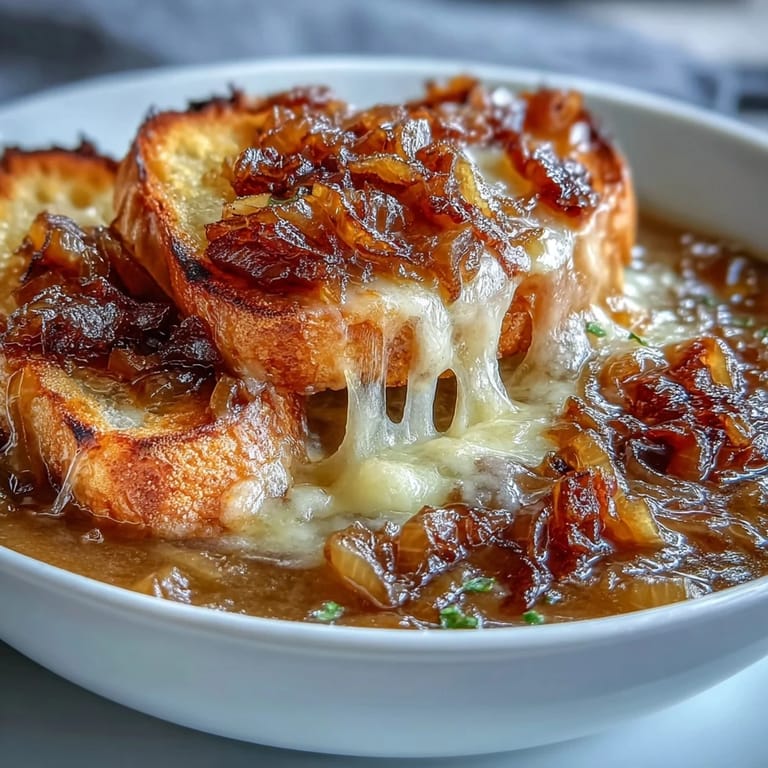
- Ladle your soup into bowls—oven-safe ones if you want to broil them—and float a crostini or two on top. If you're feeling indulgent, pop the bowls under the broiler for one to two minutes just to make that cheese layer extra bubbly and golden.
 Save
Save There was a moment when my friend took her first spoonful and closed her eyes, and I realized that's what good food does—it makes people pause and actually taste what's in front of them. That's what this soup does every single time.
The Art of Caramelization
Caramelizing onions isn't complicated, but it does require showing up and paying attention. The chemical transformation happening in your pot is real—those onions are breaking down their sugars and proteins through slow, gentle heat, creating hundreds of new flavor compounds that taste nothing like raw onion. I learned this the hard way when I tried to speed things up with high heat and ended up with onions that tasted burnt and one-dimensional. Now I view those 45 minutes as meditation time in the kitchen, and the payoff makes every minute worth it.
Wine Matters More Than You Think
The white wine isn't just flavor; it's the moment your soup goes from good to memorable. That acidity cuts through the richness of caramelized onions and beef broth, creating brightness and balance that would be missing otherwise. I once tried making this with cooking wine out of laziness, and the result tasted flat and one-note—now I always use something I'd actually drink, usually a crisp Sauvignon Blanc or Pinot Grigio.
Building Your Crostini Moment
The crostini are your textural counterpoint to the smooth, savory soup, and getting them right transforms the entire experience. The toasting step matters because it dries out the bread and makes it crispy enough to float on top without immediately becoming a soggy mess when the cheese melts and the hot soup surrounds it. That final broil is optional but honestly magical—it browns the cheese edges just enough to give you a little crunch and some caramelized cheese flavor.
- Don't slice your baguette too thick or too thin; half-inch rounds are the goldilocks zone for holding cheese without snapping.
- Brush oil on both sides of the bread if you have time, since the bottom side that touches the baking sheet still needs to toast.
- Leftover crostini keep in an airtight container for two days and can be topped with cheese and reheated whenever you want a quick snack.
 Save
Save Every time I make this, I'm grateful for that cold November evening in Paris and the person who decided onions and cheese and broth belonged together. It's comfort in a bowl.
Recipe FAQ
- → How do you achieve perfect caramelized onions?
Slow cooking sliced onions over medium heat with butter and oil, stirring often, allows natural sugars to develop a deep golden color without burning.
- → Can I use vegetable broth instead of beef broth?
Yes, vegetable broth offers a flavorful alternative to accommodate vegetarian diets without sacrificing the soup’s depth.
- → What breads work best for the crostini?
Small sourdough baguette slices are ideal for crispiness and flavor, but other rustic breads like French or Italian can also be used.
- → Is it necessary to use Gruyere cheese for topping?
Gruyere melts smoothly and has a nutty flavor that complements the soup. Alternatives like Emmental or Swiss cheese can be substituted if preferred.
- → How can I add extra richness to the soup?
A splash of brandy or sherry added just before serving amplifies the savory notes and adds complexity to the flavor profile.