 Save
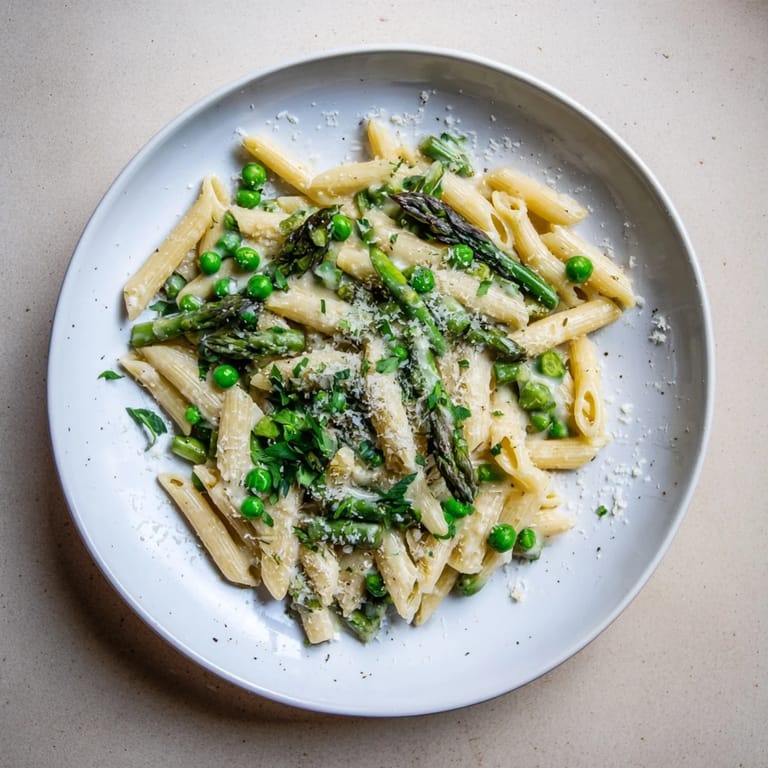
Save The smell of garlic hitting hot olive oil is what pulled my neighbor over one April evening. I was tossing bright green vegetables into a pan, and she appeared at the door with a bottle of wine and curiosity. We ended up eating this pasta on the porch while the sun set, and she asked for the recipe three times before leaving. It's been my go-to ever since spring vegetables flood the farmers market.
I made this for a potluck once, and someone accused me of ordering it from a restaurant. The trick is using really good Parmesan and not overcooking the vegetables so they stay vibrant and snappy. When you toss everything together and the pasta water loosens the sauce into something glossy, you'll understand why this became my springtime signature dish.
Ingredients
- Penne pasta (350 g): The ridges grab onto the creamy sauce, and it's sturdy enough to hold up to all those vegetables without getting lost.
- Asparagus (200 g): Trim the woody ends by bending each spear until it snaps naturally, then cut into bite-sized pieces so they cook evenly.
- Fresh or frozen peas (150 g): Frozen peas are honestly perfect here because they're already blanched and stay sweet, no shelling required.
- Green beans (150 g): Look for thin, tender beans and cut them the same size as the asparagus so everything finishes at the same time.
- Olive oil (2 tbsp): Use a fruity olive oil if you have it, the flavor really comes through in that first sauté with the garlic.
- Garlic (3 cloves, minced): Mince it finely so it melts into the sauce, and don't let it brown or it'll turn bitter and ruin the whole dish.
- Vegetable broth (60 ml): This loosens the sauce and adds depth without making it too rich, just a splash does the job.
- Heavy cream (120 ml): It creates that silky texture, but you can use half and half if you want something lighter without losing the creaminess.
- Parmesan cheese (60 g, freshly grated): Grate it yourself from a block, the pre-grated stuff has anti-caking agents that make the sauce grainy instead of smooth.
- Black pepper (1/2 tsp): Freshly ground makes a noticeable difference, it adds a gentle heat that complements the lemon perfectly.
- Salt (1/4 tsp or to taste): Start with less because the Parmesan is salty, then adjust at the end once everything's combined.
- Lemon zest and juice (1 lemon): Zest it first before juicing, and this brightens the whole dish so it doesn't feel heavy despite the cream.
- Fresh basil or parsley: A handful of torn basil or chopped parsley at the end makes it taste like spring just arrived on your plate.
Tired of Takeout? 🥡
Get 10 meals you can make faster than delivery arrives. Seriously.
One email. No spam. Unsubscribe anytime.
Instructions
- Boil the pasta:
- Bring a large pot of salted water to a rolling boil, add the penne, and cook until al dente according to the package directions. Before draining, scoop out half a cup of that starchy pasta water and set it aside, it's the secret to a sauce that clings beautifully.
- Sauté the garlic:
- While the pasta cooks, heat olive oil in a large skillet over medium heat and add the minced garlic, stirring constantly for about a minute until it smells incredible but hasn't turned golden. This is where the magic starts, so don't walk away.
- Cook the vegetables:
- Toss in the asparagus, green beans, and peas, and sauté for 3 to 4 minutes, stirring occasionally until they're just tender but still bright green and snappy. You want them to have a little bite left, not mushy.
- Add the broth:
- Pour in the vegetable broth and let it simmer for 2 minutes, which helps the vegetables finish cooking and builds the base of your sauce. The broth will reduce slightly and concentrate the flavor.
- Make the sauce:
- Lower the heat and stir in the heavy cream and grated Parmesan, whisking gently until the cheese melts and the sauce becomes smooth and glossy. If it looks too thick, don't panic, the pasta water will fix it in the next step.
- Toss with pasta:
- Add the drained penne to the skillet and toss everything together, adding splashes of reserved pasta water until the sauce coats every piece of pasta in a silky, creamy layer. The starch in that water is what makes it all come together.
- Season and finish:
- Stir in the black pepper, salt, lemon zest, and lemon juice, tasting as you go and adjusting the seasoning until it's bright and balanced. The lemon should wake everything up without tasting sour.
- Serve:
- Divide the pasta among bowls and top with extra Parmesan and a generous handful of chopped fresh basil or parsley. Serve it immediately while it's hot and the sauce is still creamy.
 Save
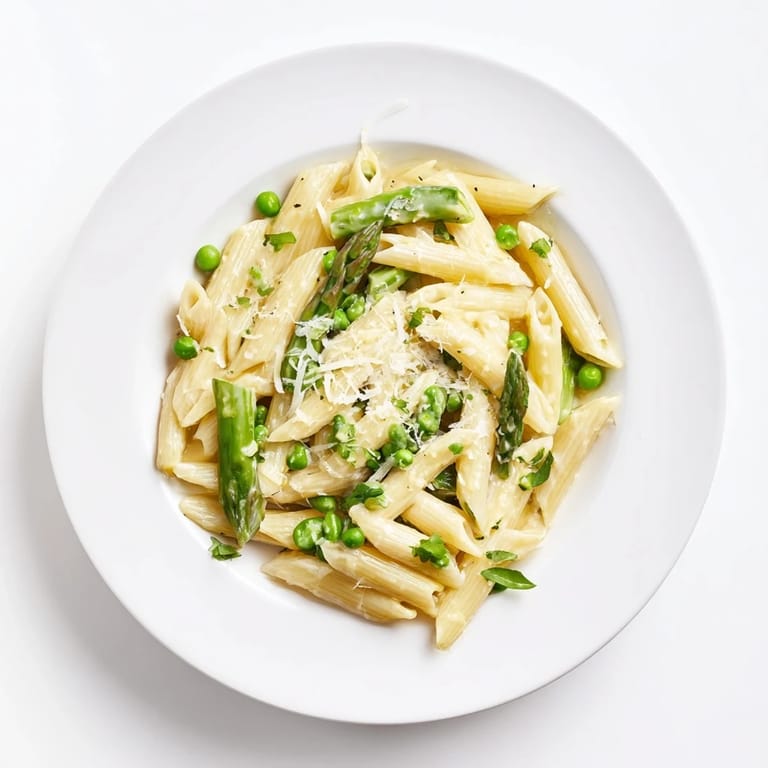
Save My sister made this for her kids one night, and they actually ate their vegetables without complaining. She called me the next day laughing, saying she'd been trying to get them to eat green beans for months. Sometimes a little cream and cheese is all it takes to turn a weeknight dinner into something everyone remembers.
Choosing Your Vegetables
You can swap in snap peas, zucchini, or even broccoli florets depending on what's fresh and what you have on hand. I've made this with whatever looked good at the market, and it always works as long as you cut everything into similar-sized pieces so they cook evenly. The key is keeping the vegetables bright and slightly crisp, not soft and dull. If you're using heartier vegetables like broccoli, give them an extra minute or two in the pan before adding the peas.
Making It Lighter or Richer
If you want to cut some of the richness, use half and half or even whole milk instead of heavy cream, though the sauce won't be quite as luscious. For a vegan version, swap in cashew cream or a plant-based cream and use nutritional yeast or vegan Parmesan, and it still tastes surprisingly creamy and satisfying. I've also added a handful of baby spinach at the end, which wilts right into the sauce and adds even more green without changing the flavor. You can go as light or as indulgent as your mood requires.
Storing and Reheating
This pasta is best eaten fresh, but leftovers keep in the fridge for up to two days in an airtight container. When you reheat it, add a splash of broth or milk in a skillet over low heat, stirring gently until the sauce loosens up again. The microwave works in a pinch, but the stovetop keeps the texture better and prevents the pasta from drying out.
- If you're meal prepping, store the pasta and sauce separately so the noodles don't absorb all the liquid.
- Toss in a handful of fresh herbs after reheating to bring back that just-made brightness.
- A squeeze of fresh lemon juice before serving revives the flavors and makes it taste like you just cooked it.
 Save
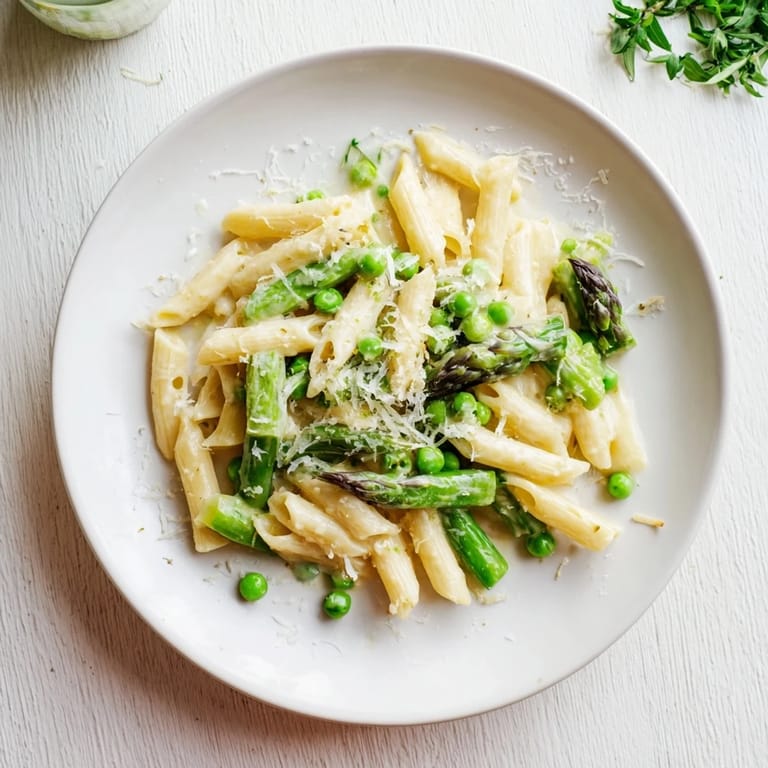
Save This is the kind of dish that makes you feel like spring is worth the wait. Serve it with crusty bread and a simple salad, and you've got a meal that feels special without any fuss.
Recipe FAQ
- → Can I use frozen vegetables instead of fresh?
Yes, frozen vegetables work excellently in this dish. Use frozen asparagus, peas, and green beans—no thawing needed. Simply add them directly to the skillet and adjust cooking time slightly, reducing it by 1-2 minutes since they're pre-blanched.
- → How do I achieve the right sauce consistency?
The reserved pasta water is key. Add it gradually while tossing the pasta and sauce together until you reach a silky consistency that coats each strand. The starch in the pasta water helps emulsify the cream and creates a luxurious texture.
- → What's the best way to prepare the asparagus?
Trim the woody ends by bending each spear until it snaps naturally—this removes the tough portion while keeping the tender tip intact. Cut into 1-inch pieces for uniform cooking and easy eating throughout the dish.
- → Can I make this dairy-free?
Absolutely. Substitute heavy cream with unsweetened oat or cashew cream, and use nutritional yeast or store-bought vegan Parmesan. The sauce will be slightly less rich but still delicious and creamy with proper stirring.
- → How do I prevent the vegetables from becoming mushy?
Cook vegetables just until tender-crisp, maintaining their bright color and slight firmness. This typically takes 3-4 minutes in the skillet. Avoid overcooking by tasting for doneness and removing from heat once vegetables have a slight bite.
- → What fresh herbs pair best with this dish?
Fresh basil and parsley are traditional Italian choices that complement garlic and cream beautifully. Chives, dill, and tarragon also work well. Add them just before serving to preserve their bright flavor and color.