 Save
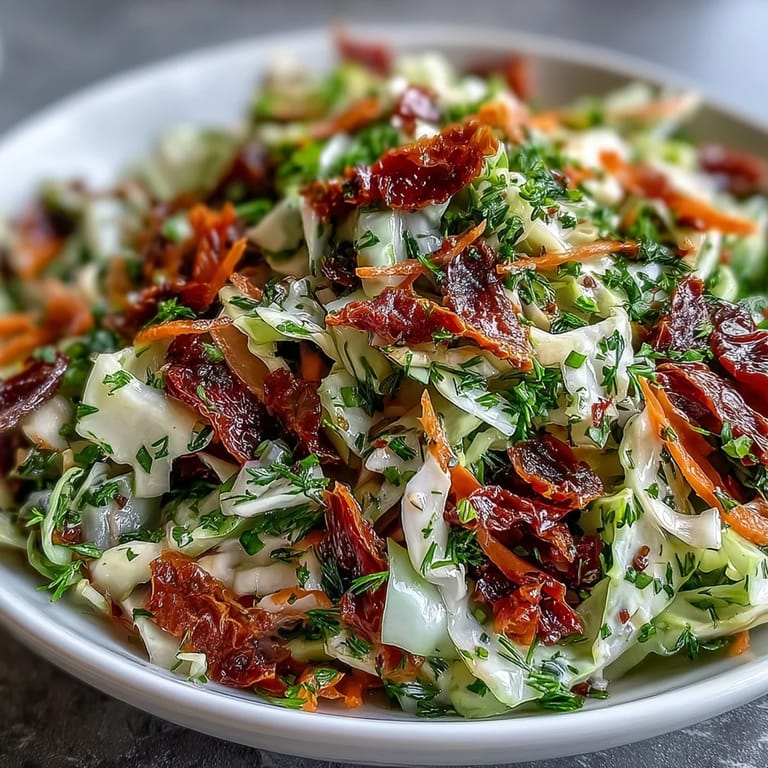
Save There's something about the way sun-dried tomatoes catch the light in a bowl that makes you want to eat salad for dinner. I discovered this particular combination while standing in my kitchen on a gray afternoon, staring at a head of cabbage and wondering how to make it feel less like an obligation and more like something worth looking forward to. The sun-dried tomatoes changed everything, turning what could have been a forgettable side into something vibrant and full of personality. That first bite, with the sweetness of the tomatoes meeting the peppery crunch of fresh cabbage, felt like a small victory.
I made this for my neighbor one summer evening when she brought over fresh herbs from her garden. She watched me slice the cabbage and asked why I was being so careful with such a simple ingredient. By the time we sat down with plates, she understood, gently twirling the ribbons of red and green on her fork like they were something precious. She came back the next week asking if I could teach her, and we've made versions of it together ever since.
Ingredients
- Red cabbage: Three cups, thinly sliced brings color and a subtle sweetness that balances the sharpness of the vinegar—don't skip it just because you have green cabbage on hand.
- Green cabbage: Two cups provides the volume and that satisfying crunch that makes you feel like you're eating something substantial.
- Carrot: One medium, julienned adds natural sweetness and keeps your knife skills honest if you're looking to practice.
- Red bell pepper: One small one, thinly sliced contributes brightness and a slight smokiness that plays beautifully against the tomatoes.
- Spring onions: Three, thinly sliced bring a gentle bite that keeps the salad from feeling one-dimensional.
- Sun-dried tomatoes in oil: Half a cup, drained and sliced are the heart of this salad, concentrated with flavor that a fresh tomato just can't match—drain them but save a spoonful of that oil for the dressing.
- Fresh parsley: A quarter cup, chopped feels lighter and brighter than dried, bringing a green freshness that grounds all the other flavors.
- Fresh dill: Two tablespoons, chopped adds an herbaceous note that makes people ask what your secret ingredient is.
- Fresh chives: Two tablespoons, chopped contribute a delicate onion flavor without overwhelming anything else.
- Extra virgin olive oil: Four tablespoons should be one you actually enjoy tasting, since there's nowhere for mediocre oil to hide.
- White wine vinegar or apple cider vinegar: Two tablespoons provides the acidic backbone—white wine vinegar is more subtle, apple cider is warmer.
- Honey or maple syrup: One tablespoon adds the sweetness that transforms tart dressing into something rounded and balanced.
- Dijon mustard: One teaspoon acts as an emulsifier and brings a sharp, peppery note that ties everything together.
- Garlic: One clove, finely minced should be treated gently—mince it small so it distributes evenly rather than giving you unexpected bursts of garlic intensity.
- Salt and black pepper: To taste are the final adjustments that make the dish feel intentional rather than accidental.
Tired of Takeout? 🥡
Get 10 meals you can make faster than delivery arrives. Seriously.
One email. No spam. Unsubscribe anytime.
Instructions
- Prepare your vegetables with intention:
- Slice your cabbages thin enough that they're tender but thick enough to hold their shape. Take your time here—the texture of the salad depends on how carefully you do this part.
- Build your bowl:
- Combine the red and green cabbage, carrot, bell pepper, and spring onions in a large bowl before adding anything else. This gives you a moment to see if your proportions feel balanced.
- Add the special ingredients:
- Fold in the sun-dried tomatoes and fresh herbs gently, as if you're introducing guests at a dinner party. Let them settle into the bowl naturally rather than stirring them aggressively.
- Make your dressing come together:
- Whisk the olive oil, vinegar, honey, mustard, and minced garlic in a small bowl or jar until the mixture becomes creamy and emulsified. This takes about thirty seconds of genuine whisking—you'll see it transform.
- Toss everything with care:
- Pour the dressing over your salad and toss until every piece is coated, which usually takes longer than you think but less time than feels comfortable. You're looking for the cabbage to begin releasing a little juice.
- Taste and adjust:
- Add more salt, pepper, or vinegar if it needs brightness—this is your chance to make it taste like something you actually want to eat. Trust your mouth, not the recipe.
- Let it rest:
- Give the salad ten minutes to sit before serving, allowing the flavors to meld and the vegetables to soften slightly. You can do this up to four hours ahead if you're planning dinner.
 Save
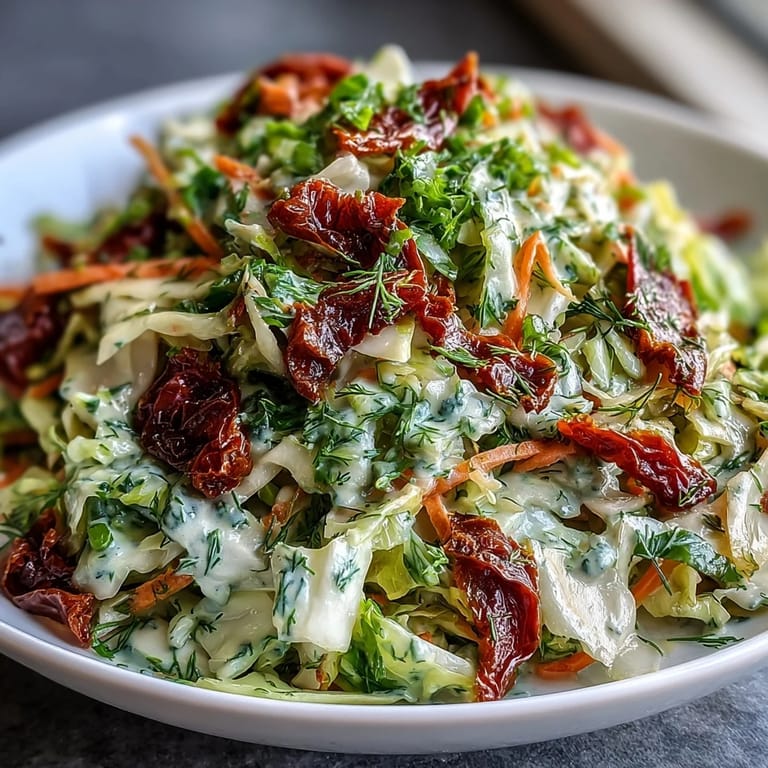
Save This salad became the thing I made when someone I cared about needed a meal but I didn't have much energy to give. There was something restorative about the act of slicing vegetables carefully, about watching colors accumulate in a bowl, about knowing that vegetables and time and a good vinaigrette could create something that felt like nourishment in the deepest sense.
Why This Salad Works
The magic here isn't complicated—it's the balance between sweet, acidic, and herby, with enough texture that eating it feels satisfying rather than obligatory. The sun-dried tomatoes do most of the heavy lifting, concentrating flavor where fresh tomatoes would dilute it, while the cabbage's natural sweetness prevents everything from tasting sharp or one-note. The fresh herbs elevate it from a side dish into something that tastes like you spent more time thinking about it than you actually did.
Making It Your Own
This is the kind of salad that invites interpretation without requiring it. If you have toasted seeds on hand, they add a dimension that makes the whole thing feel more intentional—sunflower seeds bring nuttiness, pumpkin seeds bring earthiness. A protein alongside it transforms the meal: grilled chicken, flaked fish, roasted chickpeas, or soft cheese if you're vegetarian all become something worth planning dinner around. You can prepare the ingredients hours ahead and assemble everything just before serving if you're feeding people and want a moment to yourself beforehand.
Storage and Timing
This salad keeps beautifully for three days in an airtight container, though the cabbage will gradually soften and the dressing will deepen in flavor. If you're packing it for lunch, keep the dressing separate until you're ready to eat so it doesn't wilt while sitting in your bag. The longer it sits, the more the flavors marry, so making it the night before actually improves it.
- Slice your vegetables just before assembly if you're making it hours ahead—pre-cut vegetables will release water and become soggy.
- If you find the salad tastes flat when you return to it, a squeeze of fresh lemon juice or a splash more vinegar wakes it right back up.
- Keep the dressing ingredients separate if you're taking this somewhere and assemble it on-site for the best texture and brightest flavor.
 Save
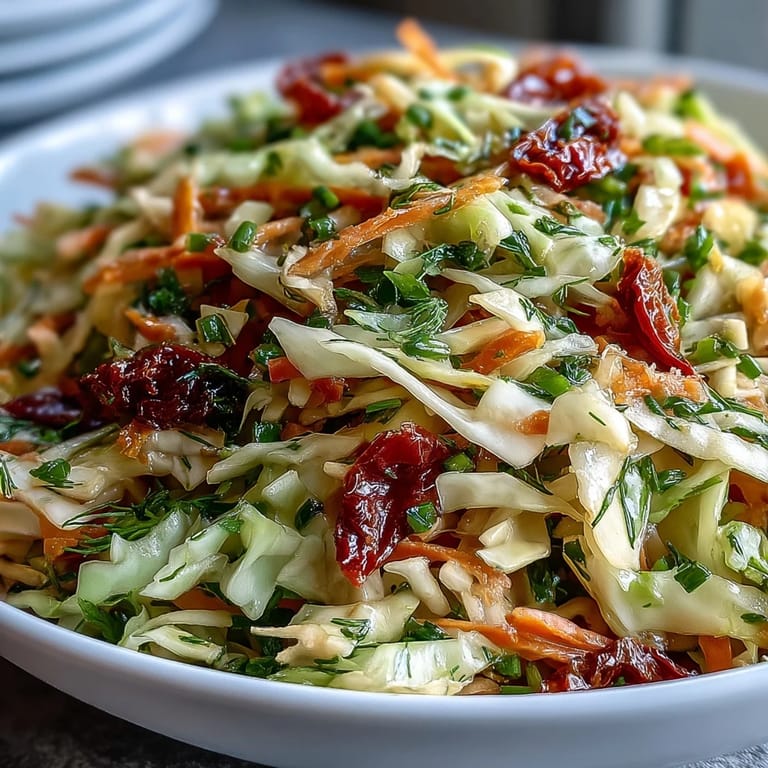
Save This salad has become my answer to the question of what to bring, what to make, what to eat when I want something that feels both easy and deliberate. It's proof that simplicity and care aren't mutually exclusive.
Recipe FAQ
- → Can I make this salad ahead of time?
Yes, you can prepare this salad up to 4 hours in advance. Keep the dressing separate and toss just before serving to maintain maximum crunch. The cabbage will soften slightly over time but remains delicious.
- → What can I substitute for sun-dried tomatoes?
You can use cherry tomatoes, roasted red peppers, or dried cranberries as alternatives. Each will provide a different flavor profile but complement the cabbage beautifully.
- → How do I store leftover salad?
Store in an airtight container in the refrigerator for up to 2 days. The salad will become more tender as it marinates. Drain excess liquid before serving if needed.
- → Can I add protein to make this a main dish?
Absolutely! Grilled chicken, chickpeas, feta cheese, or hard-boiled eggs work wonderfully. You can also add grilled shrimp or salmon for a complete meal.
- → Is this salad suitable for meal prep?
Yes, this salad is excellent for meal prep. Prepare the vegetables and dressing separately, then combine portions as needed throughout the week for fresh, crisp results.
- → Can I use a different type of vinegar?
Yes, red wine vinegar, balsamic vinegar, or lemon juice all work well. Each will give a slightly different flavor, so choose based on your preference.