 Save
Save There's something wonderfully honest about a pasta dish that doesn't pretend to be fancier than it is. I discovered black-eyed pea pasta on a weeknight when my pantry was speaking to me in cans and dried herbs, and I had exactly thirty minutes before hunger complaints began. The first time I tossed those tender legumes with warm garlic-infused oil and fresh basil, something clicked—this wasn't just a way to use what I had on hand, it became something I actually wanted to make again.
I made this for my neighbor one afternoon when she mentioned feeling tired of the same rotation of meals, and watching her face when she took that first bite—surprised that pasta with beans could taste this alive—reminded me why simple food cooked with intention matters. She finished her bowl and asked for the recipe before the steam finished rising.
Ingredients
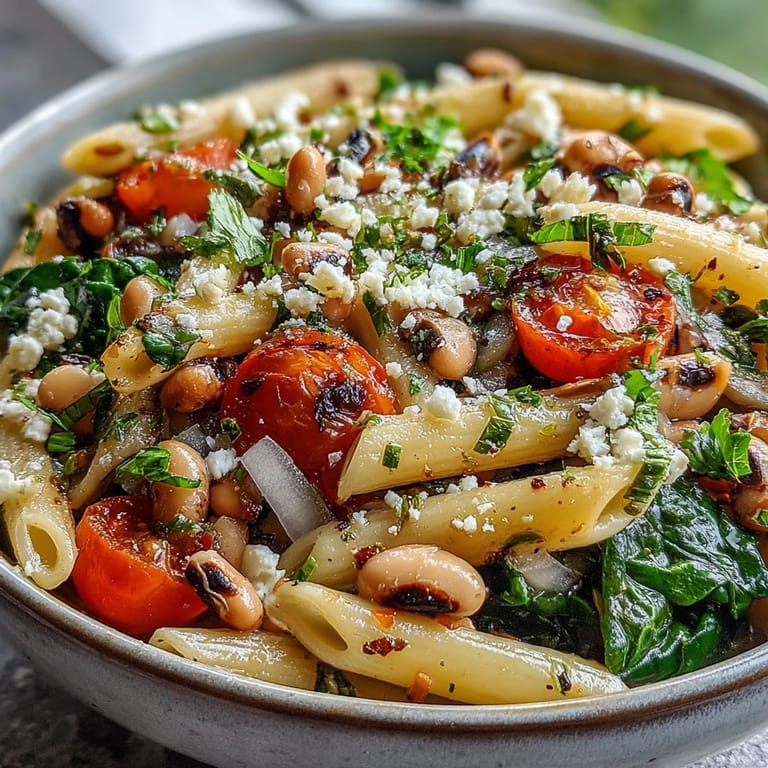
- 300 g short pasta (penne, fusilli, or farfalle): The shape matters more than you'd think because the hollow tubes and curves catch the garlicky oil and hold the black-eyed peas in every bite.
- 1 can (400 g) black-eyed peas, drained and rinsed: Canned is honest and convenient, though cooking dried ones from scratch gives you control over texture and a quieter, earthier flavor.
- 3 tablespoons extra-virgin olive oil: This is your foundation, so use something you'd actually taste on bread—cheap oil makes the whole dish taste apologetic.
- 3 garlic cloves, finely sliced: Slicing them thin rather than mincing keeps them textured and prevents them from disappearing into silence.
- 1 small red onion, thinly sliced: Red onions stay slightly sweet and add visual sharpness that white onions won't give you.
- 1 tablespoon fresh oregano or 1 teaspoon dried: Fresh oregano smells like someone's Mediterranean kitchen, but dried works fine if that's what you have.
- 2 tablespoons fresh parsley, chopped: Parsley is the quiet green that doesn't overpower, just brightens.
- 2 tablespoons fresh basil, chopped: Add this at the very end so it stays green and fragrant instead of turning bitter from heat.
- 1 cup cherry tomatoes, halved: Cherry tomatoes have more sugar and sweetness than larger ones, which balances the earthiness of the beans perfectly.
- 1 cup baby spinach leaves: It wilts to almost nothing, so don't be shy with the handful.
- ½ teaspoon sea salt, plus more to taste: Taste as you go because the pasta water and feta both carry their own saltiness.
- ¼ teaspoon freshly ground black pepper: Freshly ground pepper tastes sharper and cleaner than pre-ground.
- 1 pinch red pepper flakes (optional): Just a whisper if you want the background to warm without the foreground to burn.
- Zest and juice of ½ lemon: The zest adds brightness without extra liquid, while the juice wakes up every other flavor on the plate.
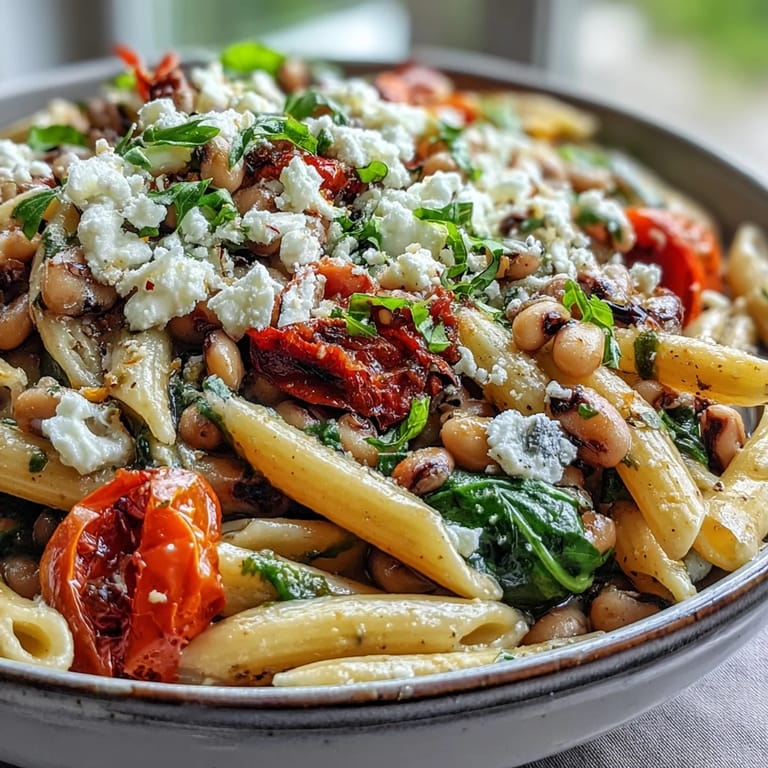
- 50 g crumbled feta cheese (optional): It melts slightly into the warm pasta and adds a salty, creamy anchor.
Tired of Takeout? 🥡
Get 10 meals you can make faster than delivery arrives. Seriously.
One email. No spam. Unsubscribe anytime.
Instructions
- Boil your pasta water generously:
- Fill a large pot with water, salt it until it tastes like the sea, and bring it to a rolling boil before the pasta goes in. This is where flavor starts, not where it ends.
- Cook the pasta until al dente:
- Follow the package timing but start tasting a minute or two before—al dente means tender but with a slight resistance when you bite, which is what keeps the finished dish from turning mushy.
- Save your pasta water before draining:
- That starchy, salty water is liquid gold for bringing everything together later, so scoop out about ¼ cup and set it aside before you drain.
- Warm the oil and start with aromatics:
- Heat olive oil in a large skillet over medium heat until it shimmers, then add the sliced garlic and red onion. After 2 to 3 minutes, you should smell something that makes you want to pause and just breathe in.
- Soften the tomatoes gently:
- Once the onion is translucent, add the halved cherry tomatoes and let them sit undisturbed for a minute, then stir. They'll start to release their juices and soften into the oil without completely collapsing.
- Bring in the beans and season:
- Stir in the black-eyed peas along with oregano, salt, pepper, and red pepper flakes if you're using them. Two minutes of gentle cooking lets everything know each other.
- Combine pasta with the sauce:
- Add your drained pasta directly to the skillet along with that reserved pasta water, tossing everything together over medium heat. The starch in that water will create a loose sauce that coats every piece.
- Wilt the spinach quickly:
- Scatter the baby spinach over the pasta and stir until it softens, which takes barely a minute—you want it to disappear into tenderness without becoming an afterthought.
- Finish with brightness:
- Remove from heat, add the lemon zest and juice, then stir in the fresh parsley and basil. Taste and adjust the salt and lemon if it needs it.
- Plate and top:
- Divide among bowls and scatter crumbled feta on top if you're using it, letting the warm pasta slightly soften the cheese.
 Save
Save This dish taught me that wholesome food doesn't have to taste like penance, and that black-eyed peas—which I'd only ever thought of as a Southern tradition—could feel completely at home in a Mediterranean context. There's something about that discovery that stays with you.
Why This Dish Works
The architecture of this pasta is simple but deliberate: the black-eyed peas provide earthiness and protein, the tomatoes and herbs bring acidity and brightness, the spinach adds a tender green note, and the lemon juice ties everything into focus. Each element has a reason for being there, and nothing feels accidental or forced. The pasta water creates a sauce that's light enough to feel Mediterranean but substantial enough to feel nourishing.
Making It Your Own
I've made this dish a hundred different ways depending on what's in my vegetable drawer and my mood that day. Some nights I add sliced fennel or diced zucchini, other times I stir in a can of white beans instead of black-eyed peas. The framework holds strong enough that you can play within it without the whole thing falling apart. I've also learned that grilled shrimp or roasted chickpeas transform this from a light vegetarian main into something that feels more substantial without losing its brightness.
Pairing and Serving
This pasta tastes best served immediately while the basil is still fragrant and the spinach is tender, though leftovers keep for a couple of days and taste slightly different but not worse—the flavors deepen overnight. If you're serving this to guests, a crisp white wine like Sauvignon Blanc or a dry rosé will cut through the richness of the oil and let all those green, bright flavors sing. For a complete meal, pair it with a simple green salad dressed with lemon and olive oil, or some crusty bread to soak up the loose sauce at the bottom of the bowl.
- The best feta is crumbly and slightly salty: Buy it from a section where it's sold in bulk if you can, rather than the pre-crumbled kind.
- If you can't find baby spinach, regular spinach wilts down even faster: Just roughly chop it so you can judge the quantities better.
- This dish is forgiving with timing as long as you keep the heat moderate: Nothing will burn or break if you take your time assembling each component.
 Save
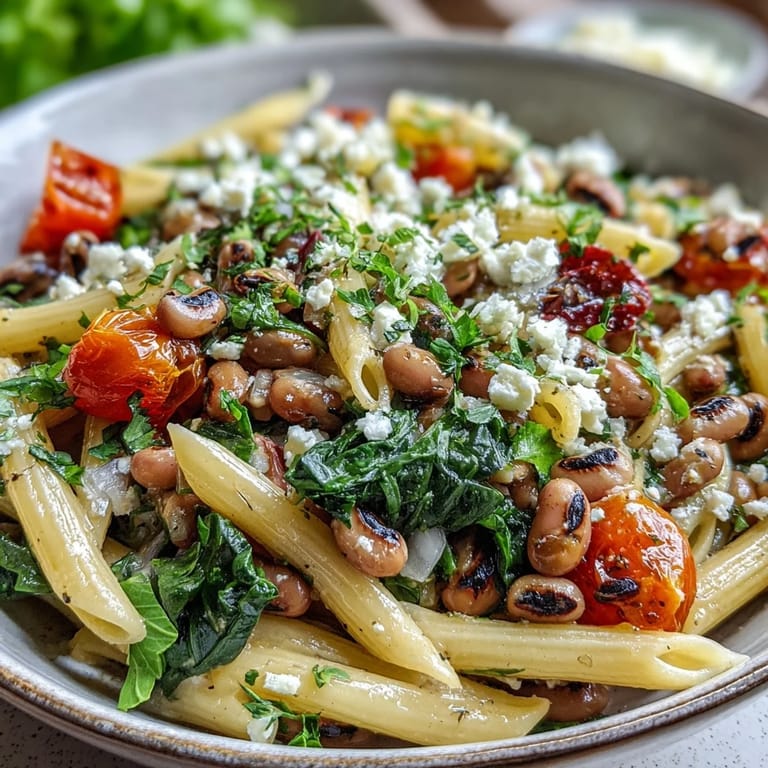
Save This black-eyed pea pasta has become the dish I reach for when I want to feed people something that tastes intentional but doesn't require me to be a perfect version of myself in the kitchen. There's honesty in that.
Recipe FAQ
- → Can I use dried black-eyed peas instead of canned?
Yes, soak dried black-eyed peas overnight and cook until tender before adding to the skillet. This typically takes 45-60 minutes of simmering.
- → What pasta shapes work best for this dish?
Short pasta varieties like penne, fusilli, or farfalle are ideal as they catch the peas and vegetables in their curves, ensuring balanced flavor in every bite.
- → How do I store leftovers?
Store in an airtight container in the refrigerator for up to 3 days. Reheat gently with a splash of olive oil or water to refresh the texture.
- → Can I make this dish gluten-free?
Absolutely. Simply substitute the regular pasta with certified gluten-free pasta made from rice, corn, or chickpeas for equally delicious results.
- → What other proteins can I add?
Grilled chicken strips, sautéed shrimp, or white beans all pair wonderfully. For added texture, try toasted pine nuts or walnuts as a topping.