 Save
Save I still remember the first time I created a Tropical Pineapple Paradise at a summer gathering on my cousin's sun-drenched patio. The moment I split open that golden pineapple, releasing that sweet, intoxicating aroma, everyone gathered around like kids mesmerized by magic. There's something about a fruit platter that transforms from simple ingredients into pure edible art—it's the kind of dish that makes people pause mid-conversation just to admire its beauty before tasting it.
I'll never forget my friend Sarah's face when she walked into the kitchen and saw the finished platter for the first time. She literally gasped, then immediately started photographing it from every angle. That's when I realized this wasn't just food—it was a conversation starter, a moment of joy that brought people together around something beautiful and nourishing.
Ingredients
- 1 large ripe pineapple: Look for one with a golden hue and leaves that are still vibrant green—this is your star, your foundation. The flesh should give slightly when gently pressed near the base.
- 2 kiwis: Their bright emerald color and delicate tartness create perfect visual pops and balance the sweetness of other fruits. Peel just before slicing to prevent browning.
- 1 mango: Choose one that's fragrant and yields gently to pressure. Its golden-orange hue is pure sunshine on a plate.
- 1 papaya: This pale, creamy fruit adds subtle sweetness and that elegant tropical feel. Make sure to remove all the black seeds.
- 1 small dragon fruit: Its shocking pink exterior and speckled white or hot pink interior are the show-offs of this platter—use them for drama.
- 1 cup strawberries: Their ruby red color and heart shape add romance and brightness. Choose firm berries with green leaves still attached when possible.
- 1 cup seedless grapes: They're nature's perfect small jewels, adding pops of color and a refreshing burst of sweetness with each bite.
- 1/2 cup blueberries: Tiny but mighty, these contribute antioxidants and a deep blue-purple that makes the whole arrangement sing visually.
- 1/2 cup raspberries: Delicate and jewel-like, they're worth handling gently—add them last to avoid crushing.
- 1/2 cup pomegranate arils: These ruby seeds are the crown jewels of this platter, offering a tart pop and unmatched elegance.
- 1/4 cup unsweetened shredded coconut: This adds texture, a whisper of tropical flavor, and visual interest to fill the empty spaces.
- Fresh mint leaves: Don't skip this—their fragrance and jade color lift the entire presentation and add a breath of freshness.
Tired of Takeout? 🥡
Get 10 meals you can make faster than delivery arrives. Seriously.
One email. No spam. Unsubscribe anytime.
Instructions
- Prepare Your Canvas:
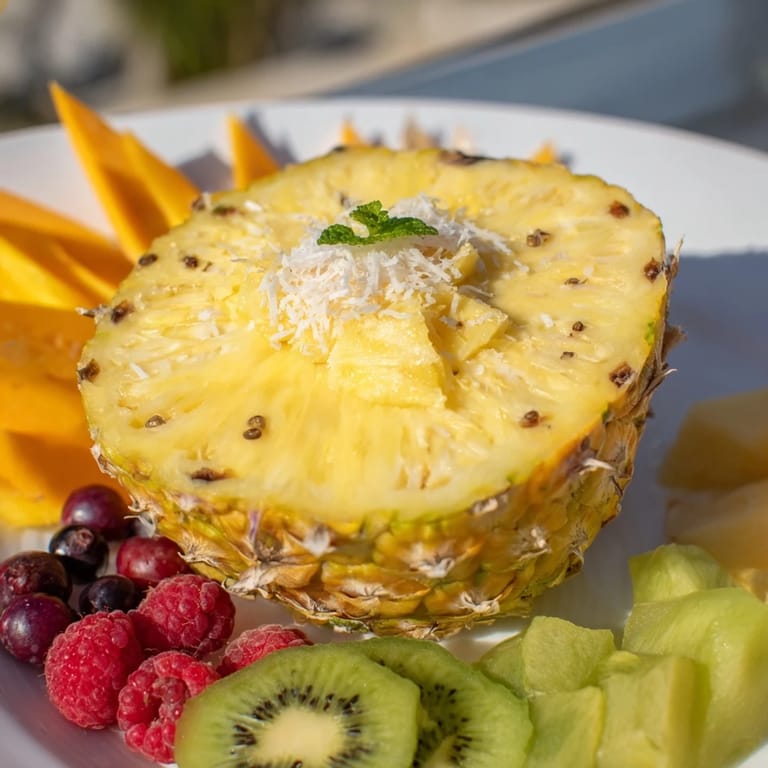
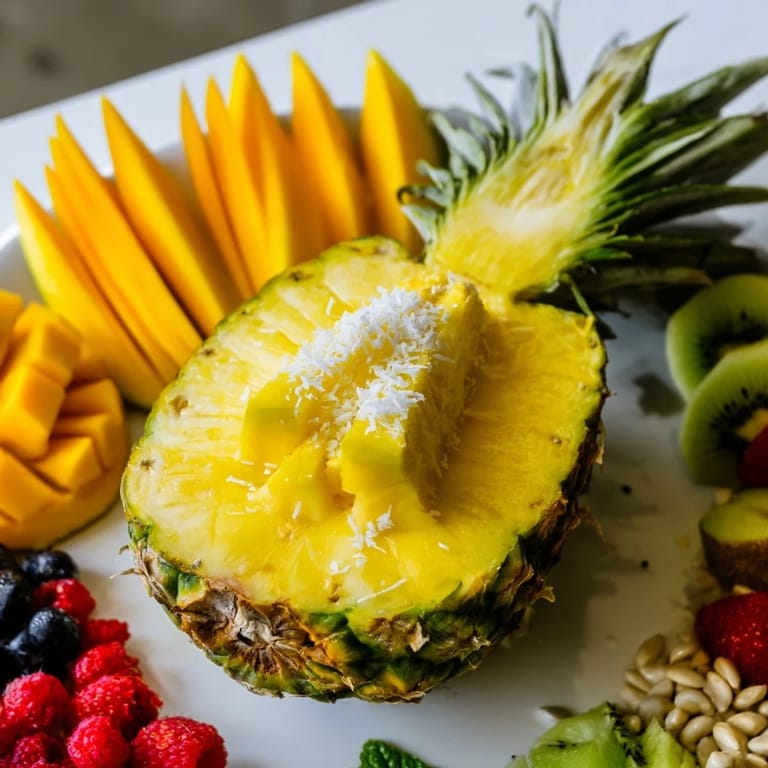
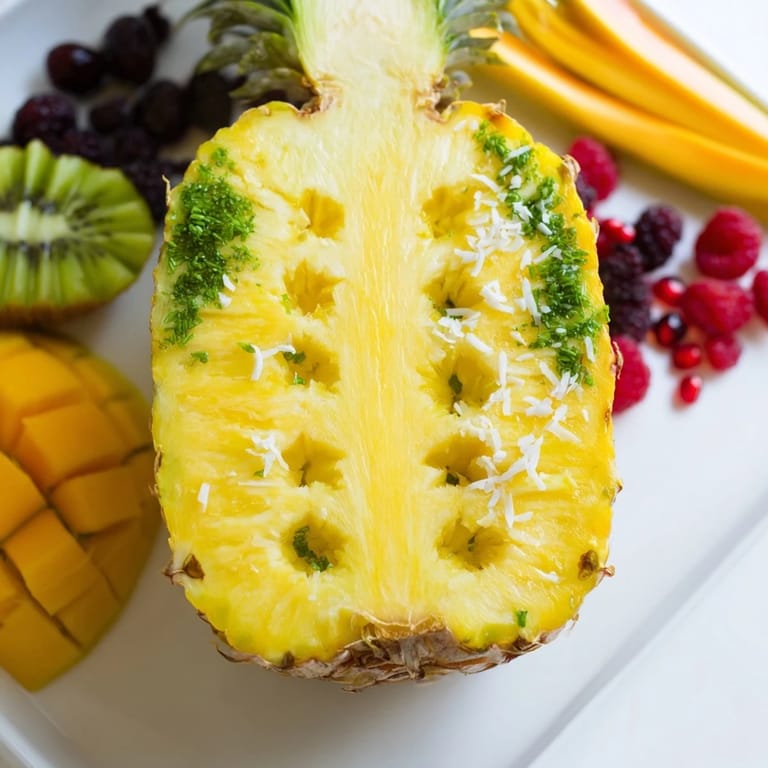
- Place that gorgeous pineapple half in the center of your largest serving platter, cut-side up, like it's sitting on a throne. Take your paring knife and gently score the flesh in a crosshatch pattern, creating little diamonds that say 'pick me up and eat me.' Don't cut too deep—you want to preserve that stunning shell and those crown-like leaves.
- Create Your First Ring:
- Now here's where it gets fun. Fan your mango, papaya, and dragon fruit slices outward from the pineapple like sun rays, alternating the colors deliberately. Think of it as painting with fruit—golden, coral, and hot pink should dance together. This is your moment to play artist.
- Fill the Gaps with Joy:
- Take those kiwi slices, strawberries, grapes, blueberries, raspberries, and pomegranate arils and tuck them into the spaces, creating a sense of abundance and harmony. Step back frequently—you're building a masterpiece, not just arranging fruit.
- Add Texture and Whisper:
- Sprinkle your shredded coconut gently over the arrangement, letting it settle into the nooks and crannies. This adds texture and that unmistakable tropical aroma that promises warm breezes.
- The Final Flourish:
- Scatter your fresh mint leaves across the platter like you're blessing it. They add that final touch of green sophistication and an aroma that says 'this is special.'
- Serve with Intention:
- Bring it straight to the table immediately while everything is at peak freshness and the colors are most vibrant. Or, if you're prepping ahead, cover loosely with plastic wrap and refrigerate for up to 2 hours—the flavors will meld beautifully.
 Save
Save What struck me most about this platter isn't just how it looks—it's how it makes people feel. I served it at a family reunion where my grandmother, who hadn't smiled much lately, lit up like a child seeing something wondrous. She spent ten minutes just admiring it before eating anything. That's when I understood: this isn't about impressing people with technique. It's about giving them permission to slow down and find joy in something alive and beautiful.
The Art of Building Your Platter
The secret I've learned is that this arrangement is forgiving—it's not about mathematical precision, but about creating balance and flow. Think of it like arranging flowers in a vase. Start with your largest focal point (the pineapple), then layer in the bigger slices, then fill with the smaller jewels. Trust your instincts about color placement. If something feels too monochromatic, add contrast. The best platters tell a visual story as much as a flavor story.
Flavor Pairings and Accompaniments
While this platter sings on its own, I've discovered that a drizzle of lime juice just before serving brightens everything magnificently—it's like turning up the volume on the natural flavors. Some people love a thin drizzle of raw honey for those who prefer extra sweetness. On the side, creamy coconut yogurt or thick coconut cream transforms this from a light fruit platter into something more substantial, perfect for lingering summer afternoons. And if you're serving adults, a chilled Moscato or sparkling water with lime wedges alongside creates an elegant pairing that feels restaurant-worthy.
Seasonal Swaps and Creative Variations
One of the joys of this platter is its flexibility. You're not locked into these exact fruits—let your market and season guide you. Have passion fruit? Slice it open for those dramatic ruby-red arils. Found beautiful starfruit at the farmer's market? Those golden stars are stunning. In winter, add pomelo segments or tangerine slices. The framework stays the same; you're just playing with the palette. Remember, the best ingredient is always the one at its peak ripeness.
- Always taste your fruits before building—a disappointing kiwi or mealy mango will affect the whole experience
- Cut fruits in different shapes and sizes to create visual interest; uniform cutting can look flat even when colorful
- If you're serving more than 6 people, build a second platter rather than overcrowding one—there's elegance in not overwhelming the eye
 Save
Save This Tropical Pineapple Paradise is proof that sometimes the most elegant dishes are also the simplest. It's about choosing the finest fruit and letting it speak for itself.
Recipe FAQ
- → How do I prepare the pineapple centerpiece?
Use a sharp knife to halve the pineapple vertically, trim the core, and score the flesh in a crosshatch pattern to allow easy serving while keeping the skin and leaves intact for presentation.
- → Which fruits complement the pineapple best in this display?
Mango, papaya, dragon fruit, kiwi, strawberries, grapes, blueberries, raspberries, and pomegranate arils all add vibrant colors and tropical flavors that enhance the pineapple centerpiece.
- → Can I customize the fruit selection?
Yes, seasonal fruits like starfruit, passion fruit, or lychee can be added or swapped to suit availability and preferences, maintaining the tropical theme.
- → What garnish options enhance the platter?
Unsweetened shredded coconut sprinkled over the fruit adds texture, while fresh mint leaves contribute color and a pleasant fragrance.
- → How should I serve the platter for best freshness?
Serve immediately for best flavor and appearance, or cover and refrigerate for up to 2 hours before serving to keep fruits fresh and vibrant.
- → Are there recommended pairings with this fruit arrangement?
For a refreshing combination, try pairing with chilled Moscato wine or sparkling water with lime, or serve alongside coconut cream or yogurt for dipping.