 Save
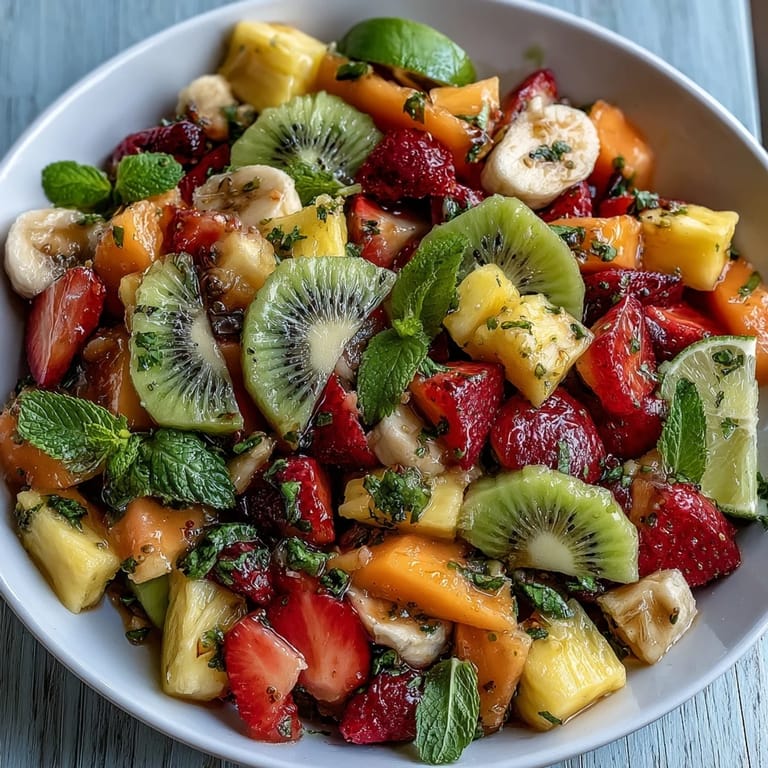
Save My neighbor brought this over one sweltering afternoon when the kitchen felt too hot to turn on the oven, and I've been making it ever since whenever the heat creeps in. There's something about the way the lime cuts through the sweetness that feels like a tiny vacation in a bowl, no cooking required. She whispered the secret was in the mint—not too much, just enough to make you wonder what that brightness is. I've served it at picnics, potlucks, and lazy Sunday lunches, and it's never once disappointed. Now it's become my go-to when someone asks what to bring.
I made this for a potluck dinner last July when everyone was too exhausted to eat anything heavy, and watching people come back for thirds told me everything. The colors alone—those bright yellows, pinks, and greens—seemed to lift the whole table's mood. My friend's kid, who usually picks at fruit, asked for the recipe to make it at home, which felt like the highest compliment.
Ingredients
- Pineapple: Choose one that smells sweet at the base and gives slightly to pressure; it should be ripe enough to be juicy but firm enough to dice cleanly without falling apart.
- Mango: The fruit should yield gently to your thumb when ripe, and the smell at the stem end will tell you it's ready—avoid anything mushy or with dark spots.
- Papaya: A ripe papaya feels soft like a ripe avocado; if it's too firm, it'll taste bland, and if it's too soft, the texture falls apart when you toss it.
- Watermelon: A heavy watermelon with a deep hollow sound when tapped usually means it's sweet and juicy, though honestly any ripe one will work beautifully here.
- Kiwis: They add a tartness that makes the whole salad sing, and peeling them is oddly satisfying if you use a small spoon to separate the flesh from the skin.
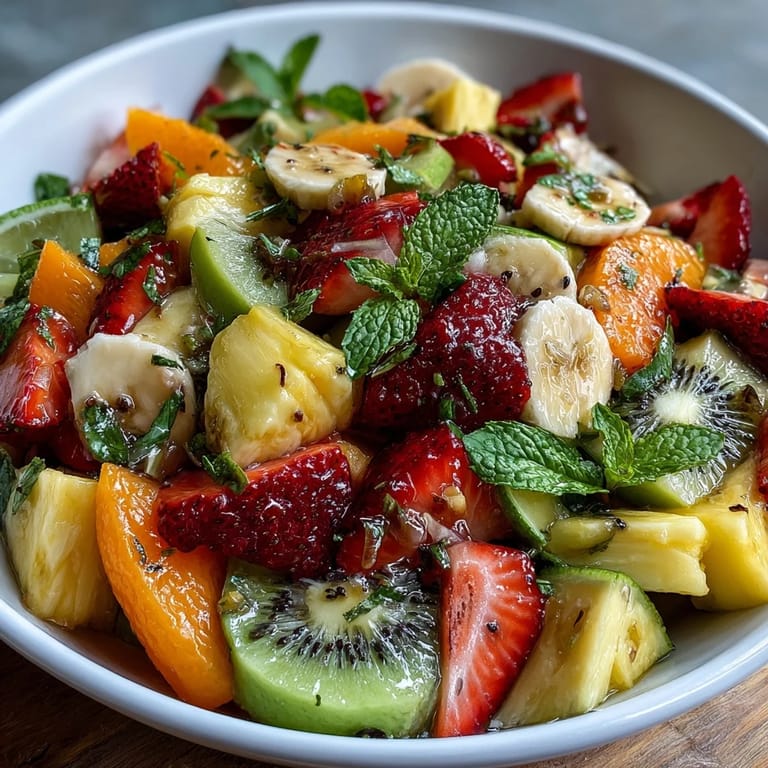
- Banana: Slice this last just before serving, or toss the slices with a tiny squeeze of lime juice to keep them from browning.
- Strawberries: Fresh ones make a difference; if they've been sitting in your fridge for days, skip them and add something else instead.
- Fresh lime juice: Bottled won't give you the same brightness, so take 30 seconds to squeeze a real lime—your palate will notice.
- Honey or agave: Use what feels right for your diet, though agave dissolves a touch more smoothly into the dressing.
- Fresh mint: Chop it finely so every bite gets a whisper of it rather than a chewy leaf; dried mint tastes like sad grass by comparison.
- Lime zest: A microplane makes this easier, but a fine grater works too; don't zest too deep into the white pith or it'll taste bitter.
- Salt: Just a pinch balances the sweetness and makes the fruit flavors pop more than you'd expect.
Tired of Takeout? 🥡
Get 10 meals you can make faster than delivery arrives. Seriously.
One email. No spam. Unsubscribe anytime.
Instructions
- Gather and prep your fruit:
- Dice everything into roughly the same size—about half-inch pieces feel right—so it all feels cohesive when you eat it. Lay the cut fruit in a big bowl as you go, and if you're making this ahead, keep it in the fridge covered with plastic wrap until you dress it.
- Make the dressing:
- In a smaller bowl, squeeze your lime juice first, then whisk in the honey until it dissolves into the liquid without any granular bits. Stir in the finely chopped mint, the lime zest, and just a pinch of salt, then taste it—it should be bright and slightly sweet, not overly tart.
- Bring it all together:
- Drizzle the dressing over your fruit and use a rubber spatula or wooden spoon to gently toss everything, rotating from the bottom of the bowl so the dressing coats evenly. Be gentle here; nobody wants mushed fruit, and the goal is for each piece to kiss the dressing without getting bruised.
- Serve or chill:
- You can eat it right away if you want that fresh, crisp texture, or refrigerate it for up to two hours if you prefer the flavors to meld together. I've found that even 30 minutes of chilling makes the dressing soak in just enough.
 Save
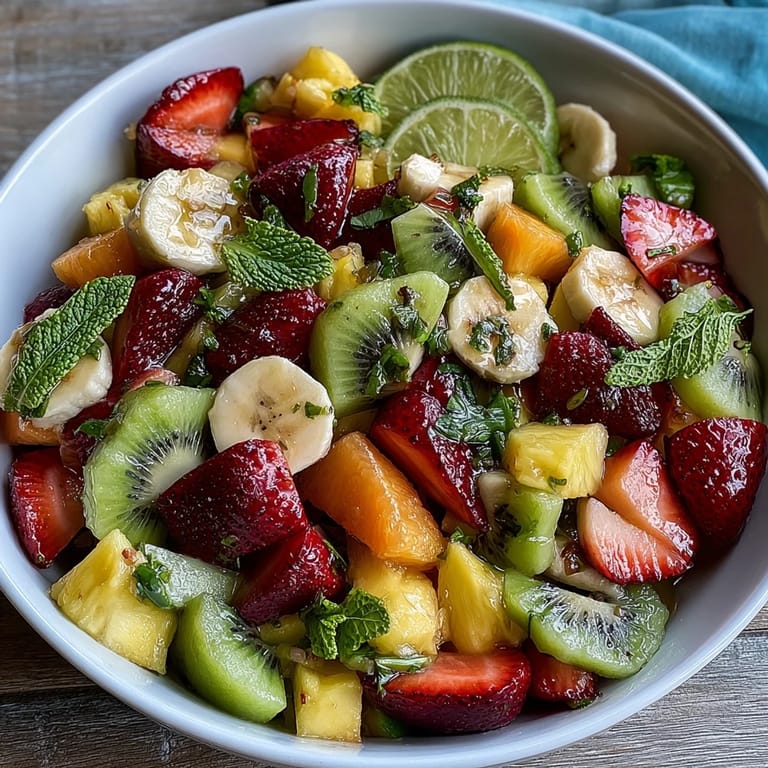
Save I'll never forget watching my dad take his first bite at a family dinner, expecting maybe a nice side dish, and instead finding himself genuinely delighted by how the flavors worked together. That moment made me realize food doesn't have to be complicated to feel special or intentional.
When Ripeness Matters
I once bought mangoes that looked ripe but tasted woody and flavorless, and that taught me that ripeness is everything with tropical fruit—more so than with almost anything else you'll buy. Color can lie, but smell and gentle pressure from your thumb never will. Some of my best salads have come from taking an extra minute at the market to really evaluate what I'm picking up.
The Lime Zest Secret
A lot of people skip the lime zest because they think it's fussy, but it's honestly the ingredient that makes people pause and ask what they're tasting. The zest carries oils that juice alone can't deliver, giving you a complexity that feels almost floral. Once you realize how much difference it makes, you'll start zesting limes over everything.
Timing and Temperature Tips
There's a window where this salad is absolutely perfect—fresh enough that the fruit hasn't gotten soggy, but chilled enough that the flavors have introduced themselves to each other. Temperature matters more than you'd think; serving it ice-cold makes it feel like a treat on a hot day, while room temperature lets the natural sweetness come through more. I've learned to read the room and adjust based on how hot it is outside and how my guests seem to be feeling.
- If you're serving this at a picnic, pack it in a cooler and wait to dress it until right before you eat, or the fruit will weep into the dressing.
- For a party, you can assemble it up to two hours ahead, but keep it chilled and give it a gentle stir right before bringing it to the table.
- Any leftovers will keep in the fridge for a day, though the fruit softens gradually—which isn't bad, just different.
 Save
Save This salad has become my answer to the question of what to bring when you want to feel generous without spending hours in the kitchen. It's the kind of dish that makes summer feel intentional rather than just something happening around you.
Recipe FAQ
- → How far in advance can I prepare this?
Prepare up to 2 hours before serving for optimal freshness. The dressing flavors meld beautifully during chilling time, but avoid making it more than 4 hours ahead as fruits may become overly soft.
- → What fruits work best in this combination?
Pineapple, mango, papaya, and watermelon form the tropical base. Kiwi adds bright color, while strawberries and banana provide sweetness. Feel free to substitute dragon fruit, passionfruit, or fresh berries based on availability.
- → Can I make the dressing separately?
Yes, whisk lime juice, sweetener, mint, zest, and salt in a small jar. Store refrigerated for up to 3 days. Bring to room temperature and shake well before drizzling over freshly cut fruit.
- → What can I use instead of honey?
Agave syrup or maple syrup work perfectly for vegan options. Adjust sweetness to taste—start with one tablespoon and add more if needed after tasting with the fruit mixture.
- → How do I prevent fruits from browning?
The lime dressing naturally helps prevent oxidation on bananas and apples. Toss these fruits immediately after cutting. For advance prep, cut heartier fruits first, adding delicate ones like banana just before serving.