 Save
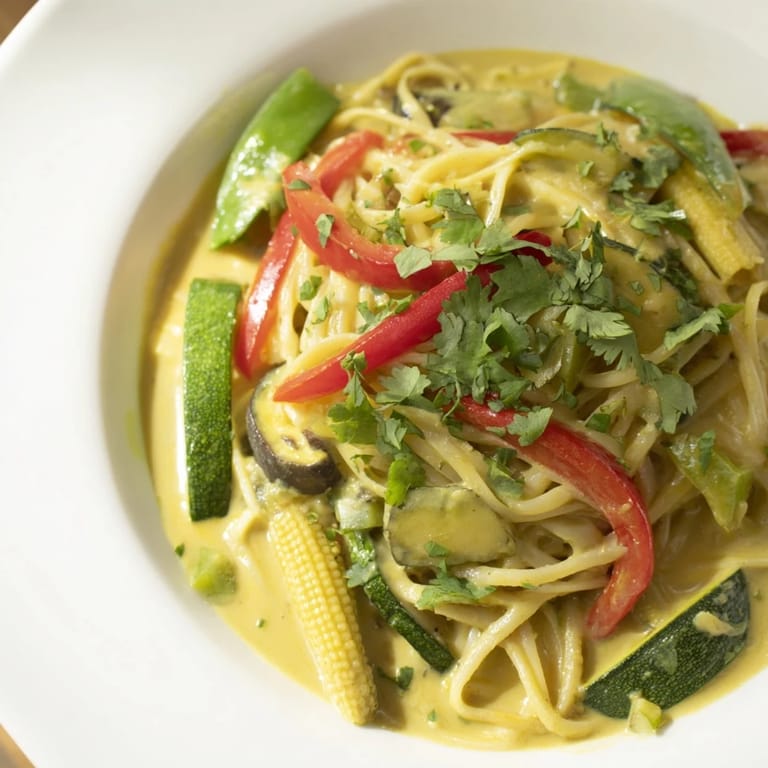
Save I stumbled onto this dish on a rainy Tuesday when my usual pasta night felt stale, and I spotted a jar of Thai green curry paste at the back of my pantry. The combination felt audacious—maybe reckless—but I was curious what would happen if I let two cuisines collide on the same plate. Twenty minutes later, the kitchen smelled like something between a Bangkok street stall and an Italian trattoria, and I knew I'd found something worth making again and again.
I made this for friends who were skeptical about pasta and curry in the same bowl, and watching their faces light up after that first bite was worth more than any compliment. One of them asked for the recipe before dessert even arrived, which tells you everything you need to know about how this dish wins people over.
Ingredients
- Linguine or spaghetti (350 g): Use a sturdy pasta shape that holds the curry sauce without breaking apart; thin strands let the coconut coat every bite.
- Red bell pepper: The sweetness balances the heat, and thin slices soften to tender without losing their color and character.
- Zucchini: It soaks up the sauce beautifully and adds a subtle earthiness that grounds the bright spices.
- Snap peas and baby corn: These keep their snap even after cooking, giving you little pockets of crunch that make each forkful interesting.
- Spring onions: Add them at the end so they stay fresh and oniony; cooked too long, they disappear into the background.
- Fresh cilantro: This is your secret weapon—it lifts the entire dish and makes it taste lighter and more alive.
- Vegetable oil: A neutral base that lets the curry paste be the star without competing flavors getting in the way.
- Thai green curry paste (3 tbsp): Buy a good quality paste; it's the backbone of everything, so don't skimp here, and always check labels if you're cooking vegan.
- Coconut milk (400 ml, full fat): The full-fat version creates that silky, luxurious sauce you're after; light coconut milk will taste thinner and less satisfying.
- Soy sauce, brown sugar, ginger, and lime juice: Together they create a balance of salty, sweet, warming, and bright that makes the whole dish sing.
Tired of Takeout? 🥡
Get 10 meals you can make faster than delivery arrives. Seriously.
One email. No spam. Unsubscribe anytime.
Instructions
- Start the pasta:
- Bring a large pot of salted water to a rolling boil—the water should taste like the sea. Cook your pasta to just al dente, where it still has a slight resistance when you bite it; it will soften slightly more when it meets the sauce.
- Build the curry base:
- Heat oil in a large skillet or wok over medium heat until it shimmers, then add the curry paste and ginger. Let them sizzle for a minute or two until the kitchen fills with that distinctive fragrant heat; you'll know it's ready when the paste darkens slightly at the edges.
- Create the sauce:
- Pour in the coconut milk, soy sauce, and brown sugar, stirring until the sugar dissolves. Let this simmer gently for a few minutes so the flavors meld together into something cohesive and balanced.
- Cook the vegetables:
- Add your bell pepper, zucchini, snap peas, and baby corn to the simmering sauce. Watch them carefully as they cook; you want them tender but still with personality, usually 5–6 minutes depending on how thickly you've sliced them.
- Bring it all together:
- Add the drained pasta and about half a cup of the starchy pasta water to the skillet, tossing everything to coat. The starch in that water helps the sauce cling to the pasta, turning it silky and cohesive.
- Finish with brightness:
- Stir in the spring onions, lime juice, and cilantro at the very end. Taste it now—this is your moment to adjust the seasoning, adding more lime if you want brightness, more curry paste if you want heat, or a pinch more sugar if things feel too sharp.
 Save
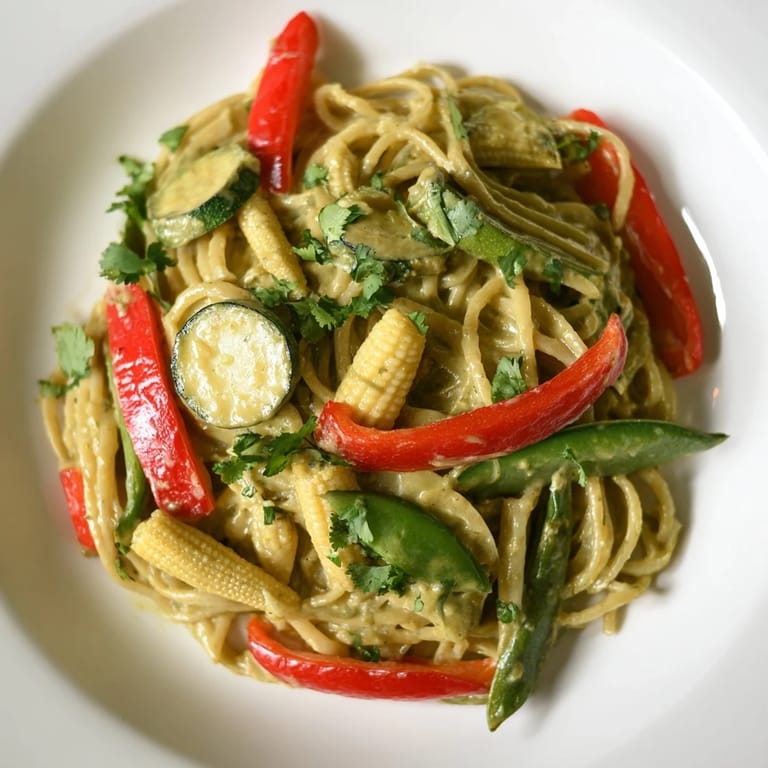
Save There's a moment, right after the pasta hits the pan and the whole thing comes together, when the aroma wraps around you and you realize you've created something that tastes like you traveled somewhere without leaving your kitchen. That's when you know this recipe is going into regular rotation.
Why This Fusion Works
Pasta and curry shouldn't work on paper, but they do because coconut milk is naturally creamy like a good sauce, and it cradles pasta the way butter or cream would. The vegetables add texture and prevent the dish from feeling one-note, while the lime and cilantro keep everything from becoming too heavy. It's bold enough to feel special on a Wednesday night, but simple enough that you're not standing at the stove for hours.
Customizing Your Bowl
This recipe thrives on flexibility, which is part of why I keep making it. Swap in whatever vegetables you have on hand—broccoli gets wonderfully tender, carrots add a subtle sweetness, and mushrooms give you an earthier angle. If you want protein, a handful of shrimp, chunks of tofu, or sliced chicken all disappear into the sauce beautifully and make the dish feel more substantial.
Spice Level and Storage
The curry paste is your dial for heat, so taste before you commit to the full 3 tablespoons if you're new to this dish. Leftovers keep well in the fridge for three days and actually taste better the next day once all the flavors have gotten to know each other, though the vegetables will be softer than they were fresh off the stove.
- Start with 2 tablespoons of curry paste if you're sensitive to heat, then add more if you want to turn up the warmth.
- If you have leftover sauce or pasta, store them separately so the noodles don't keep softening in the liquid.
- This dish pairs beautifully with a cold glass of Riesling or even a light beer if wine isn't your thing.
 Save
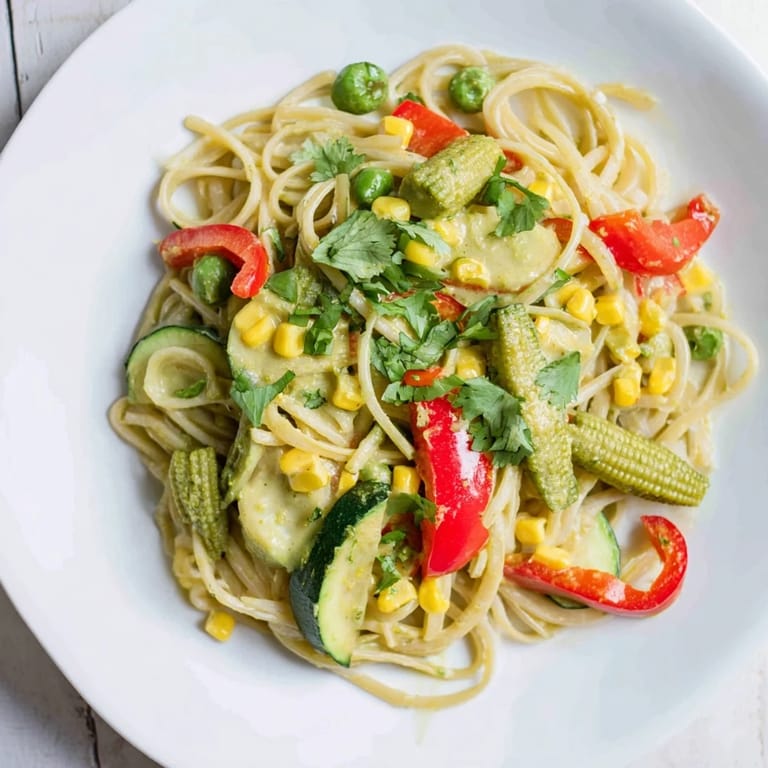
Save This is the kind of dish that reminds you why cooking at home is worth the small effort—something unexpected and delicious that tastes like it took way more time than it actually did. Make it once, and it'll become a regular in your kitchen.
Recipe FAQ
- → What pasta types work best for this dish?
Linguine or spaghetti work well by holding the sauce effectively, but feel free to use your favorite long pasta.
- → Can I make this dish vegan?
Yes, ensure the green curry paste contains no fish sauce or shrimp paste. Use plant-based alternatives for any optional protein additions.
- → How can I adjust the spice level?
Modify the amount of green curry paste or add sliced red chili according to your preferred heat tolerance.
- → What vegetables are recommended for this meal?
Bell pepper, zucchini, snap peas, baby corn, and spring onions provide a crisp and colorful mix, but you can substitute others like broccoli or carrots.
- → How do I enhance the flavor of the sauce?
Freshly grated ginger, lime juice, and chopped cilantro added at the end enhance brightness and balance the creamy coconut milk base.