 Save
Save My friend Sarah came home from a sushi restaurant absolutely obsessed with the textures and flavors she'd just experienced, but frustrated that it cost thirty dollars for one roll. That night, standing in her kitchen with leftover salmon in the fridge, we wondered aloud: what if we just baked all of it together? No rolling, no precision required, just layers of everything that makes sushi magical. That experiment became this casserole, and honestly, it tastes even better than what she paid for because it's imperfect and ours.
I made this for a dinner party last winter when my oven was already running hot for another dish, and having something that could share the space felt like winning at meal planning. The smell of baking salmon mixed with the nuttiness of toasted sesame somehow made the whole kitchen feel intentional and special, even though I'd thrown it together with whatever avocados the grocery store had left. My partner came home early and ate a slice straight from the dish with a fork, which I think says everything.
Ingredients
- Sushi rice (2 cups): The foundation that deserves respect; rinse it until the water runs clear so it's fluffy, not gluey, and the seasoning actually sticks to each grain.
- Water (2½ cups) and rice vinegar (2 tablespoons): This ratio is non-negotiable for perfectly tender rice that won't turn into mush when baked.
- Sugar (1 tablespoon) and salt (1 teaspoon): The seasoning balance that makes the rice taste alive rather than bland.
- Salmon fillet (400 g): Use something fresh enough that you'd eat it raw; the gentle baking keeps it moist and flaky instead of tough.
- Soy sauce and sesame oil: These two create an umami-forward crust on the salmon that's addictive before the casserole even hits the oven.
- Cream cheese (100 g) and Kewpie mayo (2 tablespoons): The Kewpie makes a real difference; it's silkier and slightly sweet, binding everything with elegance.
- Sriracha (1 tablespoon): Optional but I add it every time for a whisper of heat that wakes up your mouth without overwhelming the fish.
- Avocados (2): Add these only at the end so they stay creamy and don't oxidize into gray sadness.
- Nori (3 sheets): Toast it briefly over a flame if you have time; it smells incredible and tastes even better.
- Sesame seeds (1 tablespoon) and spring onions: These finish the dish with textural contrast and a sharp, fresh bite.
Tired of Takeout? 🥡
Get 10 meals you can make faster than delivery arrives. Seriously.
One email. No spam. Unsubscribe anytime.
Instructions
- Cook the rice right:
- Rinse the sushi rice under cold water, stirring with your fingers until the water runs completely clear; this removes the starch that would make it gluey. Combine with water in a saucepan, bring to a boil, cover, and simmer on low for exactly 15 minutes, then let it sit covered for 10 minutes without peeking.
- Season while it's warm:
- Mix rice vinegar, sugar, and salt in a small bowl until the sugar dissolves, then fold this into the hot rice with a fork, being gentle so you don't mash the grains. Spread the seasoned rice evenly into your lightly greased baking dish, pressing it down gently so it forms an even base.
- Prepare the salmon:
- While the rice cooks, place your salmon on a parchment-lined tray, brush it with soy sauce and sesame oil, and season with black pepper. Bake at 400°F for 12 to 15 minutes until it flakes easily with a fork; the salmon should be cooked through but still tender, not dry.
- Make the creamy binding:
- While the salmon cooks, combine softened cream cheese, mayonnaise, sriracha if using, and lemon juice in a bowl, stirring until completely smooth. Once the salmon is cooked, flake it with a fork right on the tray, then fold it gently into the creamy mixture.
- Assemble and bake:
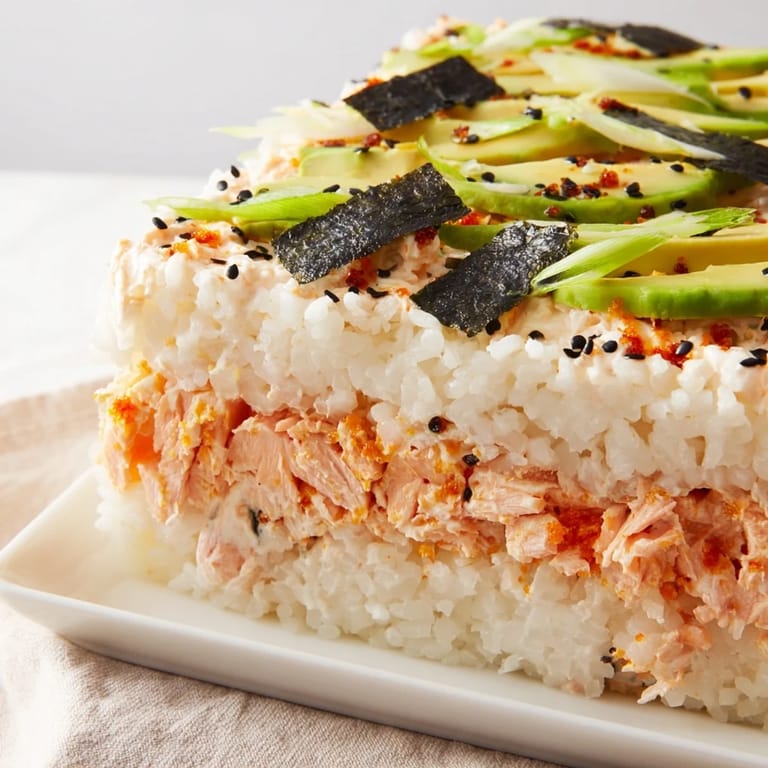
- Spread the salmon mixture evenly over the rice layer, then slide the casserole into the oven for 10 minutes at 400°F until the edges are warm and the top is just beginning to turn golden. You'll know it's ready when you can smell the sesame oil getting fragrant.
- Finish with fresh toppings:
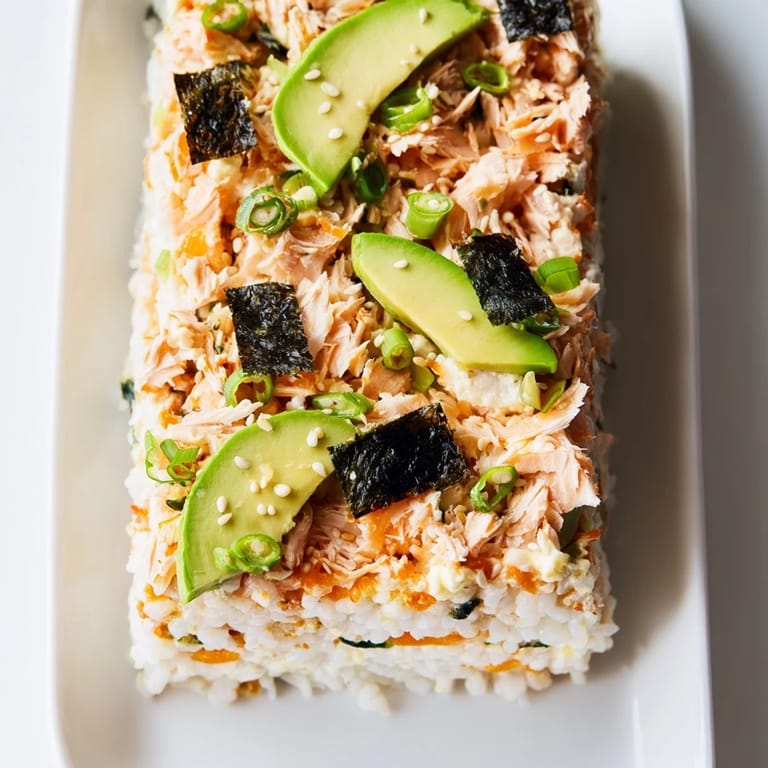
- Pull it from the oven and immediately layer on the sliced avocado, nori squares, toasted sesame seeds, and spring onions; the heat from the casserole will warm everything without cooking away the freshness. Slice and serve warm with soy sauce, pickled ginger, and wasabi alongside.
 Save
Save The first time I served this, my brother-in-law, who's a bit of a sushi purist, took a second slice without asking for permission. That quiet moment of him just eating felt like the whole dish had proven itself, like we'd cracked some kind of code between convenience and authenticity.
Why This Works as a Casserole
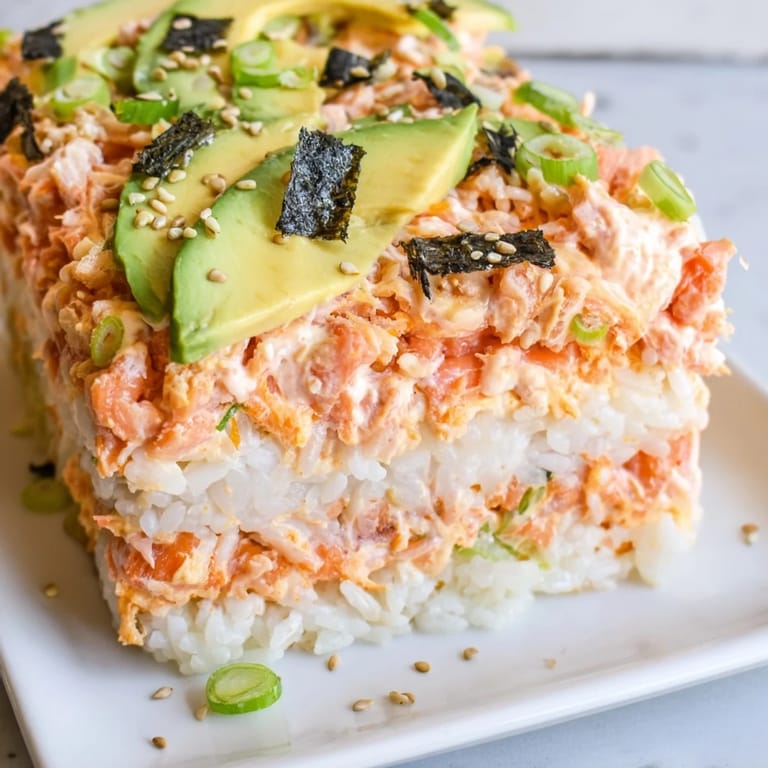
Traditional sushi demands precision and patience, which is beautiful but also intimidating for a weeknight dinner. Baking it all together in layers removes the skill barrier while keeping every element that makes sushi craveable: the umami-rich seasoned rice, the clean protein, the textural contrast of crisp nori and creamy avocado. The heat brings everything into harmony without drying anything out, because the cream cheese and mayo create a protective layer that keeps the salmon moist while the casserole warms through.
Substitutions That Actually Work
If salmon isn't in your budget or preference, canned tuna works beautifully, especially if you drain it well and mix it with the cream cheese layer; cooked crab meat is more luxurious if you're feeling indulgent, and shrimp gets slightly sweet and tender when baked in this creamy environment. I've even stretched it with roasted chickpeas for friends who don't eat fish, and the nori and avocado make it feel like sushi anyway. The beautiful thing about this dish is that it's forgiving with whatever protein you choose.
Make It Your Own
The first time you make this, follow the recipe as written so you understand how the layers work together. After that, you're free to customize it based on what's in your kitchen and what your mouth is craving that day. Some nights I add panko breadcrumbs to the top for extra crunch, other times I drizzle spicy mayo over the avocado at the very end, and once I scattered some crispy fried onions across the top and it was somehow perfect.
- Try cucumber ribbons instead of avocado, or alongside it, for a lighter summer version.
- Add a thin layer of spicy mayo mixed with sriracha before spreading the salmon mixture for concentrated heat in every bite.
- Keep pickled ginger, wasabi, and extra soy sauce tableside so everyone can adjust the flavor to their preference.
 Save
Save This casserole became my go-to when I needed something that felt restaurant-quality but didn't require me to be a sushi chef or spend my evening wrestling with rice paper. It's proof that some of the best dishes aren't the ones that follow tradition exactly, but the ones that honor the spirit of something while making it genuinely yours.
Recipe FAQ
- → How do you prepare the rice layer for this dish?
Rinse the rice until water is clear, then cook with water until tender. Mix in rice vinegar, sugar, and salt to season before spreading in the baking dish.
- → What is the best way to cook the salmon?
Brush salmon fillet with soy sauce, sesame oil, and black pepper, then bake until just cooked through. Flake it gently for layering.
- → Can other seafood be used instead of salmon?
Yes, alternatives like cooked crab meat, canned tuna, or cooked shrimp work well and can be substituted easily.
- → How should the creamy layer be prepared?
Combine softened cream cheese, mayonnaise, sriracha, and lemon juice until smooth, then fold in the flaked salmon to create a rich topping.
- → What toppings enhance the final dish?
Sliced avocado, roasted nori squares, toasted sesame seeds, and thinly sliced spring onions add texture and fresh flavors.