 Save
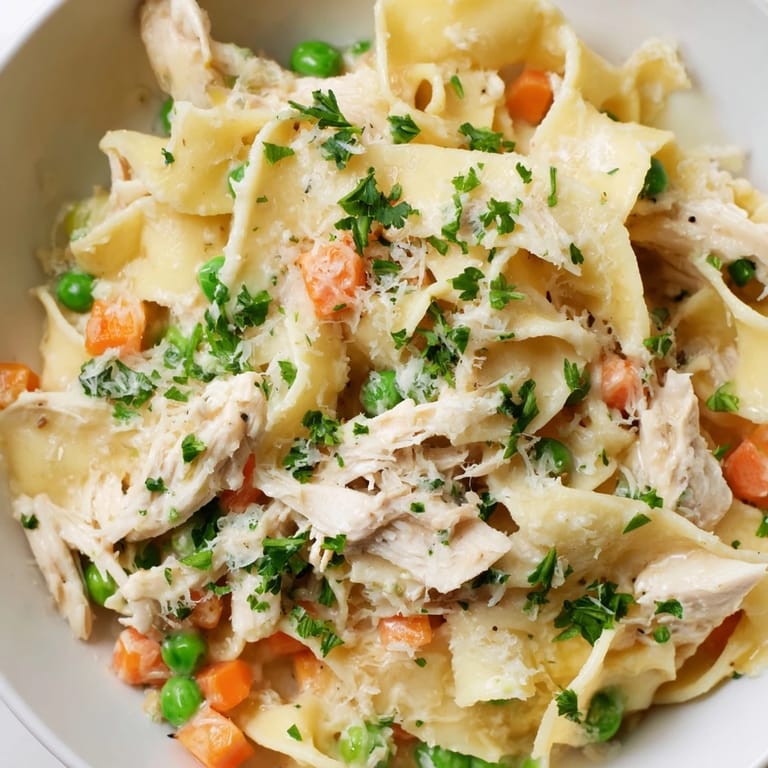
Save My daughter burst through the door one April afternoon and announced she wanted "something cozy but not heavy." I stared into the fridge, spotted leftover chicken and a bag of egg noodles, and this skillet was born. The peas were still frozen, the carrots needed using, and somehow it all came together in one pan while we talked about her day. It tasted like spring—bright, creamy, and exactly what we needed without feeling like winter was still hanging on.
I made this again the following week for my neighbor who had just moved in, and she called it "hug in a bowl." We sat on her half-unpacked porch with mismatched chairs, and she scraped her bowl clean. She asked for the recipe before I even stood up to leave. That is when I knew this one was a keeper—not fancy, not fussy, just the kind of food that makes people feel welcomed and cared for.
Ingredients
- Cooked, shredded chicken: Rotisserie chicken is your best friend here, already seasoned and tender, saving you at least twenty minutes of work.
- Wide egg noodles: Their soft, slightly chewy texture soaks up the sauce beautifully and gives the dish that nostalgic, homey feel.
- Frozen peas: Do not bother with fresh unless you are shelling them yourself, frozen peas are sweeter and cook in seconds.
- Diced carrots: Cut them small so they soften quickly and add little bursts of natural sweetness throughout.
- Yellow onion: Finely chopped onion melts into the sauce and builds a savory base without overpowering the delicate spring vibe.
- Garlic: Just two cloves, minced and barely cooked, release that warm fragrance that makes everyone wander into the kitchen.
- Unsalted butter: The foundation of the sauce, giving it richness and a silky start before the flour goes in.
- All-purpose flour: This thickens the sauce just enough to coat the noodles without turning it into gravy.
- Low-sodium chicken broth: You control the salt this way, and it keeps the sauce from tasting like a bouillon cube.
- Whole milk or half-and-half: Half-and-half makes it a little more luxurious, but whole milk works perfectly if that is what you have open.
- Grated Parmesan cheese: It melts right in and adds a nutty, salty depth that ties everything together.
- Dried thyme: A subtle earthy note that whispers spring without shouting herb garden.
- Black pepper and salt: Season to your taste, but start light since the Parmesan and broth already bring some saltiness.
- Fresh parsley: Optional, but that bright green pop makes the whole dish look and taste more alive.
Tired of Takeout? 🥡
Get 10 meals you can make faster than delivery arrives. Seriously.
One email. No spam. Unsubscribe anytime.
Instructions
- Boil the noodles:
- Cook the egg noodles in salted water until they are just al dente, then drain and set them aside. They will finish cooking in the skillet, so do not let them get mushy now.
- Soften the vegetables:
- Melt butter in a large skillet over medium heat, then add the onion and carrots and let them cook until the onion turns translucent and the carrots start to soften, about four or five minutes. Stir in the garlic and let it bloom for just thirty seconds before it starts to brown.
- Build the roux:
- Sprinkle the flour over the vegetables and stir constantly for a full minute so it loses that raw taste. This step is what keeps your sauce smooth instead of lumpy.
- Create the sauce:
- Slowly whisk in the chicken broth and milk, then add the thyme, salt, and pepper. Bring it to a gentle simmer and let it cook for three to four minutes, stirring often, until it thickens enough to coat the back of a spoon.
- Add the chicken and peas:
- Stir in the frozen peas, shredded chicken, and Parmesan cheese, letting everything warm through and the cheese melt into the sauce. This only takes about two minutes.
- Fold in the noodles:
- Gently toss the cooked noodles into the skillet, turning them until every strand is coated in that creamy sauce. If it looks a little thick, add a splash of broth or pasta water to loosen it up.
- Finish and serve:
- Remove the skillet from the heat, taste for seasoning, and sprinkle with fresh parsley if you have it. Serve warm, straight from the pan if you are feeling casual.
 Save
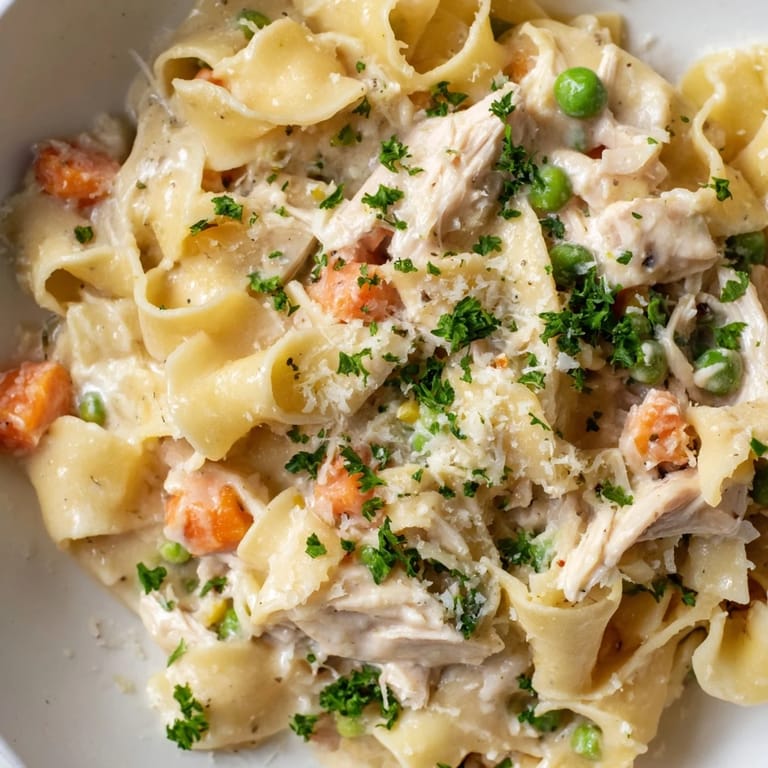
Save One evening, my son set the table without being asked, something that almost never happens. He said it smelled too good to eat on the couch. We sat down together, no phones, no distractions, and talked about nothing important while we ate. That is when I realized this dish was not just easy—it was the kind of meal that made space for connection, the kind that pulled us back to the table without any effort at all.
How to Store and Reheat
Let the skillet cool completely, then transfer leftovers to an airtight container and refrigerate for up to three days. When you reheat it, add a splash of broth or milk to loosen the sauce, since the noodles will have absorbed a lot of it overnight. I usually warm it gently in a covered skillet over low heat, stirring occasionally, until it is heated through. The microwave works too, but stir halfway through and add a little liquid to keep it creamy.
Ways to Make It Your Own
This recipe is flexible enough to handle whatever you have on hand or whatever your family will actually eat. Swap the peas for blanched asparagus tips or baby spinach if you want something a little more grown-up. A squeeze of lemon juice at the end brightens everything up, and a pinch of nutmeg in the sauce adds an unexpected warmth that people notice but cannot quite name. If someone in your house does not like chicken, shredded turkey or even white beans work beautifully instead.
What to Serve Alongside
This skillet is hearty enough to stand alone, but a simple green salad with a lemon vinaigrette balances the creaminess perfectly. I also love serving it with crusty bread for soaking up any extra sauce left in the bowl. If you want to make it feel a little more special, roasted cherry tomatoes on the side add a sweet, tangy pop that complements the mild flavors.
- A crisp white wine like Sauvignon Blanc or Pinot Grigio pairs beautifully if you are pouring drinks.
- Garlic bread is always a crowd-pleaser, especially with kids who refuse vegetables.
- For a lighter option, steamed green beans with a little butter and salt round out the plate without adding heaviness.
 Save
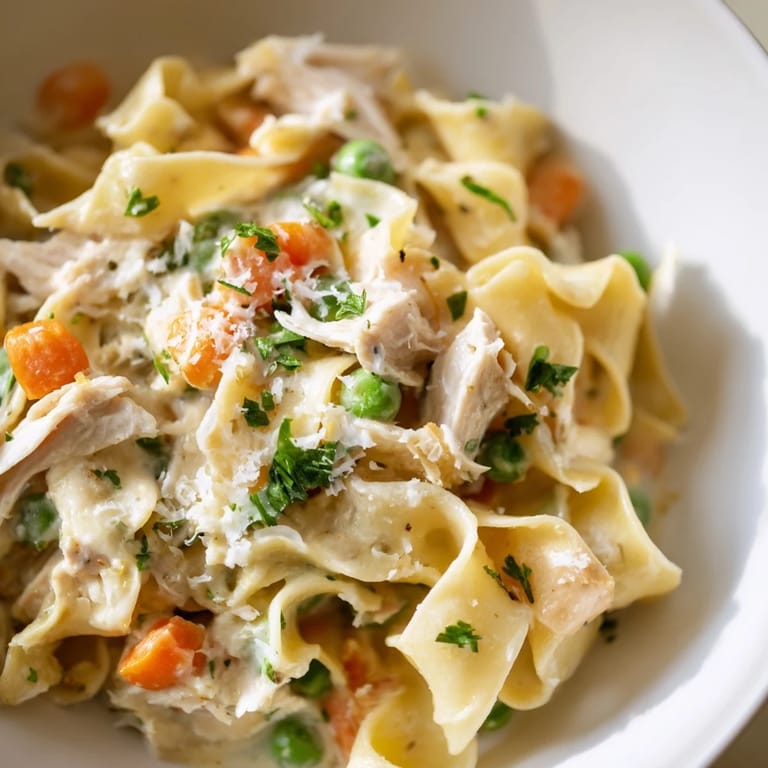
Save This is the kind of recipe I turn to when I need something reliable, something that feels like care without requiring much from me. It has become one of those meals that signals comfort in our house, and I hope it does the same in yours.
Recipe FAQ
- → Can I use fresh chicken instead of rotisserie?
Yes, you can poach or bake chicken breasts and shred them. Cook boneless breasts at 375°F for 18-20 minutes, then shred. This gives you control over seasoning and cooking method while achieving the same tender result.
- → What if I don't have half-and-half?
Substitute with whole milk for a lighter version, or use a combination of milk and heavy cream for richer results. You can also use sour cream, though add it after removing from heat to prevent curdling.
- → How do I prevent the sauce from becoming too thick?
Add the broth and milk gradually while whisking to avoid lumps. If the sauce thickens too much, thin it with additional broth or milk, a splash at a time, stirring until you reach desired consistency.
- → What spring vegetables work best as substitutes?
Asparagus, baby spinach, snap peas, and fresh green beans are excellent choices. Add hardy vegetables like asparagus early in cooking; add tender greens like spinach during the final minutes to preserve texture and color.
- → Can this dish be made ahead and reheated?
Yes, prepare through step 6 and refrigerate up to three days. Reheat gently over medium-low heat, adding extra broth if needed to restore creaminess. Add noodles fresh when reheating for best texture.
- → Is this suitable for freezing?
Freeze without noodles for best results—store up to two months in an airtight container. Thaw overnight in the refrigerator, reheat gently, then cook fresh noodles and combine just before serving.