 Save
Save I discovered this dish at a tiny restaurant in Lyon, watching a chef arrange vegetables in mesmerizing spirals like edible art. There was something magical about how she transformed simple vegetables into something that looked like it belonged in a gallery. I went home determined to recreate that moment, and after a few attempts and many burnt edges, I finally captured that same feeling of wonder in my own kitchen.
I made this for my sister's dinner party on a rainy Thursday evening. As I carefully arranged each vegetable slice, I thought about how cooking is really about patience and intention. When I brought it to the table, the whole room went quiet for a moment. That's when I knew I had nailed it.
Ingredients
- 1 small eggplant, thinly sliced lengthwise: Eggplant becomes silky and elegant when roasted. I learned to slice it lengthwise because it creates longer, more dramatic ribbons for the spiral
- 1 medium zucchini, thinly sliced lengthwise: This mild vegetable acts as a gentle bridge between the stronger flavors. The lengthwise cuts give you those beautiful long strands
- 1 red bell pepper, seeded and thinly sliced: Adds a pop of color and a subtle sweetness. The thin slices make it pliable enough to curve with the spiral
- 1 yellow squash, thinly sliced lengthwise: Think of this as the golden thread that ties the whole spiral together visually
- 1 small carrot, peeled and thinly sliced lengthwise: Raw slices work beautifully here for a little textural surprise, though I roast mine along with the others for consistency
- 100 g goat cheese, softened: This is your edible glue and flavor foundation. Let it come to room temperature so it spreads like silk
- 2 tbsp crème fraîche: This keeps the goat cheese spreadable and adds a subtle tang that makes everything taste more alive
- 2 tbsp fresh basil leaves, finely chopped: Fresh basil transforms this from nice to memorable. Never skip this or use dried
- 1 tbsp fresh thyme leaves: A whisper of thyme adds earthiness that grounds all those bright vegetables
- 2 tbsp olive oil: Good quality matters here. This is one of the few ingredients you really taste
- ½ tsp sea salt: Brings out the natural sweetness in the roasted vegetables
- ¼ tsp freshly ground black pepper: Freshly ground is non-negotiable for its aromatic brightness
- 1 tbsp pine nuts, lightly toasted: The final touch that adds both texture and a subtle richness. Toast them yourself if you can
- Microgreens, for garnish (optional): A handful of delicate greens adds sophistication and a peppery note if you can find them
Tired of Takeout? 🥡
Get 10 meals you can make faster than delivery arrives. Seriously.
One email. No spam. Unsubscribe anytime.
Instructions
- Set your oven and prepare:
- Heat your oven to 200°C and line a tray with parchment paper. This creates a blank canvas for your vegetables. I always preheat longer than I think necessary because a truly hot oven makes all the difference in roasting
- Season and brush the vegetables:
- Brush each slice gently with olive oil, then sprinkle with salt and pepper. The oil should be light, almost a whisper, not a heavy coat. You want the vegetables to roast, not fry
- Roast until pliable:
- Spread everything on the tray in a single layer and roast for 10 to 12 minutes. You're looking for the vegetables to soften and become flexible, like fabric you can gently manipulate. They should feel supple when you touch them. Let them cool just enough to handle
- Make your creamy base:
- While they cool, combine the softened goat cheese, crème fraîche, chopped basil, and thyme in a bowl. Stir until completely smooth. Taste it now, because this is where all your seasoning lives. Adjust with a pinch more salt if needed
- Spread the spiral foundation:
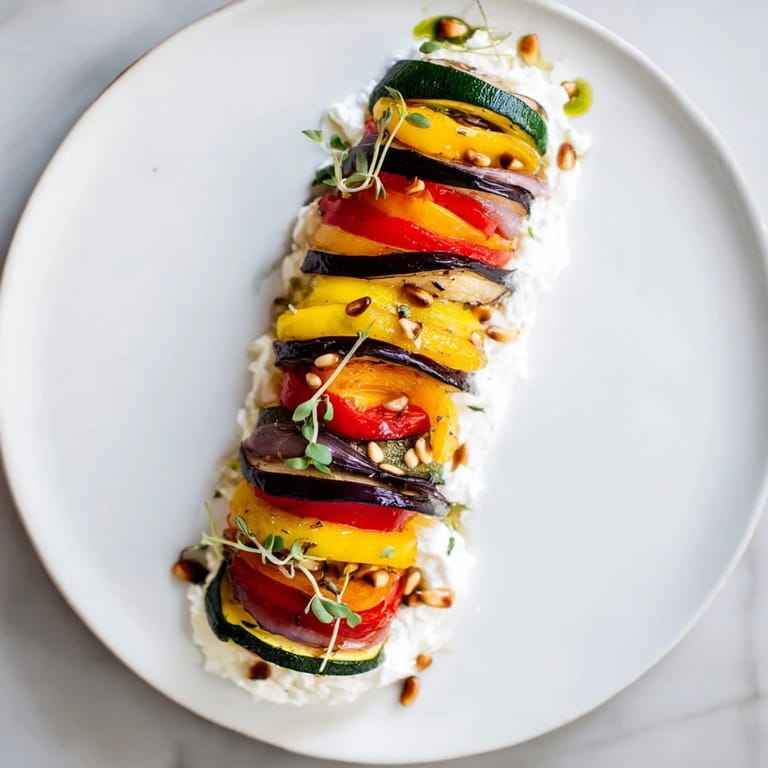
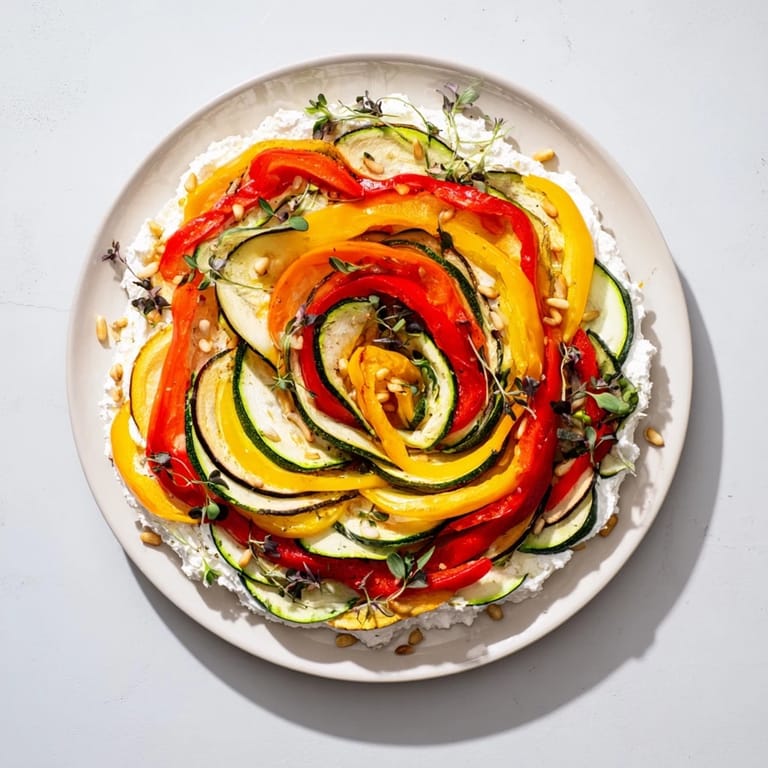
- On your serving plate, use a spatula to spread the cheese mixture in a thin, continuous spiral starting from the very center and winding outward like a nautilus shell. Don't worry about perfection. The vegetables will cover any unevenness
- Arrange your vegetable spiral:
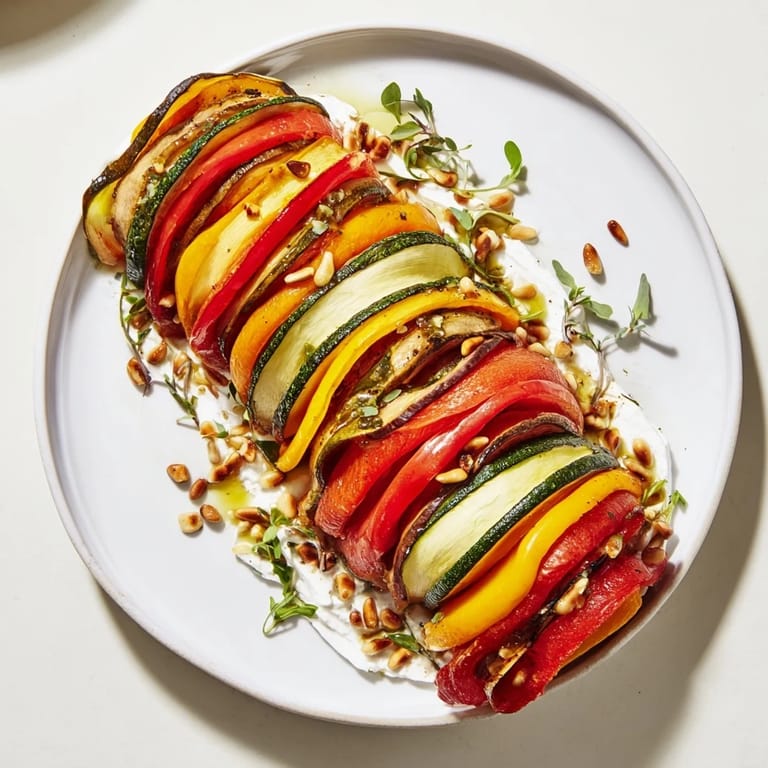
- Starting at the center, lay down your first vegetable slice overlapping slightly, then rotate to the next color, then the next, always overlapping and always moving outward. This is the meditative part. Overlap each slice by about a quarter of its width. The pattern will emerge naturally as you work. Step back occasionally to see how it looks
- Finish and serve:
- Scatter the toasted pine nuts across the spiral and add the microgreens if using. Serve at room temperature, letting the flavors settle for at least 10 minutes before cutting into it
 Save
Save I remember my mother watching me arrange that first spiral with such care, and she said, 'You're not just cooking, you're creating.' That moment changed how I think about food. It's not just about nourishment. It's about showing people you care enough to make something beautiful.
Choosing Your Vegetables
The vegetables you choose determine everything about how this dish looks and tastes. I started with the ones listed here because they're reliable and create a beautiful color gradient. But I've experimented with thinly sliced beets for a deep magenta, sweet potato for orange warmth, and even purple cabbage for drama. The rule is simple: pick vegetables that will become tender and pliable with roasting, and choose them for their colors as much as their flavors. Think about how they'll look arranged in sequence.
The Goat Cheese Matters More Than You Think
I learned this the hard way when I tried to use cold goat cheese straight from the refrigerator. It was lumpy and impossible to spread. Now I always remove it 30 minutes before cooking. The crème fraîche isn't just filler, it's essential for making the cheese spreadable and less dense. Together, they create something that's rich but not heavy, tangy but not sharp. If you want to make a vegan version, blend silken tofu with a little olive oil and nutritional yeast. It won't be the same, but it will be delicious in its own way.
Making It Your Own
Once you've made this spiral once, you'll feel confident changing it. Try adding thinly sliced roasted beets or sweet potatoes for extra color and earthiness. A drizzle of aged balsamic vinegar around the edge adds sophistication. I've even scattered crispy prosciutto around the base for non-vegetarian versions. The structure stays the same, but the ingredients can dance.
- Serve this with crusty bread or water crackers to let people use them as edible spoons for the cheese
- Make this up to 4 hours ahead, cover it loosely, and bring it to room temperature before serving. The flavors actually improve as they meld
- If your plate is dark, the spiral will look even more striking. If it's white, the colors will feel fresh and clean. Think about your table as you plate it
 Save
Save This dish reminds me why I love cooking. It takes simple ingredients and asks you to slow down, pay attention, and create something beautiful. That's the real magic.
Recipe FAQ
- → What vegetables are used in the snail shell spiral?
Eggplant, zucchini, red bell pepper, yellow squash, and carrot are thinly sliced and roasted to create the colorful spiral.
- → How do you achieve the spiral shape with the vegetables?
Vegetable slices are arranged overlapping each other in a continuous circular pattern on a bed of herbed goat cheese mixture, starting from the center and winding outward.
- → Can the dish be served warm or cold?
It is best enjoyed at room temperature, allowing the flavors of the roasted vegetables and creamy cheese to fully develop.
- → What ingredients provide the creamy texture?
A blend of softened goat cheese and crème fraîche, combined with fresh basil and thyme, creates a smooth and flavorful base for the spiral.
- → Are there any suggested ingredient substitutions?
For a vegan version, plant-based cheese spreads can replace the goat cheese and crème fraîche. Roasted beets or sweet potatoes offer vibrant alternatives for additional color.