 Save
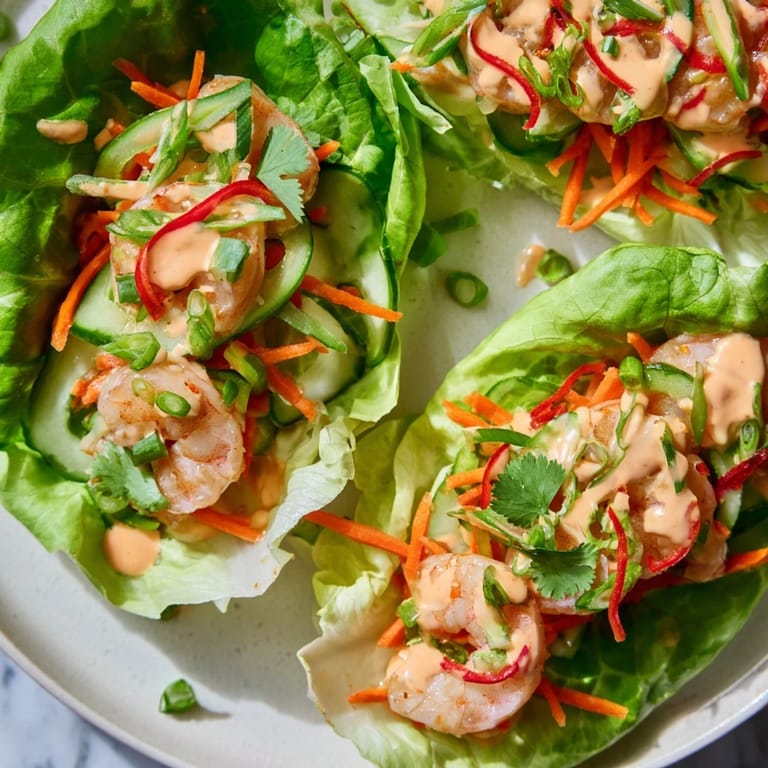
Save There's something almost magical about the moment a cold, crisp lettuce leaf meets warm spiced shrimp straight from the pan. I discovered these lettuce cups on a humid summer afternoon when I was determined to make something that didn't require heating up the kitchen, and what I ended up with became my go-to when friends drop by unexpectedly. The lettuce itself becomes edible vessels for flavor, and somehow that simple fact makes the whole experience feel more playful than a traditional plated dish. You wrap, you dip, you eat with your hands, and suddenly dinner feels less formal and more like an adventure.
I'll never forget watching my nephew's face light up when he realized he could eat the plate itself, and from that moment on, these have been his request at every gathering. He started building them faster than I could refill the shrimp, and somehow that childlike enthusiasm reminded me that the best recipes are the ones that make people feel like they're in on a secret.
Ingredients
- Medium shrimp, 500g peeled and deveined: The size matters here—medium shrimp stay tender and cook evenly in just minutes, while larger ones can turn rubbery if you're not watching carefully.
- Olive oil, 1 tbsp: This prevents sticking and carries flavor into the shrimp as they cook over high heat.
- Garlic clove, minced, 1: One clove is enough to perfume the whole batch without overwhelming the delicate seafood taste.
- Fresh ginger, grated, 1 tsp: Ginger adds warmth and a subtle bite that makes everything taste more interesting and balanced.
- Sriracha or chili sauce, 1 tsp: This is your backbone for heat, though you can always adjust based on who's eating.
- Salt and black pepper: These aren't afterthoughts—they actually brighten the sriracha and ginger rather than just seasoning the shrimp.
- Butter or iceberg lettuce leaves: Butter lettuce is sturdier and softer; iceberg is crunchier and more neutral, so choose based on your mood.
- Carrot, 1 medium julienned: The natural sweetness offers a gentle counterpoint to the spiced shrimp and tangy sauce.
- Cucumber, 1 small julienned: Cucumber brings coolness and keeps every bite light and hydrating.
- Red bell pepper, 1/2 thinly sliced: This adds color, a hint of sweetness, and a satisfying crunch that holds up through assembly.
- Green onions, 2 thinly sliced: They add an oniony sharpness that cuts through richness and makes the whole thing feel fresh.
- Fresh cilantro, chopped: Not mandatory, but it elevates the whole dish with an herbaceous brightness that feels intentional.
- Mayonnaise, 2 tbsp: The mayo base creates a creamy anchor for the sauce without being heavy.
- Lime juice, 1 tbsp: This is what makes the sauce sing—the acidity balances heat and richness in equal measure.
- Sriracha, 1 tsp: Yes, more sriracha in the sauce for layered heat that builds as you dip.
- Honey, 1 tsp: Just enough sweetness to round out the sharp edges without making it dessert-like.
- Soy sauce or tamari, 1 tsp: Umami depth that ties all the flavors together; tamari keeps it gluten-free if that matters to your table.
Tired of Takeout? 🥡
Get 10 meals you can make faster than delivery arrives. Seriously.
One email. No spam. Unsubscribe anytime.
Instructions
- Toss and coat the shrimp:
- In a bowl, combine your peeled shrimp with olive oil, minced garlic, grated ginger, sriracha, salt, and pepper. Use your hands or a spoon to make sure every shrimp gets dressed in that fragrant coating—this is where half the flavor happens before they even touch heat.
- Cook the shrimp with intention:
- Heat a large skillet over medium-high heat until it's hot enough that a drop of water sizzles immediately. Add the shrimp in a single layer and let them sit for 2-3 minutes without moving them around—this develops a light golden surface. Flip and cook another 2-3 minutes until they're completely pink and opaque throughout.
- Make the sauce while everything's warm:
- While shrimp rest on a plate, whisk together mayonnaise, lime juice, sriracha, honey, and soy sauce in a small bowl until it's smooth and cohesive. The warmth of your kitchen will actually help it blend better than if you made it cold.
- Build each cup with care:
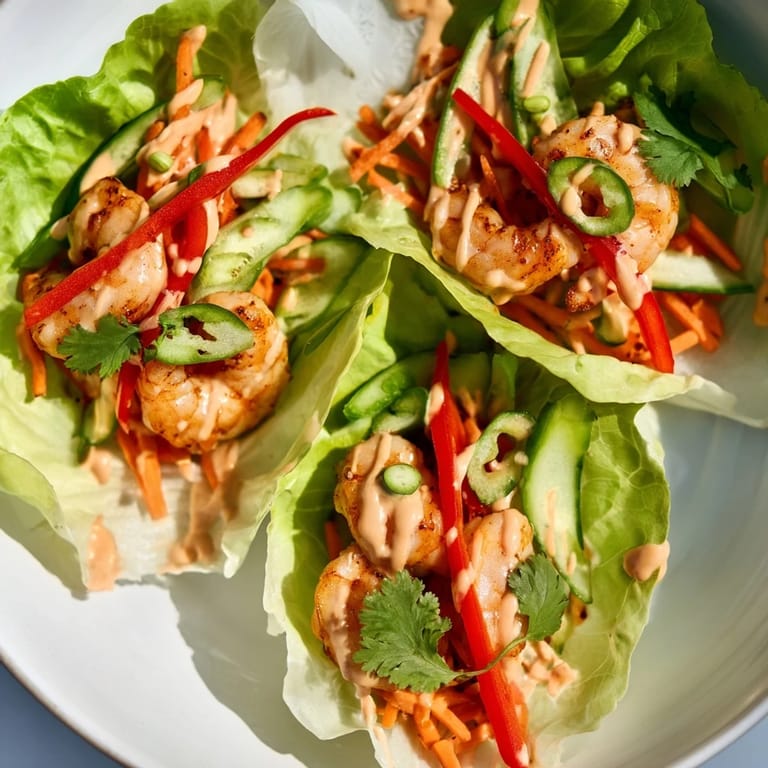
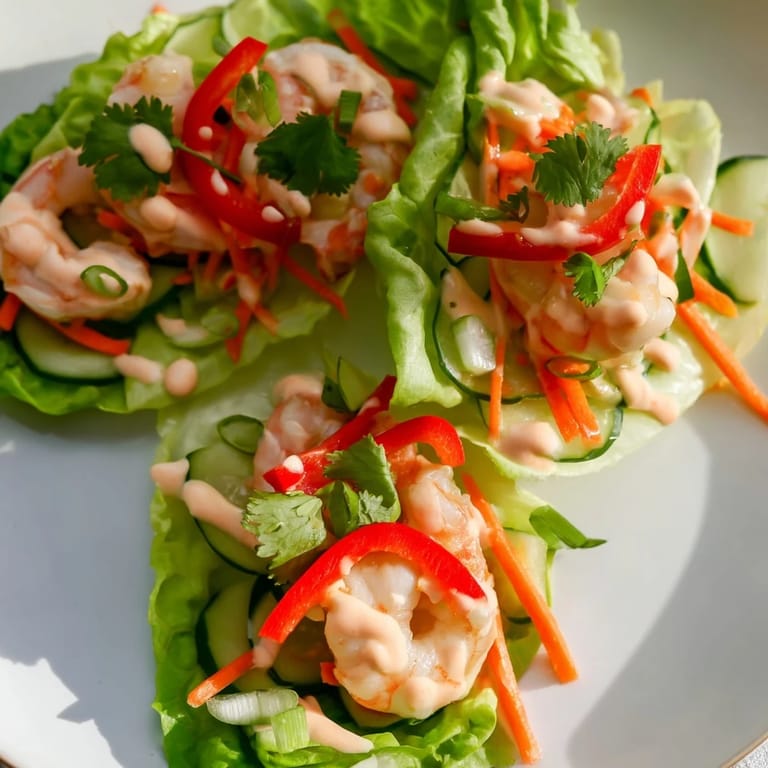
- Lay out lettuce leaves on a serving platter, and let people fill them however they want, or assemble them yourself by placing a few shrimp pieces in each leaf, then layering julienned vegetables on top. This is the fun part where textures come together.
- Finish with sauce and garnish:
- Drizzle sauce across each assembled cup or serve it on the side for dipping—people often have strong opinions about sauce ratios, so giving them control is never a bad move. Scatter cilantro on top just before serving.
- Serve immediately:
- Cold lettuce and warm shrimp are the whole point here, so don't let these sit around once they're assembled or the lettuce will wilt and lose its crispness.
 Save
Save One evening I made these for a dinner party where half the guests were avoiding carbs, and I watched the relief wash over their faces when they realized they could eat something that felt indulgent and satisfying without the bread or rice. That moment when food solves a real problem instead of creating new ones feels like the opposite of cooking stress.
The Secret of Temperature Contrast
The magic of lettuce cups lives in that moment when warm shrimp meets cold, snappy lettuce, and your mouth gets to experience two textures at once. I learned this by accident when I made these ahead and let them sit too long—the lettuce went limp and the whole experience felt flatter, less interesting. Now I time everything so the shrimp is still steaming when it hits the leaf, and suddenly the dish feels alive in a way that reheated versions simply cannot match.
Why This Sauce Matters
That lime-forward sriracha mayo isn't just a condiment; it's what transforms this from plain protein and vegetables into something memorable and crave-worthy. I spent weeks trying different ratios before I landed on one where the acid cuts through the richness without making it sour, and the honey just gently rounds everything out. The soy sauce adds an umami undertone that makes you want another bite before you've even finished the first one.
Variations That Actually Work
The beauty of this format is that shrimp is just the beginning—I've made these with grilled chicken, crispy tofu, and even seared scallops when I was feeling fancy. The sauce and vegetable combination stays consistent, but the protein becomes whatever you're in the mood for or whatever your kitchen already has. The lettuce cup concept is flexible enough to adapt to almost any filling while staying true to the original spirit of fresh, cool, crunchy simplicity.
- Substitute shrimp with grilled chicken breast, crispy baked tofu, seared scallops, or even leftover rotisserie chicken for variety.
- Swap vegetables based on season—julienned daikon, snap peas, or shredded cabbage all work beautifully.
- Adjust the sauce heat level by adding more or less sriracha, or switch to a different chili paste entirely if you prefer a different flavor profile.
 Save
Save These lettuce cups have become my answer to the question of what to make when you want something that feels special but doesn't demand hours in the kitchen. They're proof that simple ingredients, a little heat, and good timing can create something genuinely worth gathering around.
Recipe FAQ
- → What type of shrimp works best for this dish?
Medium-sized peeled and deveined shrimp are ideal for even cooking and a tender texture.
- → Can I prepare the sauce ahead of time?
Yes, the tangy sauce can be mixed in advance and stored refrigerated for up to two days.
- → What lettuce varieties are recommended?
Butter lettuce or iceberg lettuce leaves work best for wrapping due to their size and crispness.
- → How can I add extra crunch to the cups?
Adding chopped peanuts or cashews provides a pleasant crunch and nutty flavor.
- → Are there alternative proteins to shrimp for this preparation?
Grilled chicken, tofu, or tempeh can replace shrimp for different tastes and dietary preferences.