 Save
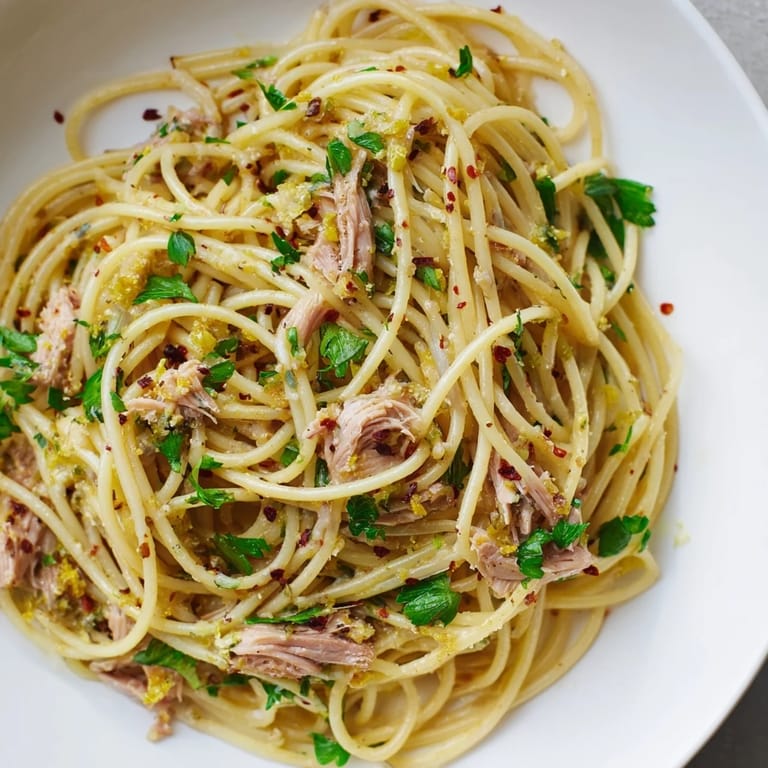
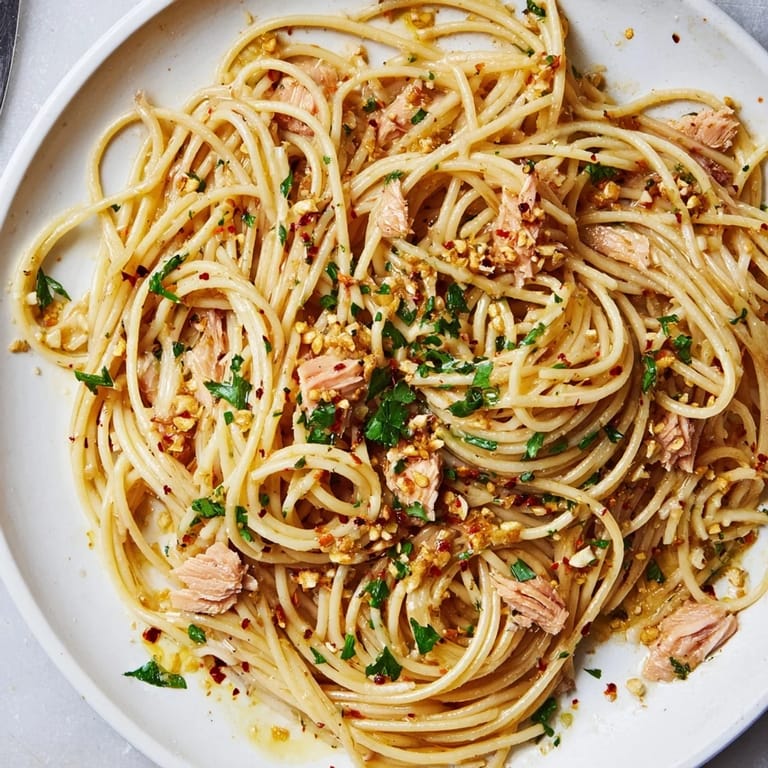
Save I threw this together on a Tuesday night when the fridge was nearly empty and I was too tired to think. All I had was a box of spaghetti, a can of tuna, and half a lemon rolling around in the crisper. Twenty minutes later, I was twirling fork after fork of bright, garlicky pasta that tasted like I'd actually tried. It's been my go-to ever since.
The first time I made this for my roommate, she wandered into the kitchen following the smell of garlic and lemon. She stood there with her bowl, quiet for a moment, then said it reminded her of summers in Sicily. I'd never been, but I understood what she meant.
Ingredients
- Spaghetti: Any long pasta works, but spaghetti holds the sauce without clumping. Don't skip salting the water, it's your only chance to season the noodles themselves.
- Olive oil: This is your base, so use something you'd happily dip bread into. It carries the garlic and coats every strand.
- Garlic: Slice it thin so it softens and sweetens instead of burning. If it starts to brown too fast, pull the pan off the heat.
- Lemon: Zest first, then juice. The zest gives you fragrance, the juice gives you brightness. Together they wake the whole dish up.
- Tuna in olive oil: Don't use the water-packed kind. The oil adds richness and flavor that water just can't.
- Red pepper flakes: Just a pinch brings warmth without heat. I forget them half the time and it's still good.
- Fresh parsley: It's not just garnish. The green, grassy flavor balances the richness and makes everything taste fresher.
- Pasta water: This starchy liquid is what turns everything into a cohesive sauce instead of dry noodles with stuff on top.
Tired of Takeout? 🥡
Get 10 meals you can make faster than delivery arrives. Seriously.
One email. No spam. Unsubscribe anytime.
Instructions
- Boil the pasta:
- Get your water rolling and salt it like the sea. Cook the spaghetti until it still has a little bite, then scoop out a mugful of that starchy water before you drain anything.
- Toast the garlic:
- Warm the olive oil over medium heat and add your garlic slices. Let them sizzle gently until they smell sweet and nutty, about a minute or two.
- Add the tuna and lemon:
- Flake in the tuna, then scatter in the lemon zest, juice, and pepper flakes if you're using them. Stir it all together and let it warm through for a couple of minutes.
- Toss with pasta:
- Add the drained spaghetti right into the skillet and toss everything together. Pour in the reserved pasta water a splash at a time until the sauce clings to every strand.
- Finish and serve:
- Stir in the parsley, taste for salt and pepper, then plate it up. A little extra parsley on top and a lemon wedge on the side make it feel complete.
 Save
Save One night I made this after a long shift and ate it standing at the counter in the dark. The lemon hit first, then the salt, then the warmth of the garlic. It wasn't fancy, but it felt like care. That's when I realized some recipes don't need an occasion.
What to Do with Leftovers
This reheats better than you'd think. Add a splash of water or olive oil to a pan and warm it gently over low heat, stirring often. The pasta will loosen back up and taste almost as bright as it did fresh. I've eaten it cold straight from the fridge too, and it's honestly not bad.
Making It Your Own
I've tossed in halved cherry tomatoes for sweetness, capers for brine, and even a handful of arugula at the end for pepperiness. Sometimes I use anchovies instead of tuna for a deeper, saltier flavor. It's one of those recipes that bends to whatever you have without breaking.
Pairing and Serving Ideas
A crisp white wine makes this feel like a real dinner, something like Pinot Grigio or Sauvignon Blanc. If you're skipping alcohol, sparkling water with a twist of lemon does the same job. A simple green salad on the side or some crusty bread to soak up any leftover sauce rounds it out.
- Serve it in wide, shallow bowls so you can twirl the pasta easily.
- Don't skip the lemon wedges, a fresh squeeze at the table brightens every bite.
- If you're feeding kids, go easy on the red pepper flakes or leave them out entirely.
 Save
Save This is the kind of recipe I come back to when I need something easy that still feels like cooking. It doesn't ask much of you, but it gives back every time.
Recipe FAQ
- → What type of tuna is best for this dish?
Use high-quality tuna packed in olive oil for the best flavor and texture.
- → Can I add extra ingredients to enrich the sauce?
Yes, capers or halved cherry tomatoes work well to add depth and freshness.
- → How is the sauce made creamy without cream?
Reserved pasta cooking water is gradually added to the tuna mixture to create a light, silky sauce.
- → What wine pairs well with this pasta?
A crisp white wine like Pinot Grigio or Sauvignon Blanc complements the lemon and tuna flavors.
- → Is crushed red pepper necessary in this pasta?
It’s optional; red pepper flakes add a gentle heat but can be omitted for a milder taste.
- → How should the garlic be cooked for best flavor?
Sauté garlic gently until fragrant but not browned, to maintain a delicate aroma and avoid bitterness.