 Save
Save I discovered Korean BBQ nachos entirely by accident one Friday night when my roommate brought home both a bag of gochujang and a box of tortilla chips in the same grocery run. We stood in the kitchen laughing about the absurd combination, but then something clicked—why not lean into it? What started as a joke became one of those dishes that somehow tastes like it was always meant to exist, marrying the best of both worlds in a way that feels both playful and genuinely delicious.
The first time I made this for a small dinner party, I was nervous about whether the flavor profile would actually work—Korean and Mexican are such different cuisines, after all. But the moment everyone tasted it, the kitchen went quiet in that way it does when food just hits right. Someone asked for the recipe before they'd even finished their plate, and that's when I knew this was a keeper.
Ingredients
- Flank or sirloin steak (300g / 10 oz), thinly sliced: This cut sears beautifully in minutes and has enough marbling to stay tender even if you slightly overcook it, which is harder to do than you'd think.
- Gochujang (2 tbsp): The soul of this dish—this Korean chili paste brings heat and umami depth that regular hot sauce can't touch, so don't skip it or substitute lightly.
- Soy sauce (1 tbsp), brown sugar (1 tbsp), sesame oil (2 tsp), and rice vinegar (1 tsp): Together these create that glossy, complex marinade that makes the beef taste restaurant-quality without any complicated technique.
- Garlic (2 cloves, minced) and fresh ginger (1 tsp, grated): These two are non-negotiable for that sharp, bright backbone that cuts through the richness of the cheese.
- Tortilla chips (200g / 7 oz, about 1 large bag): Buy thick, sturdy chips—the thin ones will get soggy before anyone can eat them, and that defeats the whole purpose of nachos.
- Mozzarella and Korean cheese (100g each / 3.5 oz each): The mozzarella melts smoothly while the Korean cheese (usually a mozzarella-cheddar blend) adds sharpness and helps the flavors feel more cohesive.
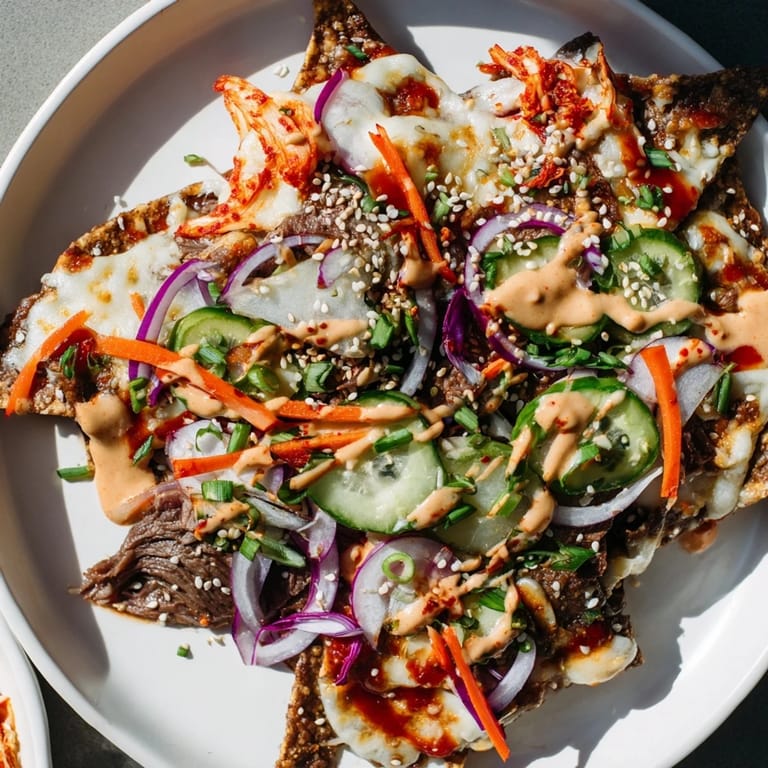
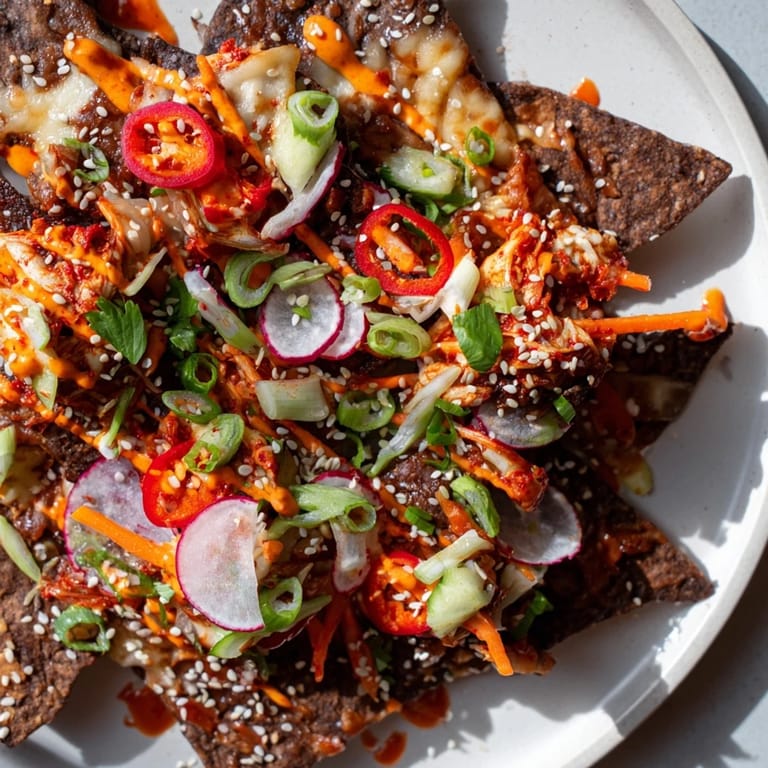
- Red onion (1 small, thinly sliced), carrot (1 small, julienned), cucumber (1/2, seeded and thinly sliced), and scallions (2, finely sliced): These raw vegetables add crunch and freshness that balances the richness, and they should go on after baking so they stay bright and crisp.
- Toasted sesame seeds (1 tbsp): Sprinkle these on at the end for nutty flavor and a professional-looking finish.
- Kimchi (2 tbsp, chopped), fresh cilantro or shiso leaves (2 tbsp, chopped), and sriracha or gochujang mayo (1 tbsp, optional): These final toppings are where the dish really sings—they add funk, herbal notes, and creamy heat all at once.
Tired of Takeout? 🥡
Get 10 meals you can make faster than delivery arrives. Seriously.
One email. No spam. Unsubscribe anytime.
Instructions
- Make the marinade and coat the beef:
- Whisk together gochujang, soy sauce, brown sugar, sesame oil, minced garlic, grated ginger, rice vinegar, and black pepper in a bowl until smooth and fragrant. The mixture should smell deep and complex, not just spicy. Add your sliced beef and turn it gently to coat everything evenly, then let it sit for at least 20 minutes—this is where the flavor magic happens.
- Get your oven ready and sear the meat:
- While the beef marinates, preheat your oven to 200°C (400°F). Heat a large skillet over medium-high heat until it's really hot (the pan should shimmer), then add the marinated beef in a single layer, working in batches if needed. Don't crowd the pan or it'll steam instead of sear. Cook for 2–3 minutes per side until the meat is deeply browned and cooked through—you want that caramelized crust.
- Layer the nachos and bake:
- Line a baking tray with parchment paper and spread your tortilla chips in an even layer. Sprinkle half of the combined cheeses over the chips, scatter the seared beef on top, then finish with the remaining cheese. Slide this into the oven for 6–8 minutes until the cheese is bubbling at the edges and just starting to turn golden.
- Top and serve:
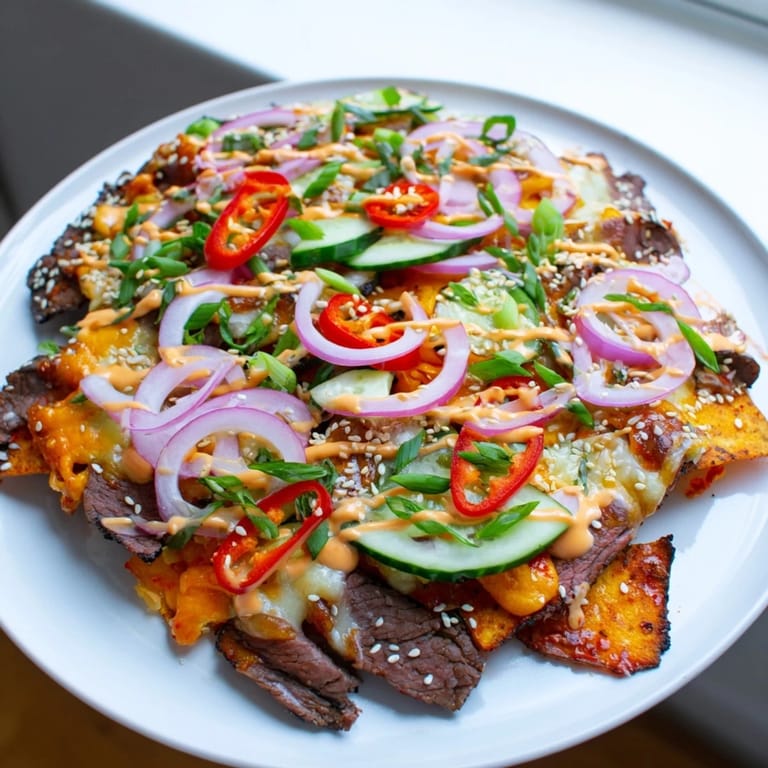
- Pull the tray out of the oven (it'll be hot, so be careful) and immediately scatter over the raw red onion, carrot, cucumber, scallions, and any red chili you're using. Finish with toasted sesame seeds, chopped kimchi, and fresh cilantro or shiso leaves. Drizzle with sriracha mayo or gochujang mayo if you want that extra creamy heat, and serve with lime wedges on the side for people to squeeze over as they eat.
 Save
Save There's something magical about watching people's faces light up when they realize this dish exists—it's approachable enough to make for a casual hangout, but special enough that it feels like you put real thought into it. This is the kind of recipe that makes people remember the meal because of how much fun it was to eat.
Customizing Your Nachos
The beauty of this dish is that it plays well with swaps and additions once you understand the core balance. Grilled chicken works beautifully if you marinate it in the same gochujang mixture and cook it a few minutes longer, or you can use crispy tofu if you're feeding vegetarians—just make sure it's pressed and marinated enough to absorb all those flavors. Some nights I add avocado slices or thin radish rounds for extra freshness, or throw in some pickled jalapeños if I want more vinegary brightness.
Timing and Prep Strategy
The 20-minute marinade is built-in downtime where you can prep all your vegetables and get your mise en place ready, so the actual active cooking time is much shorter than it appears. Slice everything and arrange it on a cutting board before you start the beef—once that cheese comes out of the oven, you need to work quickly to get all the fresh toppings on while everything is still hot enough to matter but cool enough to eat. If you're making this for a crowd, you can actually sear the beef and prep the cheese topping earlier in the day, then just do the final assembly and bake right before service.
Pairing and Serving Ideas
These nachos deserve a beverage that cuts through the richness and heat—a crisp lager is the obvious choice, but chilled soju works just as well if you want to lean into the Korean side of things. The lime wedges are essential, not optional; a squeeze of fresh lime right before you eat a bite ties all the flavors together in a way that nothing else can. Serve this family-style on the baking tray so everyone can dig in together, and don't bother with plates unless your guests are particularly formal.
- A cold beer or soju is non-negotiable for cutting through the richness.
- Lime wedges should be served on the side so people can add them to taste.
- Make this right before serving to keep the chips crispy and the vegetables bright.
 Save
Save This dish has a way of bringing people together in the best way—everyone's eating from the same tray, sharing bites, and discovering new flavor combinations with each forkful. That's really what good food is about.
Recipe FAQ
- → What cut of beef works best?
Flank steak or sirloin thinly sliced absorbs the marinade well and cooks quickly for tender results.
- → Can I substitute the gochujang?
While gochujang provides distinctive heat and sweetness, a chili bean paste or a blend of chili with miso can be alternatives.
- → How to make it vegetarian?
Replace beef with marinated mushrooms or jackfruit and ensure chips are vegetarian-friendly for a plant-based option.
- → What cheeses create the best melt?
A mix of shredded mozzarella and a Korean-style cheese blend ensures gooey melt and rich flavor.
- → How to store leftovers?
Keep components separately when possible to preserve crispness; reheat marinated beef and cheese toppings gently before assembling.