 Save
Save There's a moment when you're standing in your kitchen at 7 PM on a random Thursday, staring down a container of kimchi that's been quietly aging in your fridge, and you think: what if I stopped trying to follow rules? That's when chaos cooking happens, and this dish was born from exactly that kind of thinking. I was craving my grandmother's ragu—that deep, patient tomato sauce that meant comfort—but my taste buds were also on fire for kimchi's funky, spicy bite. So I threw caution to the wind and merged two completely different worlds on one plate. The first spoonful told me I'd stumbled onto something real.
I made this for my friend Marcus, who's skeptical about fusion food—the kind of person who thinks fusion is just fancy confusion. He showed up hungry and suspicious, took one forkful, and went quiet. That silence meant everything. By the second plate, he was already asking if I'd teach him how to make it, which is the highest compliment I know.
Ingredients
- Ground pork (300 g): The base of your ragu—use a 50/50 beef blend if you want deeper earthiness, or stick with pork for a lighter touch that lets the kimchi shine.
- Napa cabbage kimchi (200 g, chopped, plus 2 tbsp juice): This is your secret weapon; the juice is liquid gold for acidity and funk, so don't pour it down the drain.
- Onion, carrot, celery (1 medium, 1 medium, 1 stalk): The holy trinity of flavor building—finely dice them so they soften into the sauce and disappear, leaving only their sweetness behind.
- Garlic (2 cloves, minced): Add it after the soffritto so it doesn't burn; you want that mellow, sweet garlic flavor, not harsh heat.
- Crushed tomatoes (400 g can): San Marzano if you can find them, but honestly any high-quality crushed tomatoes work—this is where you don't cheap out.
- Heavy cream (120 ml): This mellows the spice and creates a silky finish; use coconut cream for dairy-free, which adds a subtle sweetness that works beautifully.
- Olive oil (2 tbsp): Good olive oil matters here because it's not hidden in a long braise—use something you'd actually taste on bread.
- Soy sauce (1 tbsp): The bridge between Italian and Korean, adding salt and umami without tasting obviously Asian.
- Gochugaru (1 tsp, optional): Korean chili flakes that give heat and a subtle smoky note; start with half a teaspoon if you're unsure, because you can always add more.
- Sugar (1 tsp): A pinch of sweetness to balance the acid and spice—don't skip this, even though it seems small.
- Rigatoni or penne (350 g): The tubes catch the sauce beautifully; whatever shape you use, cook it to al dente, not soft.
- Scallions (2 tbsp, chopped) and Parmesan (25 g, grated): The final notes that make everything pop—fresh and sharp against the deep, rich sauce.
Tired of Takeout? 🥡
Get 10 meals you can make faster than delivery arrives. Seriously.
One email. No spam. Unsubscribe anytime.
Instructions
- Build your base:
- Heat oil in a large skillet over medium-high heat until it shimmers, then add onion, carrot, and celery. You're looking for them to soften and turn golden at the edges, about 5 minutes—this is where the sweetness develops. The kitchen will smell like you know what you're doing.
- Wake up the garlic:
- Toss in minced garlic and cook for just 1 minute, stirring constantly so it releases its aroma without burning. You'll smell when it's ready—that moment when raw garlic-ness transforms into something warm and inviting.
- Brown your meat:
- Add ground pork and break it into small, irregular pieces as it cooks, about 6–7 minutes. You're not making meatballs; you want texture and surface area so every bite has browned, caramelized edges.
- Introduce the kimchi:
- Stir in chopped kimchi and its juice, letting it soften for 3–4 minutes. The kitchen will smell aggressively delicious now—funky, spicy, alive. This is the moment the dish stops being just a ragu.
- Build the sauce:
- Add crushed tomatoes, soy sauce, gochugaru, and sugar. A pinch of salt and pepper. Simmer uncovered for 15–20 minutes, stirring occasionally, until the sauce thickens and the flavors marry into something you can't quite identify but love immediately.
- Cook your pasta:
- In another pot, cook rigatoni or penne according to package directions until al dente—it should have a slight resistance when you bite it. Reserve 100 ml of starchy pasta water before draining; this is your insurance policy for a silky sauce.
- Create the cream finish:
- Lower the ragu heat to low, then stir in heavy cream and half the reserved pasta water. Watch it transform from a thick, rustic sauce into something creamy and luxurious without losing any of its personality.
- Bring it all together:
- Toss hot pasta into the ragu, coating every piece. Add more pasta water if needed until the sauce coats the pasta in a thin, glossy layer that clings to every surface. Taste and adjust seasoning.
- Serve with intention:
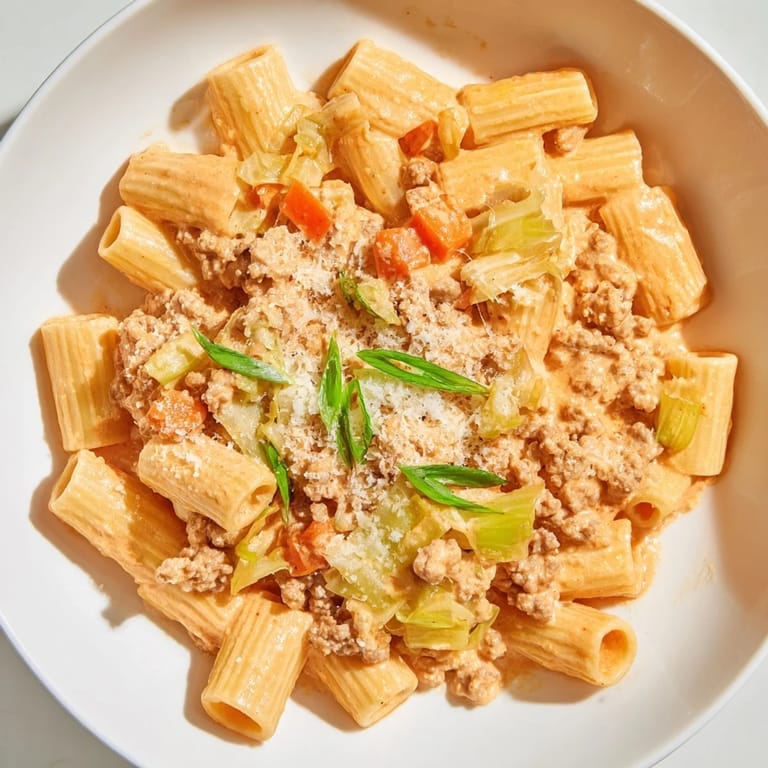
- Bowl it up hot, scatter scallions across the top for freshness and crunch, and add Parmesan if you're using it. Serve immediately while the pasta is still steaming.
 Save
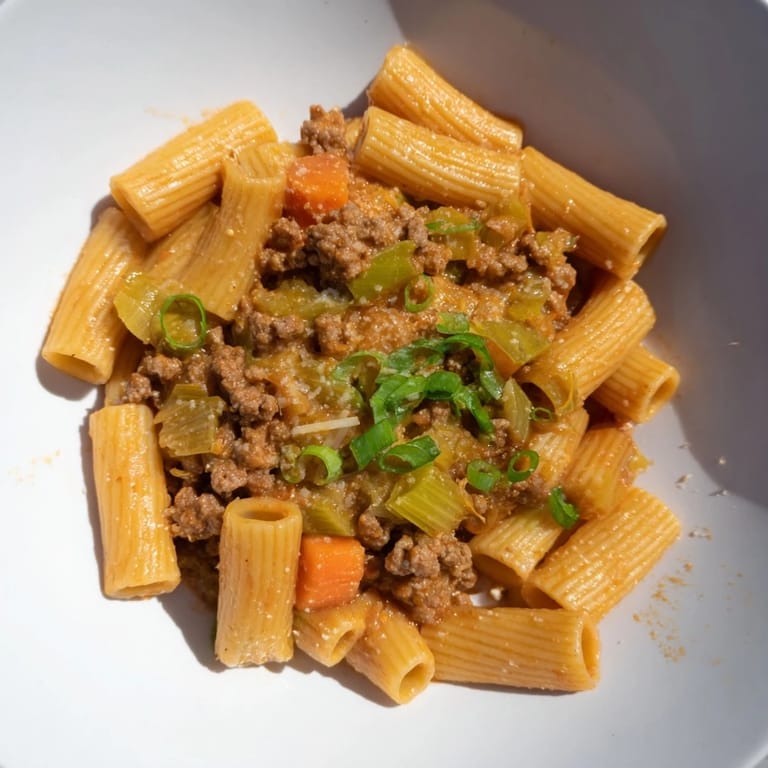
Save What stuck with me most was realizing this dish works because it doesn't try to be purely Italian or purely Korean—it commits fully to being both at once, which somehow makes it completely itself. That's the lesson I keep coming back to.
The Kimchi-to-Ragu Ratio
Finding the right balance between kimchi and tomato took a few attempts. My first version was too aggressive with the kimchi; the second time I pulled back too far and lost the whole point. By the third try, I realized 200 grams of chopped kimchi to one 400-gram can of tomatoes hits that sweet spot where neither flavor drowns out the other. They're equal partners. Start with these proportions and trust them, then adjust next time based on your taste and the intensity of your kimchi.
Why Cream Works Here
The cream sounds like it shouldn't work—it seems like it would mute the spice and funk. Instead, it mellows everything into a cohesive whole, the way a whisper of cream in coffee brings all the flavors into focus. It's not about making this dish mild; it's about binding the chaos into something elegant. If dairy isn't your thing, coconut cream adds a subtle sweetness that feels intentional rather than like a substitute.
Variations and Swaps
I've made this with beef for a richer version, with half ground pork and half ground mushroom for vegetarians, and once with leftover chicken—all worked beautifully. The framework is strong enough to handle substitutions because the sauce carries so much flavor.
- For a vegetarian version, use plant-based ground meat and the sauce becomes even more about the kimchi and tomato conversation.
- Swap cream for oat milk or cashew cream if you're avoiding dairy, and you'll get a lighter finish that still coats the pasta perfectly.
- If you want spice, add gochugaru; if you want heat without the flavor, hit it with fresh chili flakes at the end instead.
 Save
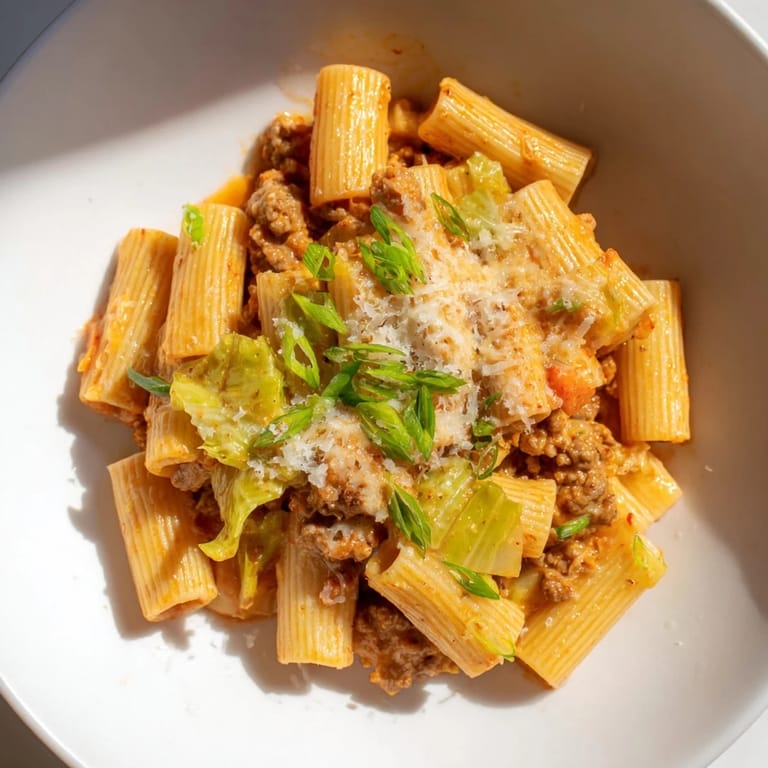
Save This dish is proof that the best recipes come from breaking rules thoughtfully, not following them blindly. Make it tonight and make it yours.
Recipe FAQ
- → What type of meat works best for this dish?
Ground pork is traditional, but ground beef or a pork-beef blend work well for rich flavor and texture.
- → Can I adjust the spice level?
You can modify spiciness by adding or reducing gochugaru and the amount of kimchi used in the sauce.
- → What pasta types suit this preparation?
Short ridged pastas like rigatoni or penne hold the creamy sauce well and are ideal for this dish.
- → Is there a dairy-free alternative for the creamy finish?
Unsweetened plant-based creams or coconut cream provide a smooth texture suitable for dairy-free variations.
- → How to ensure the sauce coats the pasta nicely?
Reserve some pasta cooking water to adjust the sauce consistency, ensuring a silky and even coating.
- → What garnishes enhance the final presentation?
Finely chopped scallions add freshness, while grated Parmesan adds depth—both elevate the dish's flavors.