 Save
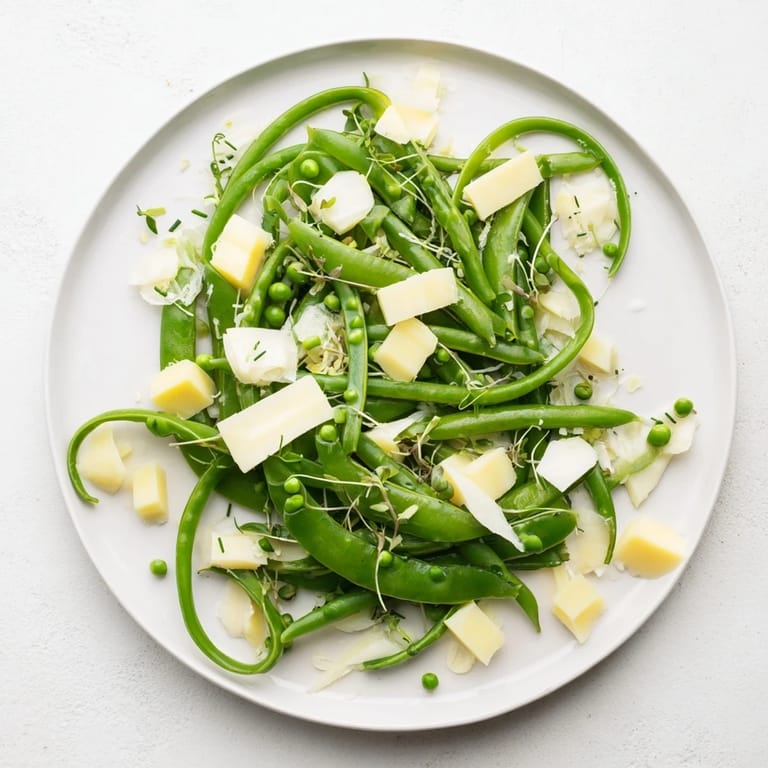
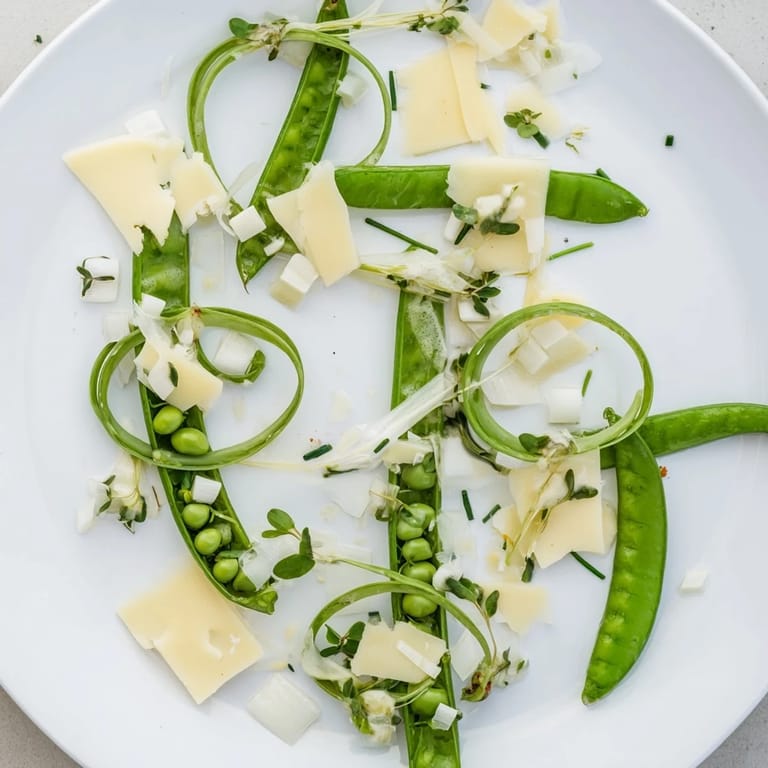
Save I discovered this salad on a particularly hectic Tuesday when my neighbor brought over a basket of snap peas from her garden, still dusty with soil. She'd grown them specifically to share, and I found myself standing in my kitchen at dusk, holding these bright green vines and wondering what would honor them properly. The idea of twining them with crisp green beans and sharp white cheddar came to me almost by accident—a way to celebrate the natural curves of the vegetables rather than chop them into submission. That first bowl, dressed simply and arranged like edible architecture on a white plate, felt like discovering something I'd been waiting to make.
I made this for my sister's impromptu garden party last summer, and the way the green vines caught the golden hour light made people stop and actually look at what they were eating before diving in. Someone asked if I'd studied art because of how I'd arranged it, which made me laugh—it was really just letting the vegetables do what they naturally wanted to do. She ate two full servings and asked for the recipe before dessert even arrived, which felt like the highest compliment.
Ingredients
- Snap peas: Look for ones that are bright and firm, with a slight waxy sheen; they'll stay crispest if you blanch them just until they turn vibrant green, barely two minutes in boiling water.
- Green beans: Choose thinner, younger beans if possible—they cook faster and have a more delicate texture that won't turn mushy or dull.
- Sharp white cheddar: This is your anchor flavor; don't skimp on quality here, as a good sharp cheddar will bring complexity that mild versions simply can't match.
- Fresh shallot: Just one small one, sliced paper-thin, adds a gentle sulfurous whisper that makes every bite more interesting without overpowering.
- Extra virgin olive oil: Use something you'd actually taste on its own; the dressing is simple enough that the oil's character will shine through.
- Fresh lemon juice: Always freshly squeezed—bottled just tastes tired and thin by comparison.
- Dijon mustard: The emulsifier that holds everything together while adding a sophisticated edge.
- Honey: Just enough to soften the mustard's sharpness and let the vegetables' natural sweetness come forward.
- Fresh chives: Chopped at the very last moment so they keep their delicate onion perfume.
Tired of Takeout? 🥡
Get 10 meals you can make faster than delivery arrives. Seriously.
One email. No spam. Unsubscribe anytime.
Instructions
- Bring your water to a proper boil:
- Fill a large pot with salted water and let it come to a rolling boil—you want it genuinely hot so the vegetables cook evenly and stay bright. If your water isn't hot enough, they'll soften and lose that crucial snap.
- Blanch the vegetables:
- Drop in the snap peas and green beans together and set a timer for exactly two minutes. You're looking for that moment when they shift from raw dullness to vibrant jade green, which happens quickly.
- Stop the cooking with ice:
- Have a bowl of ice water waiting before you even drain the pot. Transfer the vegetables immediately using a slotted spoon, letting the hot water fall away as you lift them. The ice bath stops the cooking instantly and locks in the color.
- Pat everything dry:
- Once cooled, drain the vegetables and pat them very dry with a clean kitchen towel. Any excess water will dilute your dressing and make the final dish taste washed out.
- Make a proper emulsion for your dressing:
- In a separate bowl, whisk together the olive oil, lemon juice, Dijon mustard, honey, salt, and pepper. The mustard is doing the work here, helping the oil and acid stay together in a silky suspension rather than separate into layers.
- Toss gently with the vegetables:
- Add the blanched vegetables and shallot to the dressing bowl and turn everything together with a light hand. You want every piece coated but not bruised or broken.
- Arrange like vines on your platter:
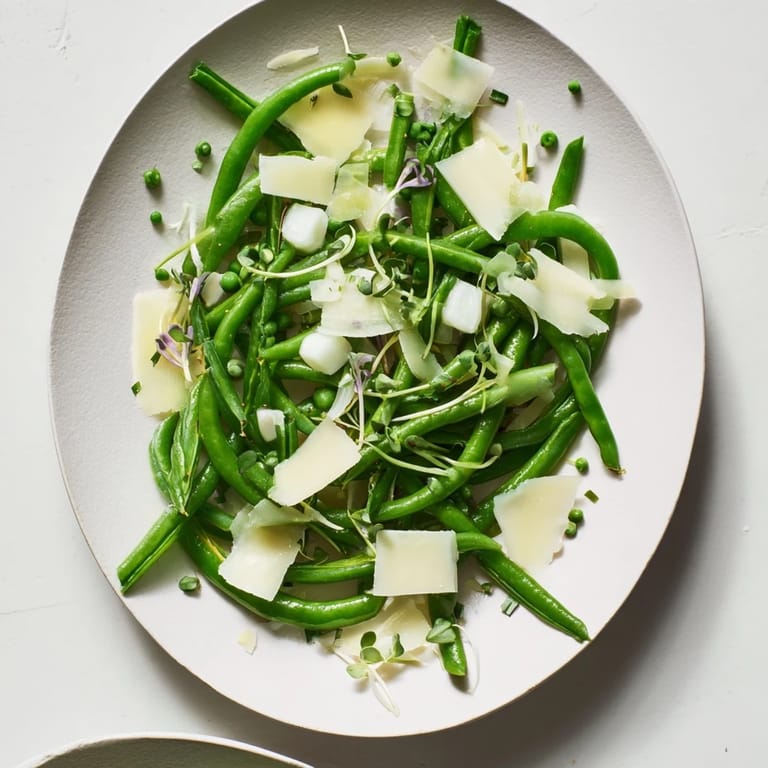
- Rather than mixing everything together in a chaotic pile, lay the vegetables out in long, winding lines that show off their natural shape. Scatter the cheddar shards over the top.
- Finish and serve right away:
- Sprinkle with freshly chopped chives and any microgreens you have on hand. Serve immediately while everything is still cold and crisp.
 Save
Save There's a specific moment in late spring when fresh shallots and the first tender green beans arrive at the same time, and making this salad feels like capturing that exact season on a plate. It became the dish I'd reach for whenever I wanted to impress without stress, or simply make myself feel better on a rough day when fresh, vibrant food seemed like exactly what was needed.
The Sharpness Factor
The white cheddar is doing heavy lifting here—it's not just a garnish but the dish's backbone, its bold tang creating a contrast that makes the sweet snap peas and tender green beans taste more like themselves. I've experimented with softer cheeses, and while they're pleasant, they get lost in the simplicity of the salad. The sharpness also cuts through any richness from the olive oil, keeping everything bright and appetizing.
Temperature and Timing
Serve this salad cold, straight from the ice bath, because the cool temperature amplifies the snap and makes every flavor cleaner. I once accidentally let it sit on the counter while I finished other dishes, and by the time we ate it, something essential had diminished—it was still good, but it had lost that vital energy. The vegetables should feel almost cold against your tongue when you first taste them, that's when the cheddar and dressing sing loudest.
Variations and Swaps
This salad's architecture is flexible enough for gentle experimentation without losing its character. I've added a small handful of toasted walnuts when I had them, their earthiness complementing the sharp cheese beautifully, and once I swapped in shredded goat cheese for a tangier, creamier take that felt almost European. The lemon dressing is your foundation—keep that—but beyond the main vegetables and cheese, you have room to play.
- Toast a small handful of walnuts or almonds and scatter them over the top for nutty depth and textural surprise.
- Try goat cheese or feta instead of cheddar if you want something creamier or more tangy, though you'll lose the umami intensity.
- Add a teaspoon of whole grain mustard instead of Dijon for a grainier texture and slightly different flavor profile.
 Save
Save This salad proves that simplicity, when built on quality ingredients and genuine technique, needs no apologies. It's become my go-to reminder that the best recipes often emerge from constraints—a basket of vegetables, nothing fancy, and the willingness to let them shine rather than hide them under unnecessary complications.
Recipe FAQ
- → What is the best way to cook snap peas and green beans for this dish?
Blanching snap peas and green beans for 2 minutes in salted boiling water keeps them crisp and bright green, then cooling them in ice water halts cooking for optimal texture.
- → Can the sharp white cheddar be substituted in this salad?
Yes, goat cheese or feta work well as substitutes, adding a tangier flavor profile that complements the fresh vegetables.
- → How can I enhance the crunchiness of the salad?
Adding toasted walnuts or almonds provides a nutty crunch that contrasts nicely with the tender vegetables and creamy cheese.
- → What kind of dressing is used to flavor the vegetables?
A simple dressing made from extra virgin olive oil, fresh lemon juice, Dijon mustard, honey, salt, and pepper gently coats the vegetables for a bright, balanced taste.
- → Are there any suggested garnishes to finish the salad?
Fresh chives and optional microgreens or pea shoots add color, texture, and a fresh herbal note to the dish.