 Save
Save My kitchen smelled like summer the first time I tore into a burrata ball over warm pasta and watched that cream spill everywhere. It was a Tuesday night, nothing fancy planned, but I had tomatoes starting to wrinkle on the counter and a craving for something that tasted both light and indulgent. I didn't expect the cheese to steal the show like that, but one bite in and I understood why Italian nonnas guard their burrata sources like state secrets. Now it's my go-to when I want to feel like I'm dining somewhere expensive without leaving my tiny apartment.
I made this for my sister when she visited last spring, and she literally photographed every angle before taking a bite. She's not even a food blogger, just someone who appreciates a good cheese pull. We ended up eating it on the balcony with cheap wine, and she told me it was better than the pasta she'd had in Rome the year before. I'm not sure I believe her, but I didn't argue. Some meals just land differently when you're sharing them with the right person at the right moment.
Ingredients
- Spaghetti or linguine (400 g): Long noodles are essential here because they tangle beautifully with the tomatoes and give you the best vehicle for that creamy burrata, though I've used rigatoni in a pinch and it worked fine.
- Cherry tomatoes (400 g, halved): They break down into a jammy, sweet sauce when cooked, and halving them speeds up the process so you're not standing over the stove forever.
- Garlic (2 cloves, minced): Just enough to perfume the oil without overpowering the delicate burrata, and mincing it fine prevents any harsh bites.
- Fresh basil (1 small bunch, torn): Tearing the leaves instead of chopping them keeps the edges from bruising and turning dark, plus it releases more of that sweet, peppery aroma.
- Extra-virgin olive oil (2 tbsp): Use the good stuff here since it's one of the main flavors you'll taste, and save the cheap bottle for roasting vegetables.
- Burrata cheese (250 g, 2 medium balls): This is the star, so don't substitute with mozzarella unless you want to miss out on that molten cream center that makes the whole dish magical.
- Sea salt (1 tsp plus extra): Pasta water should taste like the ocean, and a pinch at the end brightens everything up right before serving.
- Black pepper (1/2 tsp, freshly ground): Freshly cracked makes a difference, adding a subtle heat that plays nicely with the sweet tomatoes.
- Red pepper flakes (pinch, optional): I add them when I want a little kick, but skip them if you're serving this to anyone who thinks black pepper is spicy.
- Additional basil and olive oil for garnish: A final drizzle and a few torn leaves make it look like you tried harder than you actually did.
Tired of Takeout? 🥡
Get 10 meals you can make faster than delivery arrives. Seriously.
One email. No spam. Unsubscribe anytime.
Instructions
- Boil the pasta:
- Bring a large pot of water to a rolling boil, salt it generously (it should taste like seawater), and cook your pasta until it still has a little bite in the center. Before draining, scoop out half a cup of that starchy pasta water because it's liquid gold for bringing the sauce together.
- Start the tomato base:
- While the pasta bubbles away, heat olive oil in a large skillet over medium heat and toss in the minced garlic, letting it sizzle for about a minute until your kitchen smells amazing but before it turns brown. Add the halved cherry tomatoes, salt, pepper, and red pepper flakes if you're using them, then let everything cook for five to seven minutes, stirring now and then until the tomatoes burst and release their juices into a chunky sauce.
- Combine pasta and tomatoes:
- Add the drained pasta directly to the skillet with the tomatoes and toss everything together, adding splashes of that reserved pasta water to loosen things up into a silky, glossy coating. The starch in the water helps the sauce cling to every strand instead of pooling at the bottom of the bowl.
- Finish with basil:
- Pull the skillet off the heat and toss in your torn basil leaves, stirring gently so they wilt slightly but don't cook down completely. The residual heat is enough to release their fragrance without turning them sad and dark.
- Plate and add burrata:
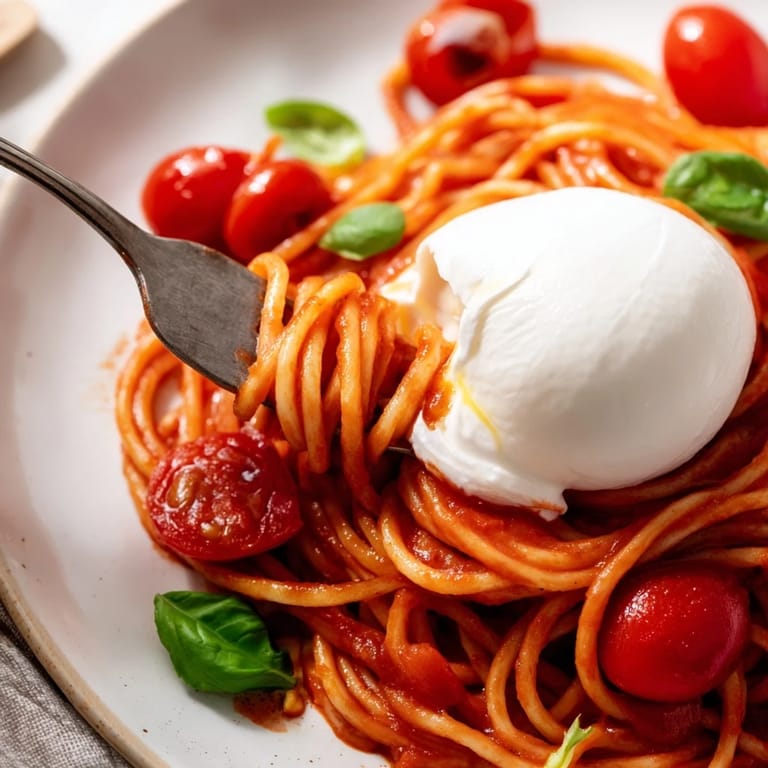
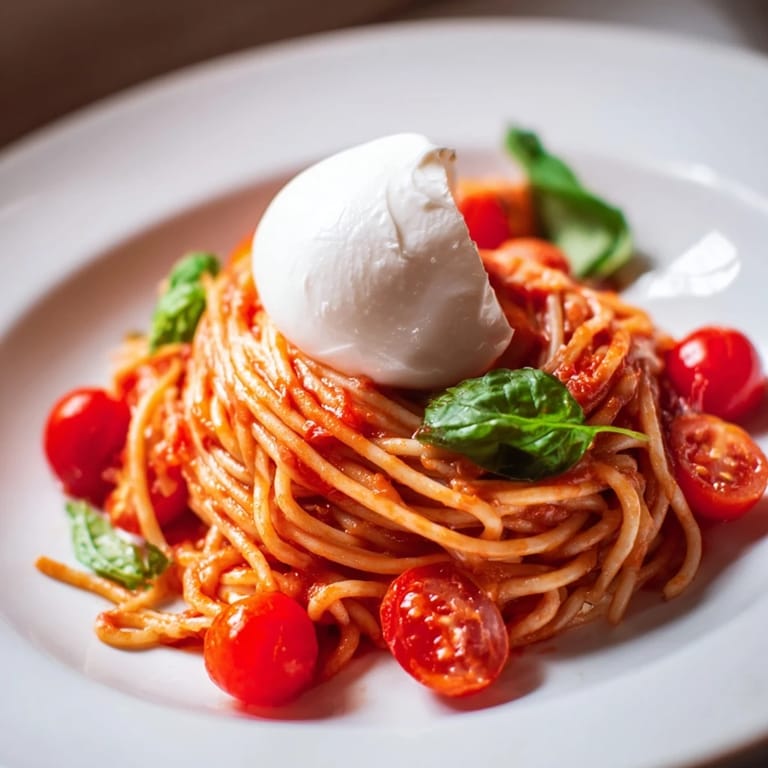
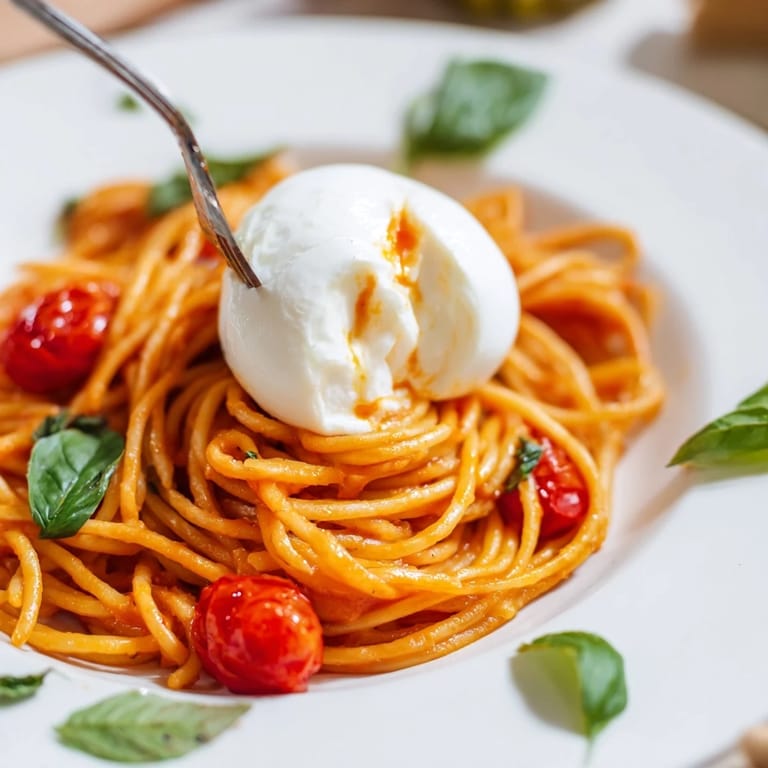
- Transfer the pasta to individual plates or a big serving platter, then place the burrata balls right on top and gently tear them open so that creamy center spills out over the hot noodles. Drizzle with a little more olive oil, scatter extra basil leaves, and serve immediately while the cheese is still warm and pullable.
 Save
Save The first time I brought this to a potluck, someone asked if I'd ordered it from a restaurant and just plated it at home. I took it as the highest compliment, even though I was slightly offended they thought I'd lie about making pasta. It's become my signature dish now, the one people request when they're coming over, and I never tell them how absurdly easy it is. Some secrets are worth keeping, especially when they make you look like a better cook than you actually are.
Choosing Your Pasta Shape
Long noodles like spaghetti or linguine are traditional here because they twirl beautifully and give you those dramatic forkfuls, but I've made this with penne when I wanted something my nephew could eat without wearing half of it. Short shapes hold onto the tomato chunks differently, creating little pockets of flavor in every bite, so it's really about whether you want elegance or convenience. Either way, cook it al dente because mushy pasta will turn this dish into a sad, soggy pile no amount of burrata can save.
Making It Your Own
I've added a splash of balsamic glaze before serving when I want a sweet, tangy finish, and it's incredible with the creamy burrata. Sometimes I'll toss in a handful of arugula right at the end for a peppery bite, or swap the cherry tomatoes for sun-dried ones when fresh tomatoes are sad and flavorless in winter. A few torn pieces of prosciutto on top turns this into something heartier, though it's no longer vegetarian, and I've been known to add a squeeze of lemon juice when the dish needs a little brightness.
Serving and Storing
This pasta is best eaten immediately, straight from the stove while the burrata is still warm and melty, but leftovers keep in the fridge for up to two days in an airtight container. The cheese will firm up and the pasta will absorb some of the sauce, so it won't have that same silky texture, but I actually love eating it cold as a pasta salad the next day. If you want to reheat it, add a splash of olive oil or a little water to a skillet and warm it gently over low heat, though the burrata won't melt the same way twice.
- Serve with crusty bread to mop up every bit of tomato and burrata left on the plate.
- A simple green salad with lemon vinaigrette balances the richness without competing for attention.
- Pair it with a crisp white wine or something light and fizzy if you're feeling fancy.
 Save
Save Every time I make this, I'm reminded that the best meals don't need to be complicated to feel special. Just good ingredients, a little heat, and someone to share it with.
Recipe FAQ
- → Can I make this dish ahead of time?
While best served immediately for optimal cheese texture, you can prepare the tomato sauce up to 2 hours ahead. Reheat gently before tossing with pasta, then add fresh burrata just before serving for the best results.
- → What type of pasta works best?
Spaghetti or linguine are traditional choices, but penne and rigatoni also work wonderfully. Choose a shape that holds the light tomato sauce well and complements the creamy burrata.
- → How do I select quality burrata cheese?
Look for burrata that's white or pale cream-colored with a slight sheen. It should feel soft but not mushy. Purchase from reputable sources and use within 1-2 days for the best creamy texture and flavor.
- → Is this suitable for dietary restrictions?
This dish is naturally vegetarian. For vegan versions, substitute burrata with plant-based cheese alternatives. It contains gluten from pasta and dairy from cheese—check all ingredients if you have allergies.
- → How can I add more flavor complexity?
Try adding a splash of balsamic glaze before serving, incorporating red pepper flakes for heat, or finishing with a squeeze of fresh lemon juice. A sprinkle of toasted pine nuts adds textural contrast.
- → What's the purpose of reserved pasta water?
Pasta water is starchy and helps emulsify the olive oil with tomato juices, creating a silky sauce that clings beautifully to each strand of pasta rather than pooling at the bottom.