 Save
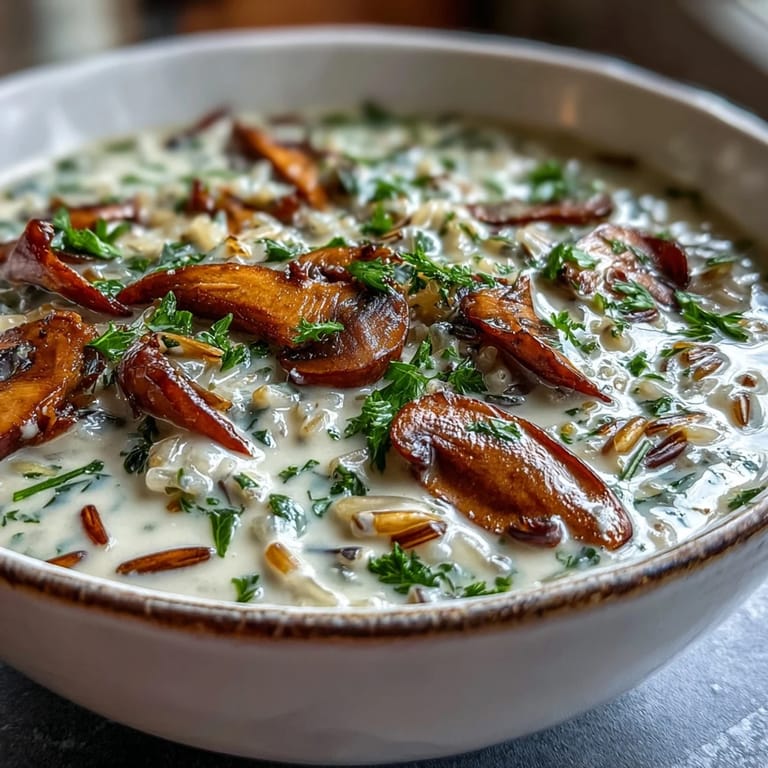
Save There's something about the sound of mushrooms hitting hot oil that makes me slow down in the kitchen. One autumn evening, I was rushing through dinner prep when that sizzle stopped me cold—earthy, almost meaty in how it filled the pot. That's when I understood wild rice mushroom soup wasn't just another weeknight recipe; it was an invitation to pay attention. The combination of nutty wild rice, those dark mushrooms releasing their umami, and cream swirling into the broth felt like comfort food with actual depth.
I made this for my neighbor last winter when she was under the weather, and watching her face as she tasted it—that quiet moment of recognition that food could be both gentle and nourishing—taught me something. She asked for the recipe but said the real secret was that I'd remembered how she liked her soups. That's when I realized recipes are just templates; the care is what matters. Now whenever I make it, I think about how a bowl of soup can say things words sometimes can't.
Ingredients
- Olive oil (2 tbsp): You want good quality here because it's not hiding in other flavors—this is your base note.
- Yellow onion, celery, carrots (1 medium onion, 2 stalks celery, 2 medium carrots): The holy trio that builds flavor; don't skip the sweating step or you'll lose their sweetness.
- Garlic cloves (3, minced): Add this after the vegetables soften or it can turn bitter and overpowering.
- Fresh thyme and rosemary (2 tsp thyme, 1 tsp rosemary): Dried works but fresh herbs bloom when they hit the hot pan and smell like a forest just woke up.
- Bay leaf (1): Don't forget to fish this out before serving or someone will find a surprise.
- Fresh parsley (2 tbsp, plus garnish): The bright note that cuts through richness and makes people taste vegetables instead of just cream.
- Mixed wild mushrooms (400 g): Cremini, shiitake, oyster—use whatever looks freshest; they release their own broth as they cook, which is liquid gold.
- Wild rice, uncooked (1 cup rinsed): Those grains pop open with a tender bite and give the soup its character; regular rice would make it mushy and forgettable.
- Vegetable broth (1.5 liters): Use low-sodium so you control the salt story yourself.
- Heavy cream (200 ml): Or cashew cream if you're vegan; add it at the end so it stays silky.
- All-purpose flour (3 tbsp): This creates the roux that thickens everything naturally without cornstarch feeling chalky.
- Soy sauce (1 tbsp): The secret deepener that makes people ask what they're tasting.
- Salt and black pepper: Taste as you go; wild rice can absorb flavor in unexpected ways.
Tired of Takeout? 🥡
Get 10 meals you can make faster than delivery arrives. Seriously.
One email. No spam. Unsubscribe anytime.
Instructions
- Start with your base:
- Heat olive oil in a large soup pot over medium heat and add your chopped onion, celery, and carrots. You're not browning anything here—just letting them become translucent and soft over 6 to 8 minutes, releasing their natural sweetness. The kitchen should smell like autumn.
- Wake up the aromatics:
- Stir in minced garlic, thyme, rosemary, and that bay leaf, cooking for just one minute until the fragrance hits you—that's your signal the oils are releasing. Don't let it go longer or the garlic gets sharp and the herbs lose their subtlety.
- Let the mushrooms speak:
- Add your sliced mushrooms and let them cook for 6 to 8 minutes, stirring occasionally, until they've released their liquid and it's mostly evaporated. This concentrates their earthiness rather than creating a watery soup; you're coaxing out flavor, not drowning it.
- Create the thickening base:
- Sprinkle the flour over everything and stir well, making sure each vegetable and mushroom piece gets coated. Cook for 1 to 2 minutes to toast the flour slightly and eliminate that raw taste.
- Bring it together:
- Pour in the vegetable broth gradually while stirring constantly, watching for lumps to dissolve. This is the moment where a smooth soup or a lumpy one is decided—patience here pays off.
- Introduce the rice:
- Add your rinsed wild rice and soy sauce, then bring everything to a boil before dropping the heat to a simmer. Cover the pot and let it bubble gently for 40 to 45 minutes, stirring now and then, until those grains have puffed open and become tender.
- Finish with cream and grace:
- Remove the bay leaf, stir in your cream and fresh parsley, and let it warm through uncovered for 2 to 3 minutes. The soup should be steaming and silky now, with flecks of green from the parsley.
- Season and adjust:
- Taste your creation and season with salt and freshly ground black pepper to your preference. If it's thicker than you like, thin it with extra broth; if it seems thin, let it simmer a few minutes longer.
 Save
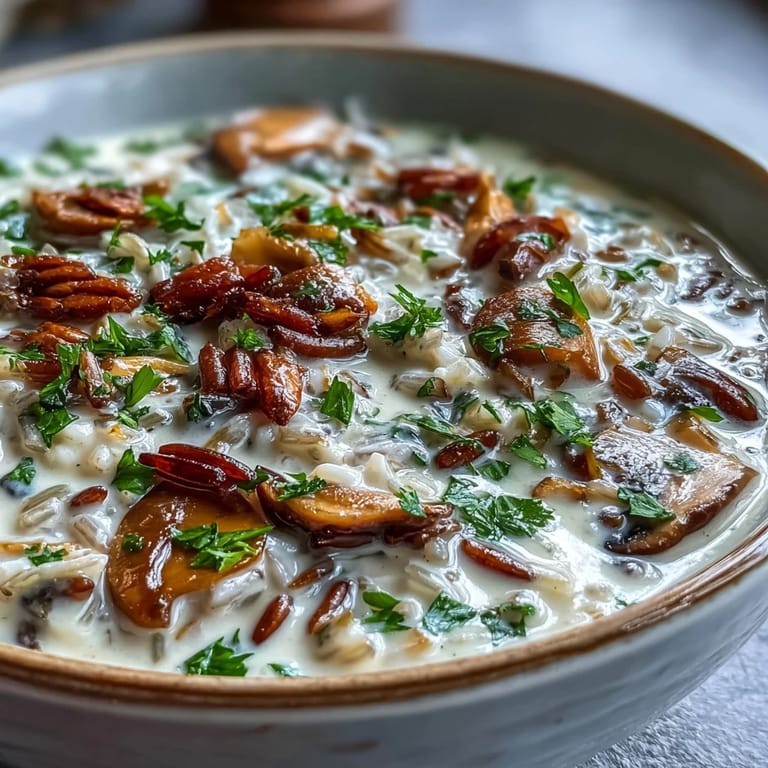
Save My daughter once asked why this soup tasted different every time I made it, and I realized she was right—it never tastes the same twice because the mushrooms vary, the seasons change what herbs taste like fresh, and I'm always learning. That's the beauty of it; it's a recipe that rewards paying attention rather than punishing small variations. Every pot tells a different story.
Making It Your Own
This soup is a canvas more than a rigid formula. I've added a splash of dry sherry when I had a bottle open, and it pushed the earthiness into somewhere almost elegant. Some mornings I use all cremini mushrooms because that's what was on sale, and the soup becomes simpler, more approachable. Other times someone mentions they're vegan and suddenly I'm reaching for coconut cream, which gives it this subtle sweetness that actually works. The point is, you're not locked into anything here—you're building something that fits your pantry and your moment.
Serving and Pairing
This soup sits at that perfect intersection of elegant enough for guests but homey enough for a quiet Tuesday. A crusty bread is non-negotiable—you need something to drag through the broth and soak up that creamy goodness. I've served it in wide bowls with a swirl of extra parsley and cracked pepper, and I've ladled it into mugs when people came in from the cold. The temperature and the company change how it lands, but it always lands softly.
Storage and Make-Ahead Strategy
This soup is actually better the next day when the flavors have had time to mingle and deepen. I usually make it in larger batches and freeze half because there's something luxurious about having something this good waiting in the freezer when you need it most. Store it in an airtight container and it keeps in the fridge for up to four days, or frozen for two months.
- Cool the soup to room temperature before freezing to prevent condensation and freezer burn.
- If you're freezing, hold back the cream and add it fresh when you reheat, which keeps the texture silky rather than separated.
- Thaw frozen soup in the refrigerator overnight rather than on the counter for safer, gentler reheating.
 Save
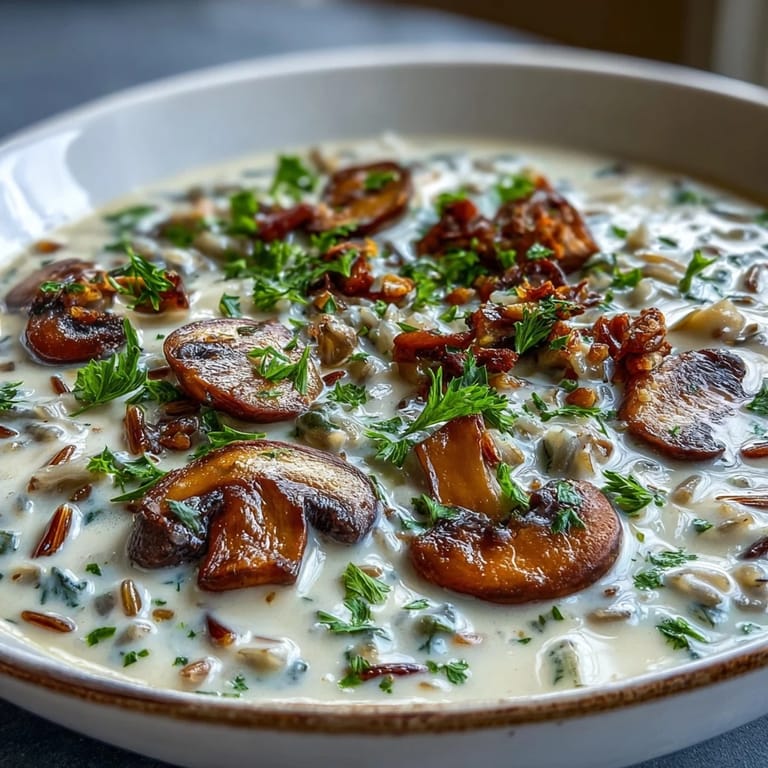
Save This soup has a way of becoming the dish people request, the one you make when someone's had a hard day or when you want to remember that good food doesn't need to be complicated. That's all it's asking of you.
Recipe FAQ
- → Can I make this soup ahead of time?
Yes, this soup actually tastes better the next day as flavors have time to meld. Store in an airtight container in the refrigerator for up to 4 days. Reheat gently on the stove, adding a splash of broth or cream if it thickens too much.
- → Can I freeze wild rice mushroom soup?
You can freeze it for up to 3 months, though the cream may separate slightly upon thawing. Freeze without the cream, then stir it in when reheating for the best texture.
- → What mushrooms work best in this soup?
Mixed wild mushrooms like cremini, shiitake, and oyster provide excellent depth. Button mushrooms work too, but you might want to add dried porcini mushrooms for extra earthiness.
- → How do I make this soup vegan?
Substitute the heavy cream with full-fat coconut cream, cashew cream, or your favorite plant-based cream alternative. The result remains creamy and satisfying.
- → Why is my soup too thick or thin?
If too thick, add more vegetable broth or water. If too thin, simmer longer uncovered to reduce, or mash some rice against the pot's side to release starch. You can also make a slurry with flour and water.
- → Do I need to soak wild rice before cooking?
No need to soak—just rinse thoroughly before adding to the soup. Wild rice takes longer than regular rice to cook, about 45 minutes simmering time until tender and some grains burst open.