 Save
Save My neighbor showed up at my door one October afternoon with a butternut squash the size of a small melon, insisting I needed to do something special with it. I'd never roasted squash before, but she swore by it, and honestly, I was curious about what made roasting so different from just boiling everything into oblivion like I'd been doing. That first batch changed how I think about soup entirely—the caramelized edges, the almost nutty sweetness, the way cream swirled into something so silky it felt like falling into autumn itself.
I made this soup the night before my mother-in-law's first visit to our new house. I was nervous about everything, but as the smell of roasted squash filled the kitchen, something shifted—it became impossible to stay anxious. When she walked in and tasted it, she asked for seconds, and suddenly we had something real to talk about instead of the awkward silences I'd been dreading.
Ingredients
- 1 large butternut squash (about 2 lbs), peeled, seeded, and cubed: The roasting is what makes this sing; don't skip it or you'll miss the caramelization that gives the soup its depth.
- 1 medium yellow onion, chopped: Yellow onions sweeten as they roast, building flavor that simmering alone can't achieve.
- 2 garlic cloves, peeled: Roasting mellows garlic from sharp to gentle, almost creamy in the finished soup.
- 1 medium carrot, peeled and chopped: This adds earthiness and natural sweetness that rounds out the squash beautifully.
- 4 cups vegetable broth: Use good broth—it becomes the backbone of every spoonful, so it matters more than you'd think.
- 2 tbsp olive oil: This is your ticket to those golden, caramelized edges; don't hold back here.
- 1 tsp salt: Start here and taste as you go; you can always add more but you can't take it back.
- 1/2 tsp black pepper: Fresh ground makes a real difference in the finish.
- 1/2 tsp ground nutmeg: This is the secret ingredient that people always ask about—it whispers rather than shouts, so it's easy to miss if you skip it.
- 1/4 tsp cayenne pepper (optional): Add this if you want a gentle warmth that builds as you eat.
- 1/4 cup heavy cream or coconut cream (optional): Stirred in at the end, this transforms good soup into something you'll daydream about.
- Toasted pumpkin seeds (optional): They add texture and a subtle nuttiness that makes people pause mid-spoonful.
- Fresh thyme (optional): A single leaf on top looks intentional and tastes like you planned this all along.
Tired of Takeout? 🥡
Get 10 meals you can make faster than delivery arrives. Seriously.
One email. No spam. Unsubscribe anytime.
Instructions
- Heat your oven and prep your vegetables:
- Preheat to 400°F (200°C) while you cube the squash and chop the onion and carrot—this is where patience pays off because uniform sizes mean even roasting. Don't worry about making everything perfect; slightly uneven pieces actually develop more caramelization.
- Coat everything in oil and let it roast:
- Toss your vegetables with olive oil, salt, and pepper on a baking sheet, then slide them into the oven for 30–35 minutes, stirring halfway through. You'll know it's ready when the squash edges turn golden and slightly crispy, almost charred in places—that's when the magic happens.
- Combine and simmer to let flavors marry:
- Transfer your roasted vegetables to a pot, add the broth, nutmeg, and cayenne if you're using it, then simmer for 10 minutes. This brief simmer lets everything get to know each other instead of just existing in the same bowl.
- Blend until silky smooth:
- Using an immersion blender right in the pot, blend until there are no visible pieces—if you're using a countertop blender, work in batches and be careful with the heat. The texture should feel almost luxurious on your tongue.
- Taste and adjust, then add richness if desired:
- Before serving, taste and add more salt or nutmeg if it needs it; some days your broth is saltier than others, so trust your palate. Stir in cream if you want, though it's wonderful either way.
- Finish with intention:
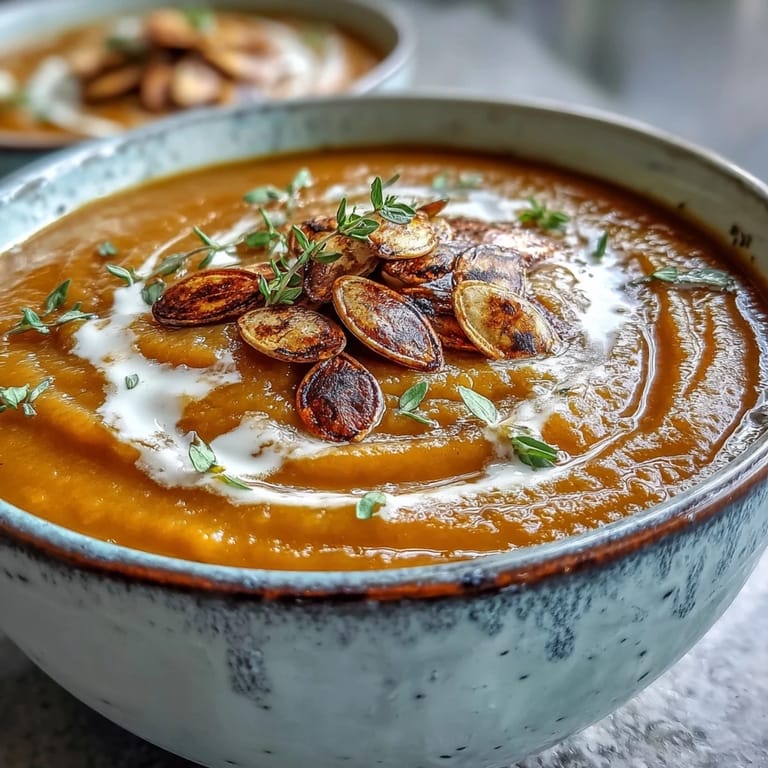
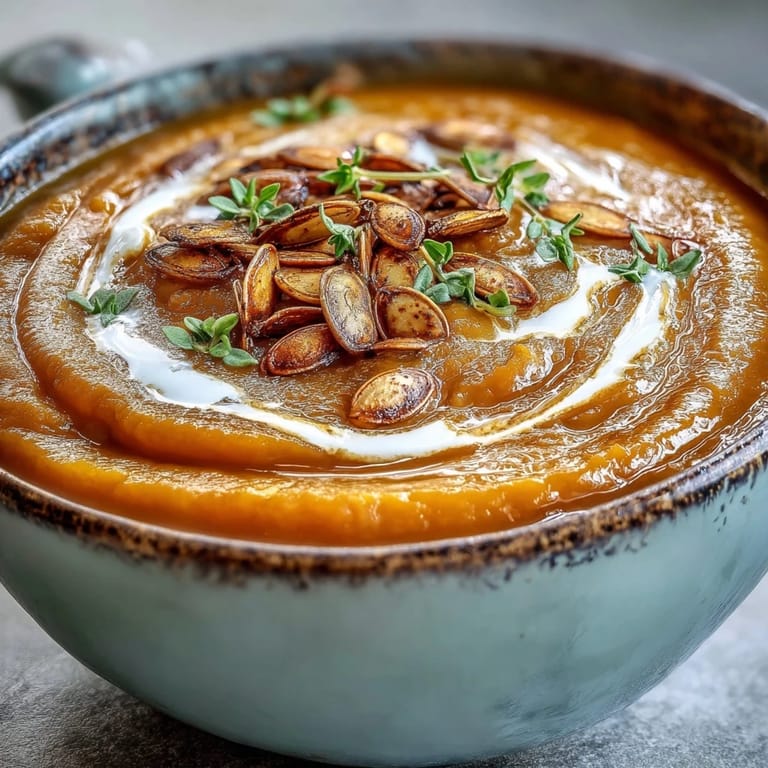
- Ladle into bowls and top with pumpkin seeds that crunch, a drizzle of cream that swirls, and a fresh thyme leaf that says you cared about the details. This last step is what transforms a bowl into an experience.
 Save
Save My daughter declared this her favorite soup after I added pumpkin seeds, and now she helps me make it every time the weather turns crisp. Watching her carefully sprinkle them on top like she's conducting some grand finale reminds me that cooking isn't just about feeding people—it's about creating moments they'll remember.
The Secret of Roasting
Roasting vegetables sounds like it should be complicated, but it's actually one of the kindest things you can do in a kitchen. The dry heat of the oven concentrates sugars and creates those caramelized edges that add depth boiling can never touch. I used to think I was supposed to throw everything in a pot with water, and I genuinely didn't know what I was missing until that neighbor showed up with her squash.
Cream or No Cream
This soup works beautifully either way, and I've served it both to strict vegans and to people who add cream without hesitation. The base is so naturally rich from the roasted vegetables that cream is truly optional—it's about preference, not necessity. I've found that coconut cream adds a subtle sweetness that almost tastes like it belongs there, while heavy cream is pure luxury.
Make It Your Own
The beauty of this soup is that it's forgiving and adaptable, which means you can make it feel like your own creation rather than following someone else's blueprint. I've added a small apple during roasting for subtle sweetness, extra garlic when I'm feeling bold, or a pinch of cumin for a different kind of warmth. The foundation is solid enough to handle your experiments without falling apart.
- Try adding a small apple to the roasting tray for a whisper of sweetness that surprises people in the best way.
- Save the soup for pairing with crusty bread or a grilled cheese sandwich if you want to turn lunch into something special.
- This freezes for up to three months, so make a double batch and give yourself the gift of future comfort.
 Save
Save This soup has become my go-to comfort, the thing I make when someone needs feeding or when I need to feel like I'm taking care of myself. It's proof that the simplest ingredients, treated with a little attention and time, can become something worth remembering.
Recipe FAQ
- → Can I make this soup ahead of time?
Absolutely. This soup actually tastes better the next day as flavors have time to meld. Store in an airtight container in the refrigerator for up to 4 days. Reheat gently over medium-low heat, stirring occasionally.
- → How do I achieve the smoothest texture?
Blend thoroughly with an immersion blender or countertop blender until completely silky. For extra smoothness, pass through a fine-mesh sieve after blending. Adding the cream at the end also creates a luxurious mouthfeel.
- → Can I freeze this soup?
Yes, freeze without the cream for up to 3 months. Thaw overnight in the refrigerator, then reheat and stir in fresh cream when serving. The texture remains excellent after freezing.
- → What can I substitute for butternut squash?
Other winter squash like acorn, delicata, or kabocha work beautifully. Sweet potatoes or pumpkin also create similar results. Adjust roasting times as different vegetables may cook at slightly different rates.
- → How can I add more protein?
Stir in white beans like cannellini during the final simmer, or serve with roasted chickpeas on top. Adding a dollop of Greek yogurt instead of cream also boosts protein content.