 Save
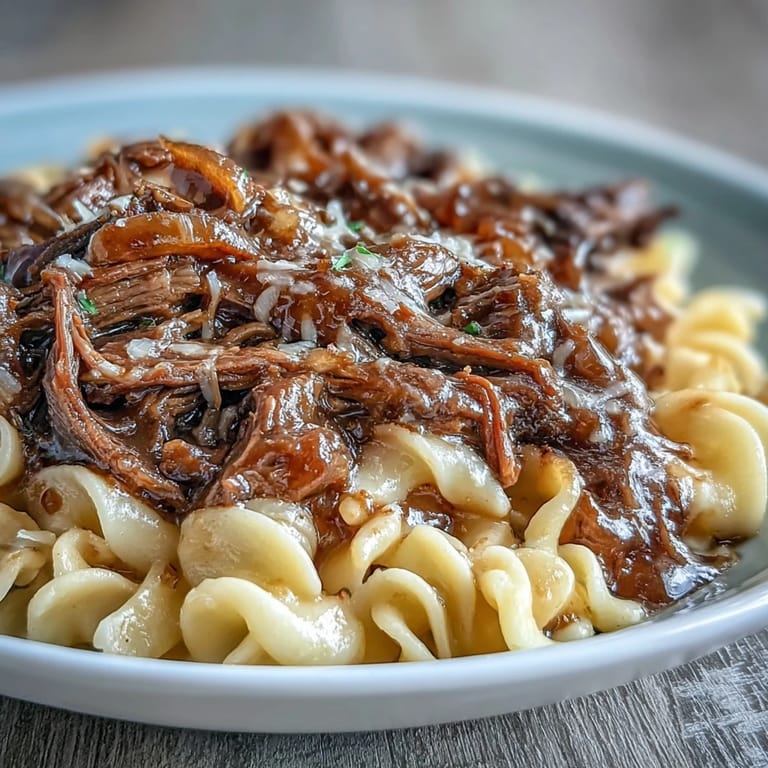
Save There was this Sunday when my neighbor brought over a pot of something that smelled like a French bistro had moved into my kitchen—rich, deeply savory, with caramelized onions that seemed to have been cooked with patience I didn't know I had. She explained it was just a crockpot situation, eight hours of gentle heat while she did literally anything else, and I was sold immediately. The beef fell apart at the mere suggestion of a fork, and when she spooned it over egg noodles with that mahogany-colored gravy clinging to every strand, I understood why she'd been sneaking tastes all afternoon.
I made this for my parents last winter when they were stuck at my house during an unexpected snowstorm, and my dad—who usually eats everything with the urgency of someone late for a meeting—actually paused mid-bite to ask what I'd done differently. Nothing, really, except let time do the work, but that moment of him genuinely savoring something I'd made stayed with me longer than it had any right to.
Ingredients
- Beef chuck roast (3 lbs): This cut has enough marbling and connective tissue to become absolutely luxurious after slow cooking, nothing fancy required.
- Olive oil (2 tbsp): Just enough to get that gorgeous sear without making things greasy, which is the whole point of this step.
- Yellow onions (2 large, thinly sliced): Thin slicing means they break down into the gravy rather than staying chunky, and eight hours of cooking transforms their natural sugars into something borderline addictive.
- Garlic (4 cloves, minced): Added after the onions have already caramelized so it doesn't burn and turn bitter.
- Fresh thyme (1 tbsp or 1 tsp dried): Dried works fine, but fresh thyme leaves release their oils more delicately if you're in a position to use them.
- Tomato paste (2 tbsp): A small amount adds umami depth without making the dish taste tomatoey.
- Beef broth (1 cup): Quality matters here since there's nowhere for mediocre broth to hide.
- Dry white wine (1 cup): The alcohol cooks off, leaving behind a subtle complexity, though extra broth works too if you prefer.
- Worcestershire sauce (2 tbsp): This is the secret whisper that makes people ask what they're eating.
- Kosher salt and black pepper: Seasoning in layers as you go prevents a one-note result.
- Wide egg noodles (12 oz): The width catches and holds onto that precious gravy better than thin pasta ever could.
- Unsalted butter (2 tbsp): Tossed with the noodles so everything stays silky and separate rather than clumping.
- Gruyère or Swiss cheese (1 cup, optional): A shaving or sprinkle adds a subtle funk that elevates this from comfort food to something slightly more intentional.
- Fresh parsley (2 tbsp, chopped): A final brightness that cuts through the richness and makes the dish look like you tried.
Tired of Takeout? 🥡
Get 10 meals you can make faster than delivery arrives. Seriously.
One email. No spam. Unsubscribe anytime.
Instructions
- Season and sear your beef:
- Pat the chuck roast dry with paper towels, then season generously on all sides with salt and pepper. In a large skillet over medium-high heat, warm the olive oil until it shimmers slightly, then nestle the roast in and let it sit undisturbed for a few minutes so it develops that crucial brown crust before turning it.
- Caramelize the onions:
- Keep that same skillet going and add your thinly sliced onions, stirring occasionally as they soften and gradually turn golden, then deeper amber over eight to ten minutes. This is where patience genuinely changes the final flavor, so resist the urge to rush it on high heat.
- Build the flavor base:
- Once your onions are properly caramelized, add the minced garlic, fresh thyme, and tomato paste all at once, stirring constantly for just a minute until the kitchen smells like something from a restaurant kitchen. This brief cooking moment mellows the raw edges and coaxes out the aromatics.
- Deglaze and combine:
- Pour the white wine into the hot skillet and use a wooden spoon to scrape up every brown bit clinging to the bottom, then let it bubble for about two minutes before pouring the entire mixture over the beef in your waiting crockpot. All those caramelized fragments are pure flavor.
- Slow cook low and long:
- Add the beef broth and Worcestershire sauce to the crockpot, cover it, and set it to low for eight hours. Resist opening it repeatedly to check progress, which only releases heat and extends cooking time.
- Shred and combine:
- When those eight hours are finally up, carefully remove the beef to a cutting board and use two forks to gently pull it into shreds, then return everything to the crockpot where it'll absorb all that onion-rich gravy. Stir it together and let it sit for a few minutes to marry the flavors.
- Cook and finish the pasta:
- Bring a large pot of salted water to a rolling boil, add your egg noodles, and cook according to package instructions until they're tender but not mushy, then drain and immediately toss with butter so they don't stick together. This keeps them from becoming a starchy clump.
- Plate and serve:
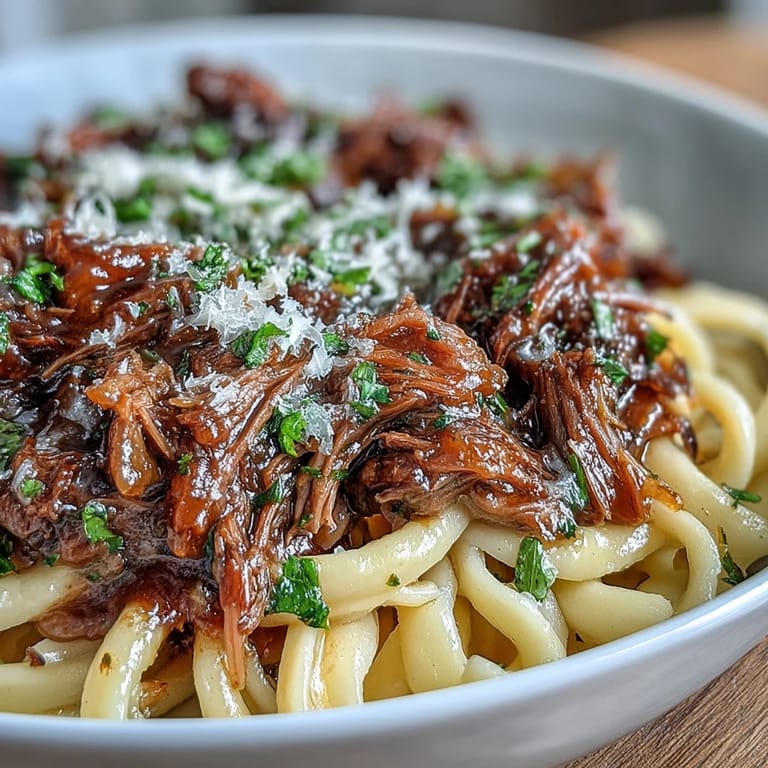
- Twirl buttered noodles onto warm plates, top generously with shredded beef and all that mahogany gravy, then finish with a sprinkle of Gruyère cheese and fresh parsley if you've got it on hand. Serve immediately while everything is still warm.
 Save
Save I'll never forget my friend Sarah tasting this for the first time and literally closing her eyes, and when she opened them, she asked if I'd somehow figured out how to bottle restaurant-quality cooking and keep it in my crockpot. It wasn't magic, just time and attention to detail in all the right moments, but it felt like something worth explaining.
The Magic of Slow Cooking Beef
Slow cooking isn't just about convenience, though eight hours of hands-off time is certainly convenient. It's a transformative process where collagen breaks down into gelatin, muscle fibers relax, and every ounce of beef becomes exponentially more tender than any quick-seared alternative. The low, consistent heat allows the beef to braise gently rather than toughen, which is why chuck roast—a cut that would be tough if cooked quickly—becomes melt-in-your-mouth tender. This is the lesson that changed how I approach tougher, cheaper cuts entirely.
Why Caramelization Matters Here
Those onions aren't just a side note in this recipe; they're genuinely the star. When onions caramelize, their natural sugars undergo a complex transformation that creates hundreds of new flavor compounds, turning what starts as sharp and pungent into something sweet, deep, and savory all at once. Eight to ten minutes might feel long, but it's the difference between onion-flavored gravy and gravy that tastes like someone spent hours on it. I learned this after trying to rush the process once, and the flatter taste taught me that some things truly cannot be hurried.
Serving and Customization Ideas
This dish is endlessly adaptable depending on what you have in your kitchen and what mood you're in. Some nights I add a splash of heavy cream at the very end for a silkier sauce, while other times I skip the cheese and let the beef and onions stand alone. A crisp green salad on the side cuts through the richness, and thick slices of crusty bread are genuinely essential for sopping up every last drop of gravy.
- Stir in a quarter cup of heavy cream if you want a slightly richer, more luxurious sauce.
- Try Swiss cheese instead of Gruyère if that's what's in your fridge, or leave it off entirely if you're avoiding dairy.
- Pair this with a medium-bodied red wine like Merlot or Pinot Noir, which echoes the wine already in the pot.
 Save
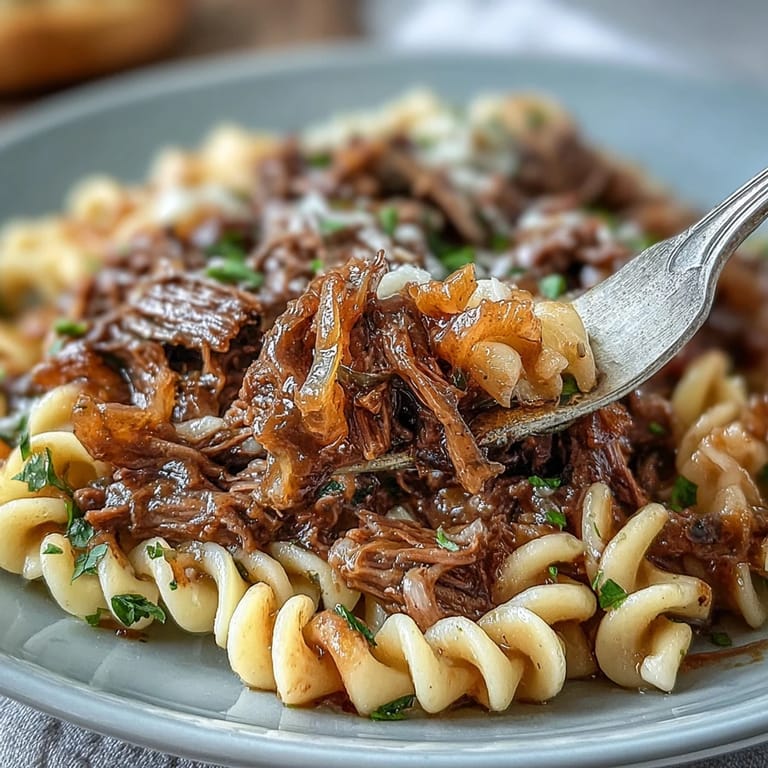
Save This recipe became a staple at my house not because it was complicated or special in any showy way, but because it delivered something genuine every single time. The kind of meal that reminds people why home cooking matters.
Recipe FAQ
- → How do you achieve tender beef in this dish?
Slow cooking the beef on low heat for 8 hours helps break down the connective tissues, resulting in tender, flavorful meat that shreds easily.
- → What is the best way to caramelize onions for the gravy?
Cook thinly sliced onions slowly over medium heat, stirring occasionally until they turn deep golden brown and sweet, usually about 8–10 minutes.
- → Can I substitute the egg noodles with other pasta types?
Yes, wide pasta shapes like pappardelle or fettuccine work well to hold the rich gravy and shredded beef.
- → What wine pairs well with this slow-cooked beef dish?
Medium-bodied reds such as Merlot or Pinot Noir complement the rich flavors without overpowering the dish.
- → Is it necessary to sear the beef before slow cooking?
Searing locks in flavors and adds depth to the dish by creating a caramelized crust on the roast before slow cooking.
- → Can this meal be made creamier?
Stirring in a small amount of heavy cream before serving adds a smooth, creamy texture to the gravy.