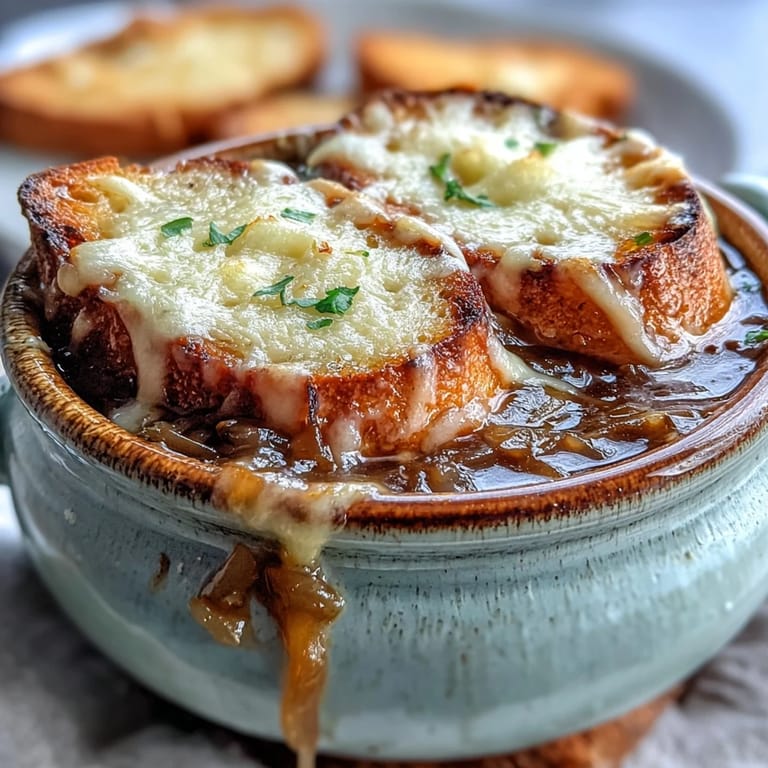
 Save
Save There's something about the smell of onions turning golden that stops time in a kitchen. My neighbor once called through the fence asking if something was burning, but it was just the magic happening—those layers of flavor developing slowly, deliberately, with no rushing allowed. French onion soup taught me that patience isn't boring; it's where real depth comes from. The first time I made it, I couldn't believe something so simple could taste so impossibly rich and comforting.
I made this soup for my sister during a particularly gray November evening, and she sat at my kitchen table with a bowl warming her hands, barely speaking until it was gone. That's when I understood this dish isn't really about technique or ingredients—it's about creating a moment where someone feels genuinely cared for through food.
Ingredients
- Yellow onions: Use the large ones and slice them thin; they have enough natural sugar to caramelize into something extraordinary.
- Leeks: They add a subtle sweetness and softer texture that regular onions can't quite achieve—don't skip them.
- Shallots: These bring an earthy complexity that makes people ask what your secret ingredient is.
- Garlic: Mince it fine and add it late so it stays tender and integrated rather than sharp.
- Butter and olive oil: The butter carries flavor while the oil prevents burning; this combination matters.
- Beef broth: Quality broth is non-negotiable here—this is the foundation everything else builds on.
- Worcestershire and soy sauce: These seem like an odd couple but they add umami depth that makes the whole soup sing.
- White wine: It cuts through richness and adds brightness; don't use anything you wouldn't drink.
- Fresh thyme: If using dried, use half the amount—dried herbs can overpower this delicate balance.
- Baguette: Slice it yourself if possible; pre-sliced bread often falls apart under the cheese.
- Gruyère cheese: It melts beautifully and has a nutty flavor that complements caramelized onions perfectly.
Tired of Takeout? 🥡
Get 10 meals you can make faster than delivery arrives. Seriously.
One email. No spam. Unsubscribe anytime.
Instructions
- Heat your fat and begin the long journey:
- In your heavy pot, melt the butter with olive oil over medium heat until it smells nutty and inviting. You're setting the stage for what comes next.
- Caramelize the alliums with intention:
- Add onions, leeks, and shallots, stirring frequently for 35 to 40 minutes until they're deep golden brown and have given up most of their moisture. This isn't rushed; let them tell their story on the heat.
- Welcome the garlic:
- Stir in minced garlic and cook just until fragrant, about 2 minutes—you want it incorporated but not bitter.
- Deglaze with wine:
- Pour in the white wine, scraping the bottom of the pot with your spoon to lift up all those browned bits packed with flavor. The kitchen will smell like a wine bar, which is exactly right.
- Build the broth:
- Add beef broth, Worcestershire sauce, soy sauce, thyme, and bay leaf, then bring everything to a simmer. Let it cook gently uncovered for 30 minutes, allowing flavors to marry and deepen.
- Season to your taste:
- Taste as you go and adjust salt and pepper—this is your soup, so make it right for you. Fish out the bay leaf before moving forward.
- Toast the bread:
- Arrange baguette slices on a baking sheet and toast under the broiler until golden on both sides, about 1 to 2 minutes per side. Watch carefully; they can go from perfect to charred quickly.
- Assemble in bowls:
- Ladle hot soup into oven-safe bowls and top each with toasted baguette slices and a generous handful of Gruyère cheese.
- Broil until melted and bubbly:
- Place bowls under the broiler for 3 to 5 minutes until the cheese is melted, bubbling, and starting to brown at the edges. This is the moment everything comes together.
- Serve immediately:
- Bring the bowls straight to the table while everything is still hot and the cheese is at its creamy best.
 Save
Save My daughter once said this soup tasted like a warm hug that you could eat, and I've never heard it described better. That's what happens when you take the time to do things right—the food becomes something more than sustenance.
The Art of Caramelization
Most people don't understand that caramelizing onions is as much about patience as it is about technique. The heat needs to be medium, steady, and unwavering; too high and they'll brown unevenly and burn, too low and they'll just steam. Stir frequently and don't get distracted—this is your moment to be present in the kitchen, watching the transformation unfold.
Why the Umami Matters
Worcestershire and soy sauce sound like they don't belong in French cuisine, but they're the secret layer that makes people lean back and say, 'What is that?' It's not about tasting Asian or British; it's about umami—that savory, satisfying depth that makes everything taste more like itself. Once you understand this principle, it changes how you cook everything.
The Cheese and Bread Finale
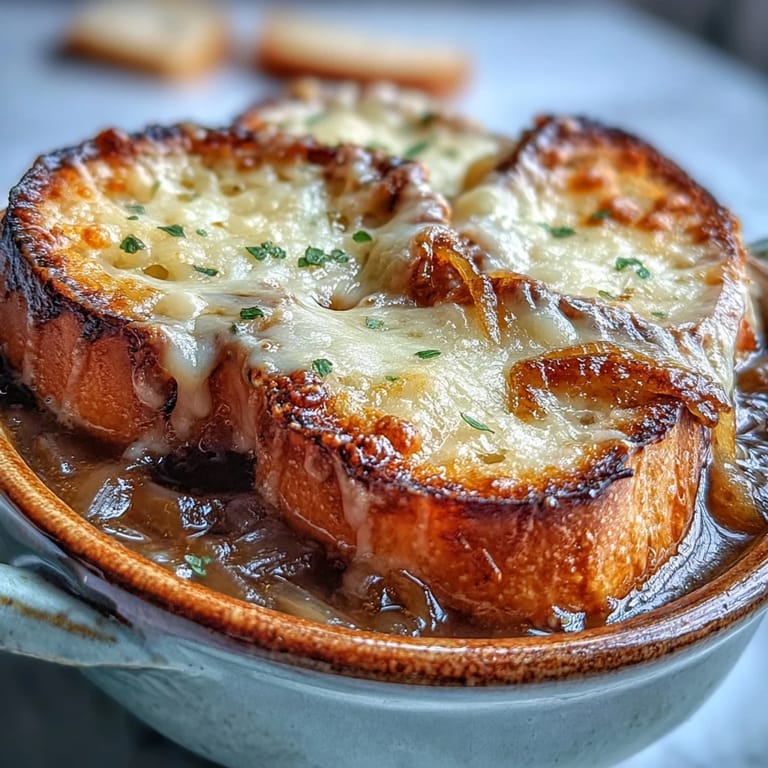
The toasted baguette and melted Gruyère aren't just toppings; they're the final act in a three-course play. The bread absorbs the soup while staying textured, and the cheese adds richness and a slight nuttiness that pulls everything together. This last step under the broiler is when the dish transforms into something restaurant-quality right in front of you.
- If you can't find Gruyère, Swiss or Emmental cheese works beautifully as a substitute.
- Toast the bread just before serving so it stays crispy rather than soggy from sitting in the soup.
- For a vegetarian version, use high-quality vegetable broth and check that your Worcestershire sauce is meat-free.
 Save
Save This soup has taught me that the best dishes don't need to be complicated—they just need time, good ingredients, and someone who cares enough to stand at the stove. Make it for someone you love.
Recipe FAQ
- → How do I achieve perfectly caramelized onions?
Cook onions, leeks, and shallots over medium heat with butter and olive oil, stirring frequently. The process takes 35–40 minutes to reach deep golden brown. Don't rush—this slow caramelization develops the sweet, savory depth that defines this dish.
- → Can I make this vegetarian?
Yes. Substitute high-quality vegetable broth for beef broth and use vegetarian Worcestershire sauce or omit it entirely. The result remains rich and satisfying thanks to the caramelized alliums and umami from soy sauce.
- → What cheese works best for topping?
Gruyère is traditional, offering excellent melt and nutty flavor. Swiss or Emmental make great alternatives. Adding Parmesan enhances the savory depth. Use freshly grated cheese for best melting results.
- → Can I freeze this soup?
Freeze the soup base without bread and cheese for up to 3 months. Thaw overnight in refrigerator, reheat gently, and add fresh toasted baguette and cheese when serving. The texture remains excellent after freezing.
- → What wine pairs well with this soup?
A crisp dry white wine like Sauvignon Blanc or Chardonnay complements the rich, savory broth. For red wine lovers, a light Pinot Noir works nicely. The same white wine used in the soup makes an ideal serving pairing.
- → How can I add more depth of flavor?
Add a splash of sherry or cognac when deglazing the pot. Use homemade beef broth if possible. Toast the baguette slices until deeply golden before topping with cheese. Fresh thyme and proper seasoning also enhance complexity.