 Save
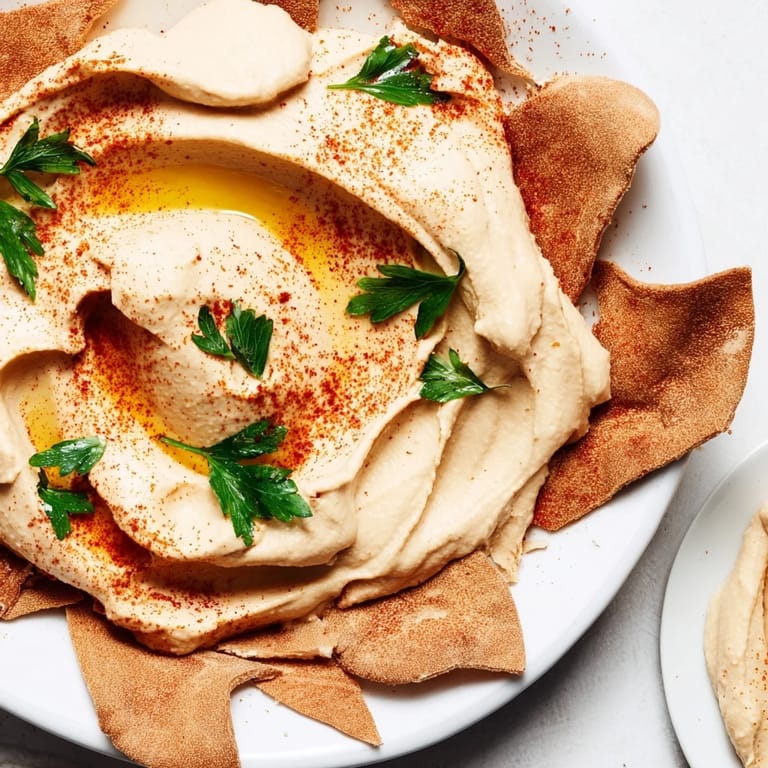
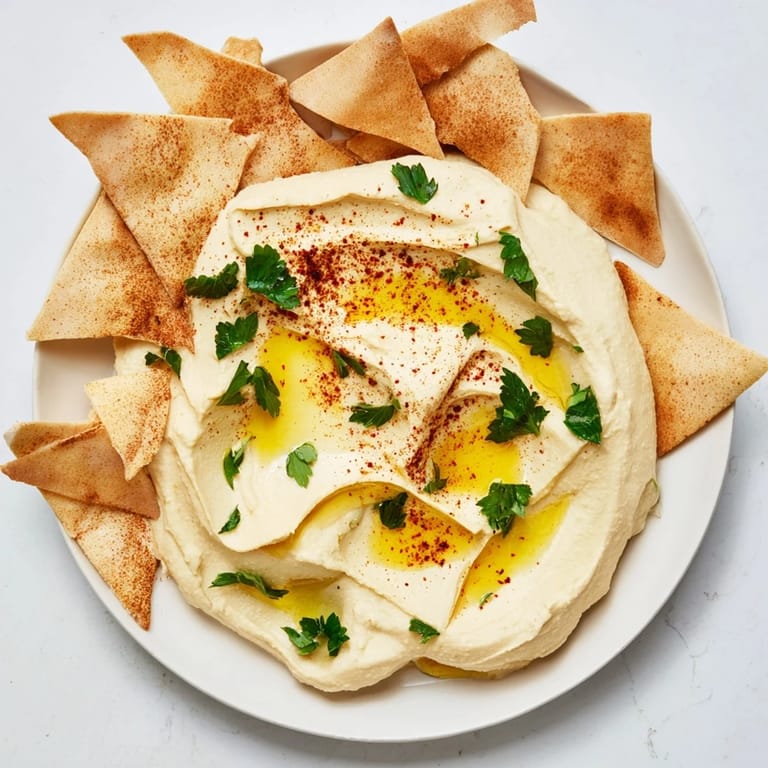
Save I was browsing a cookbook one afternoon when a photograph stopped me cold: golden hummus shaped into rolling mounds, with triangular pita chips arranged like windswept dunes. It looked almost too theatrical for a weeknight appetizer, but I made it anyway. The moment my guests arrived and saw it on the table, their eyes lit up before they'd even tasted it. That's when I knew this dish had something special—it transforms humble chickpeas into edible art.
A friend who'd grown up in Beirut watched me plate this once, and instead of critiquing my technique, she smiled and said the hummus reminded her of her grandmother's kitchen. She showed me how to swirl it differently, creating deeper waves. Now whenever I make it, I think of her hands guiding mine, and how food bridges the space between different childhoods.
Ingredients
- Chickpeas (one 15 oz can): Drain and rinse these twice—the extra step removes starches that make hummus grainy instead of cloud-soft.
- Tahini (3 tbsp): This sesame paste is the soul of the dish; buy it fresh from a store with good turnover, as old tahini tastes bitter and musty.
- Fresh lemon juice (2 tbsp): Never use bottled; the brightness only comes from fruit you've squeezed yourself.
- Extra-virgin olive oil (2 tbsp, plus more for drizzling): Good oil costs a few dollars more and tastes like sunshine—it matters here.
- Garlic clove (1, minced): Raw garlic packs punch, so start with less and taste as you go.
- Ground cumin (1/2 tsp): Toast it in a dry pan first if you have time; the warmth deepens its earthiness.
- Fine sea salt (1/2 tsp, plus more to taste): Salt is your tuning fork—taste constantly and adjust freely.
- Cold water (2–3 tbsp): Add this slowly while blending to reach the exact creamy texture you want.
- Pita breads (4 large): Fresh pita chips are incomparable to stale storebought ones; buy pita the day you plan to use it.
- Smoked paprika (1/2 tsp): This adds warmth and visual drama without heat.
- Sumac or sweet paprika (pinch for garnish): Sumac brings a subtle tanginess that makes people ask what that flavor is.
- Fresh parsley (optional): A small handful of green anchors the whole dish and catches the light beautifully.
Tired of Takeout? 🥡
Get 10 meals you can make faster than delivery arrives. Seriously.
One email. No spam. Unsubscribe anytime.
Instructions
- Heat your oven and prep the pans:
- Preheat to 375°F (190°C) and line a baking sheet with parchment paper. This dry, even heat is what gives pita chips their shatter.
- Cut the pita into dunes:
- Slice each pita into irregular, curved triangles—think rolling hills, not uniform chips. The unevenness is intentional and beautiful.
- Oil and season the chips:
- Brush both sides lightly with olive oil, then sprinkle with smoked paprika, cumin, and salt. Don't be heavy-handed; the pita will dehydrate and concentrate flavors as it bakes.
- Bake until golden and crisp:
- Arrange in a single layer and bake 8–10 minutes, turning halfway through so they brown evenly. They'll continue crisping as they cool, so pull them out when they're just golden, not dark brown.
- Blend the hummus:
- While chips toast, combine drained chickpeas, tahini, lemon juice, olive oil, garlic, cumin, and salt in a food processor. Blend for 2–3 minutes until completely smooth, adding cold water a tablespoon at a time.
- Taste and adjust:
- This is the step most people skip, but your palate is unique—add more salt, more lemon, more garlic if it whispers instead of sings to you.
- Sculpt into mounds:
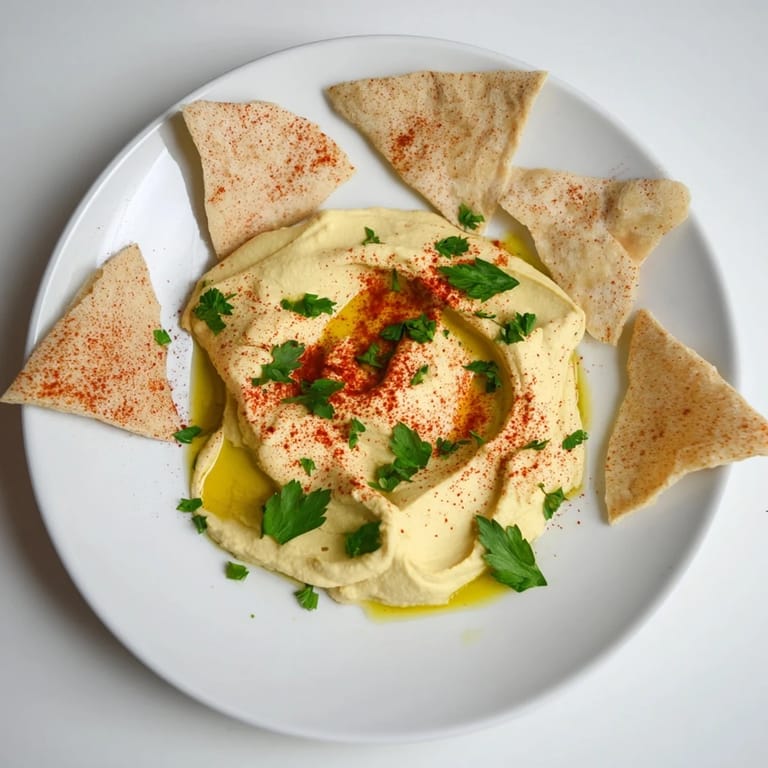
- Spoon the hummus onto a serving platter and use the back of a spoon or an offset spatula to create smooth, undulating waves. Let your hand move like you're shaping sand.
- Finish and arrange:
- Drizzle with olive oil, dust lightly with sumac or paprika, scatter parsley if you're using it, and nestle the pita chips around the hummus like they're blowing across the desert.
 Save
Save I served this at a potluck once where everyone was stressed and quiet, and watching people's faces soften as they tasted it reminded me why I cook at all. It wasn't the ingredients—it was the care baked into those crispy chips and the smoothness poured into the hummus.
The Story Behind the Dunes
The Sahara Dune is a dish born from the collision of two loves: the Mediterranean's humble ingredients and the drama of the desert. It takes the most ordinary chickpea and makes it look like something from a Moroccan riad kitchen. There's something deeply satisfying about food that tells a story, that makes people pause and admire before they eat. This appetizer does exactly that—it's playful without trying too hard, luxurious without being pretentious.
Making It Your Own
Hummus is forgiving and deeply personal—your version should taste like your kitchen. If you love heat, add cayenne or a dash of harissa. If you grew up with roasted garlic, use three cloves instead of one. I once added roasted red pepper to the hummus and suddenly it became sunset over the dunes, and my guests asked for the recipe immediately. Don't be afraid to drift from the path; some of the best versions happen by accident.
Serving and Pairing
This dish shines as part of a mezze spread, but it's equally at home as a solo star. Serve it with cool, crisp sliced cucumbers and carrots for contrast, or pair it with a cold Sauvignon Blanc that cuts through the richness of the tahini. I've also served it alongside roasted vegetables and fresh flatbread, and each time the hummus seems to elevate everything around it. There's a reason hummus has traveled the world—it makes friends with almost anything.
- Make the hummus up to three days ahead; it actually deepens in flavor as it sits.
- Cut and season the pita chips the morning you plan to serve, then toast them an hour before guests arrive.
- If the hummus firms up in the fridge, let it sit at room temperature for 15 minutes before serving.
 Save
Save This recipe proves that the simplest dishes, made with intention and care, can be the ones people remember long after the last chip is gone. Make it, watch people smile, and let it become part of your story too.
Recipe FAQ
- → What gives the hummus its creamy texture?
The creamy texture comes from blending chickpeas with tahini, olive oil, fresh lemon juice, garlic, and adding cold water gradually for smoothness.
- → How are the pita chips shaped to resemble dunes?
The pita breads are cut into irregular, curved triangles that mimic the rolling shapes of desert dunes before being baked crisp.
- → Can I make this dish gluten-free?
Yes, replace pita bread with gluten-free crackers or gluten-free pita varieties to accommodate gluten sensitivity.
- → What spices enhance the flavor of the pita chips?
Smoked paprika, ground cumin, and fine sea salt are lightly dusted on the pita chips for a smoky, aromatic flavor.
- → How should the hummus be served for the best presentation?
Shape the hummus into smooth, undulating mounds using a spoon or offset spatula on a serving platter, then drizzle olive oil and sprinkle with sumac or sweet paprika.