 Save
Save There's something about autumn that makes me crave soup, and one October afternoon while browsing a farmer's market, a tower of butternut squashes caught my eye. I'd walked past them a dozen times before, but this time I actually stopped and thought about what I could do with one. A vendor nearby was roasting spices, and that combination of cinnamon and nutmeg sparked something—I went home and created this velvety soup that's become my go-to when the weather turns cool.
I made this soup for my sister's dinner party last November, nervous because I'd never pureed anything before in front of guests. Watching that rough mixture transform into something silky and smooth under the immersion blender was genuinely magical, and everyone went quiet after their first spoonful in that way that means you've done something right.
Ingredients
- 1 large butternut squash (about 1.2 kg / 2.5 lbs), peeled, seeded, and cubed: The star of the show—roasting brings out its natural sweetness and depth, so don't skip that step or rush it.
- 1 medium yellow onion, chopped: This builds a savory foundation that keeps the soup from tasting one-dimensional.
- 2 cloves garlic, minced: Just enough to whisper in the background, not shout.
- 1 liter (4 cups) vegetable broth: Use something you'd actually drink on its own; weak broth makes weak soup.
- 250 ml (1 cup) water: This keeps things from becoming too concentrated and lets the delicate flavors breathe.
- 120 ml (1/2 cup) coconut milk or heavy cream: Coconut gives it an elegant lightness, while cream makes it indulgent—choose based on your mood.
- 2 tbsp pure maple syrup: Real maple changes everything; the imitation stuff tastes thin and one-note by comparison.
- 1/4 tsp ground nutmeg and 1/2 tsp ground cinnamon: These warm spices are what make people ask for the recipe.
- 2 tbsp olive oil: Divided between roasting the squash and sautéing the aromatics.
- Salt and freshly ground black pepper, to taste: Taste as you go because seasoning is personal.
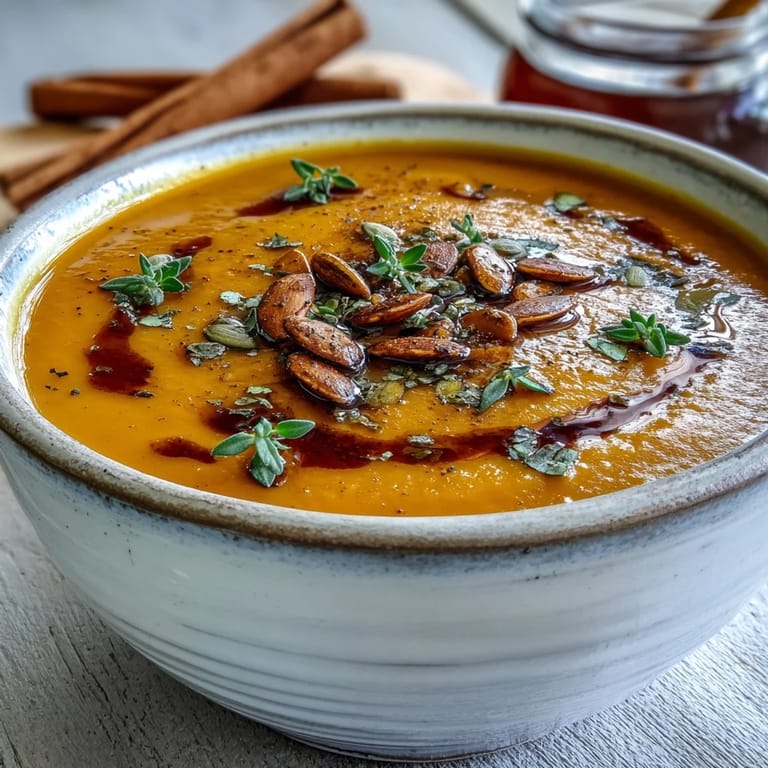
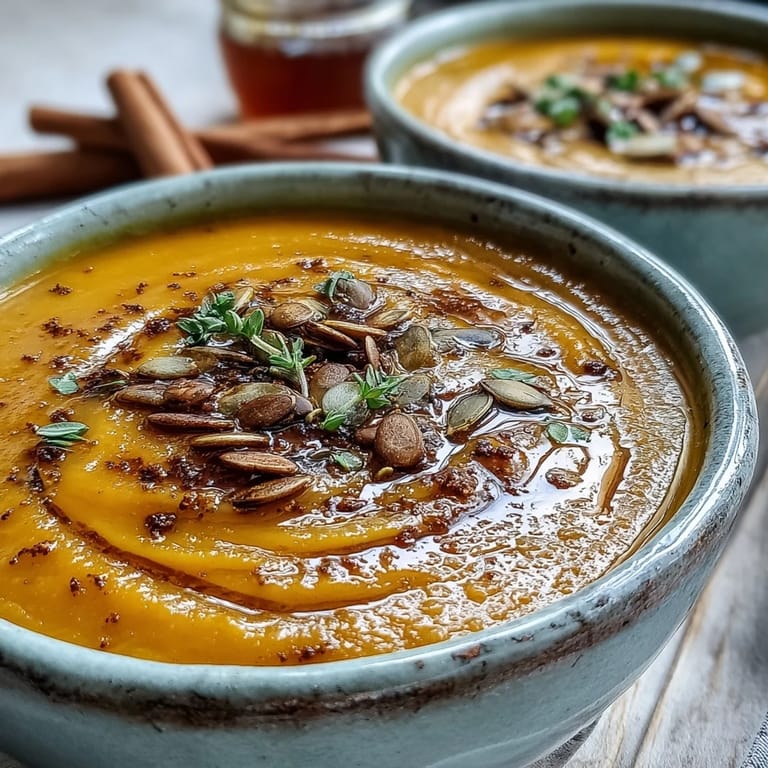
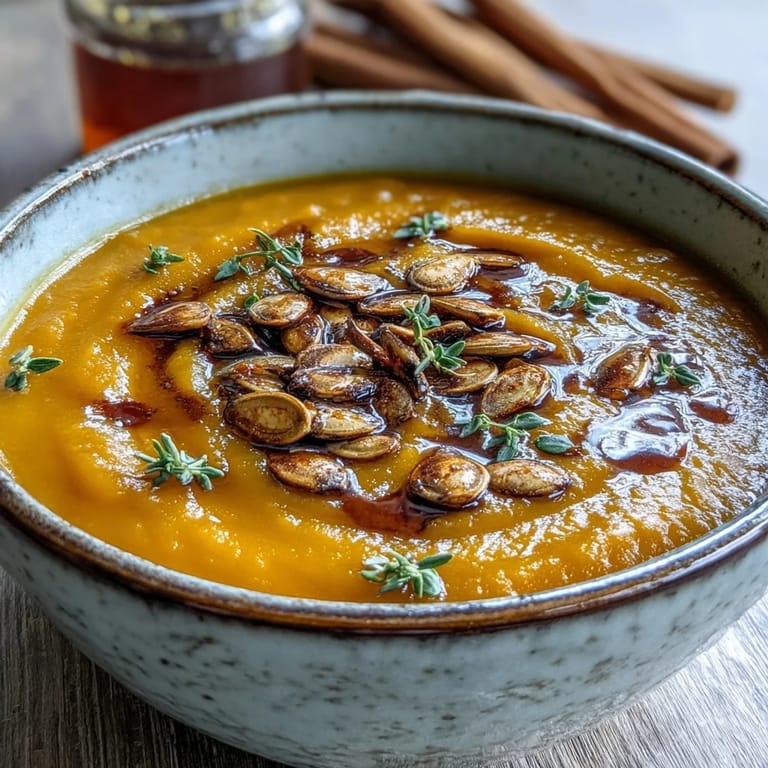
- Toasted pumpkin seeds, extra maple syrup drizzle, and fresh thyme (optional garnish): These finish the bowl with texture and visual appeal.
Tired of Takeout? 🥡
Get 10 meals you can make faster than delivery arrives. Seriously.
One email. No spam. Unsubscribe anytime.
Instructions
- Prep and Preheat:
- Get your oven to 200°C (400°F) while you peel, seed, and cube that butternut squash. Wear gloves if you have them—the squash can be stubborn and your hands will thank you.
- Roast the Squash:
- Toss your cubes with 1 tablespoon olive oil, salt, and pepper, then spread them on a baking sheet. Roast for 30–35 minutes, stirring halfway through, until they're tender and the edges are caramelized—you're looking for those golden-brown spots where the sweetness concentrates.
- Build the Base:
- While the squash roasts, heat the remaining tablespoon of oil in a large pot over medium heat. Sauté your chopped onion for 4–5 minutes until it turns translucent, then add the garlic and cook just 1 minute more until fragrant.
- Combine Everything:
- Add the roasted squash to the pot along with the vegetable broth, water, maple syrup, nutmeg, and cinnamon. Give it all a good stir so the spices distribute evenly.
- Simmer and Blend:
- Bring everything to a boil, then lower the heat and let it simmer gently for 10 minutes so the flavors get to know each other. Using an immersion blender, purée the mixture until it's smooth and creamy—work in batches with a regular blender if you don't have an immersion one, and let the soup cool slightly before blending hot liquid.
- Finish and Serve:
- Stir in your coconut milk or cream, then taste and adjust the salt and pepper. If it's cooled down while blending, reheat it gently over medium heat, then ladle into bowls and garnish with pumpkin seeds, a drizzle of maple syrup, and fresh thyme if you're feeling fancy.
 Save
Save My neighbor smelled this soup simmering through our shared wall and knocked on my door with this hopeful expression on her face. We ended up eating it together while talking about our weeks, and I realized that sometimes the best thing about cooking is how it gives you an excuse to slow down and actually sit with someone.
Why Roasting Makes All the Difference
The magic of this soup lives in that roasting step, and I learned this the hard way when I once tried to rush by just boiling the squash pieces. The result was pale, watery, and tasted like something you'd eat because it was healthy, not because it brought you joy. Roasting concentrates the squash's natural sugars and creates those caramelized edges that give the soup depth and complexity you simply can't achieve any other way.
The Cream Question
I've made this both ways—with coconut milk for a lighter, subtly tropical version, and with heavy cream for something richer that feels more like autumn comfort in a bowl. The choice genuinely changes the personality of the dish. Coconut milk keeps the focus on the squash itself, while cream softens everything and makes it feel more indulgent. There's no wrong answer, just different moods.
Serving Suggestions and Storage
This soup tastes even better the next day after the flavors have had time to marry and deepen, which makes it perfect for batch cooking on a lazy Sunday. Store it in the fridge for up to four days, or freeze it in portions for up to three months. Reheat gently on the stove rather than blasting it in the microwave, which can make the texture grainy. Pair it with crusty bread for dipping, a fresh green salad for contrast, or even grilled cheese if you're feeling nostalgic.
- Make it ahead—this soup actually improves after sitting in the fridge overnight as the spices continue to develop.
- Freeze individual portions in containers so you've got restaurant-quality soup ready whenever you need comfort food.
- Don't be shy with the garnishes; toasted pumpkin seeds and that final maple drizzle turn a simple bowl into something special.
 Save
Save This soup has become my answer to so many different moments—when I need comfort, when I want to impress someone, or when autumn finally arrives and I remember why I love this season. It's the kind of recipe that feels like giving someone a warm hug.
Recipe FAQ
- → Can I make this soup ahead of time?
Absolutely. This soup actually improves after sitting in the refrigerator overnight as the flavors continue to develop. Store in an airtight container for up to 4 days and reheat gently on the stove, adding a splash of broth or water if needed to adjust consistency.
- → Is roasting the squash necessary?
Roasting is highly recommended because it caramelizes the natural sugars in the squash, creating depth of flavor that boiling cannot achieve. However, in a pinch, you can boil the cubed squash in the broth until tender, though the final result will be slightly less complex.
- → Can I substitute other winter squash?
Yes. Acorn squash, kabocha, or even pumpkin work beautifully in this preparation. Adjust cooking times slightly depending on the density of your chosen squash. Each variety brings its own subtle sweetness to the finished bowl.
- → How do I get the smoothest texture?
An immersion blender works wonderfully directly in the pot. For ultra-smooth results, pass the puréed mixture through a fine-mesh sieve. This extra step removes any remaining fibers and ensures restaurant-quality silkiness.
- → Can I freeze this soup?
This freezes exceptionally well for up to 3 months. Cool completely before transferring to freezer-safe containers, leaving space for expansion. Thaw overnight in the refrigerator and reheat slowly, whisking well to restore creaminess.
- → What can I use instead of coconut milk?
Heavy cream creates a richer finish, while cashew cream offers a dairy-free alternative with similar body. For a lighter version, simply omit the creamy element or use a splash of additional broth.