 Save
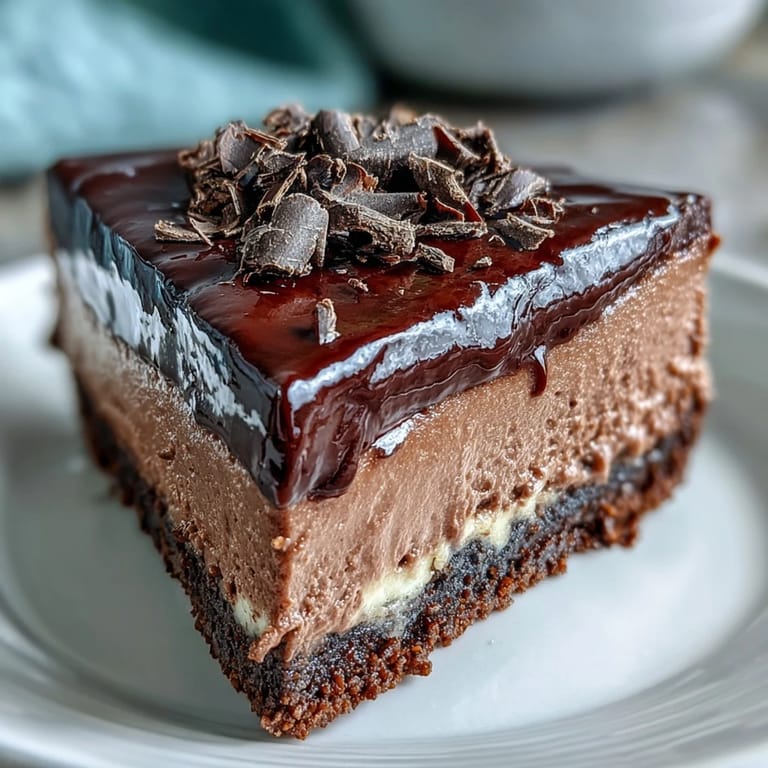
Save My sister called me mid-afternoon, frustrated that her favorite cheesecake tasted heavy after eating just two bites. That conversation stuck with me for weeks until I found myself staring at a container of cottage cheese in my fridge, wondering if it could replace the usual cream cheese base. The result was unexpectedly silky, deeply chocolatey, and somehow felt less like indulgence and more like something I could actually enjoy without guilt. That first slice, topped with a thin smear of yogurt and dark chocolate shavings, changed how I thought about dessert entirely.
I served this to my book club last spring, and watching my friend Sarah take that first bite—the skeptical pause, then the surprised smile—made the entire baking process worthwhile. She asked for the recipe before finishing her slice, which, in her words, "felt like actual cake but lighter." That moment reminded me that food doesn't have to fit traditional molds to feel special or satisfying.
Ingredients
- Graham cracker crumbs (120 g): The foundation of your crust—use finely crushed crackers so they pack down evenly without gaps.
- Coconut oil or melted butter (30 g): Choose whichever you have on hand; coconut oil gives a subtle richness while butter adds familiarity.
- Unsweetened cocoa powder (1 tbsp for crust, 50 g for filling): The quality of your cocoa matters here—splurge on a good brand since it's the star ingredient.
- Maple syrup (1 tbsp for crust): Binds the crust together and adds warmth; honey works too if you prefer.
- Low-fat cottage cheese (500 g): This is your secret weapon—blending it until completely smooth ensures no grainy texture sneaks into your cheesecake.
- Plain Greek yogurt (150 g): Adds tang and creaminess while keeping fat content down.
- Large eggs (2): They help set the filling, so don't skip them or substitute with flax eggs here.
- Granulated sugar or sweetener (100 g): Adjust based on your sweetener choice—some are sweeter than others, so taste as you go.
- Vanilla extract (1 tsp): Use pure vanilla; the imitation kind gets lost in the chocolate.
- Cornstarch (1 tbsp): Helps stabilize the filling and prevents that dreaded crack on top.
- Dark chocolate chips, melted and cooled (60 g): Let them cool slightly before mixing so the heat doesn't scramble your eggs.
- Greek yogurt for topping (30 g) and dark chocolate shavings: These finishing touches feel fancy but take less than a minute to add.
Tired of Takeout? 🥡
Get 10 meals you can make faster than delivery arrives. Seriously.
One email. No spam. Unsubscribe anytime.
Instructions
- Prepare your workspace:
- Preheat your oven to 170°C and line your springform pan with parchment paper so the crust doesn't stick to the bottom. Having everything ready means you won't be scrambling once you start mixing.
- Build the crust:
- Combine graham cracker crumbs, cocoa powder, coconut oil, and maple syrup in a bowl, stirring until the mixture looks like damp sand. Press it firmly and evenly into the bottom of your prepared pan, then bake for 8 minutes until it's set but still slightly fragrant—this partial bake keeps it from getting soggy once the filling goes on top.
- Blend your filling:
- Pour the cottage cheese into your food processor and let it run for 1-2 minutes, stopping to scrape down the sides, until it's completely smooth with no visible curds. Add the Greek yogurt, eggs, sugar, cocoa powder, vanilla, cornstarch, and cooled melted chocolate, then blend until the mixture is silky and uniform throughout.
- Combine and bake:
- Pour the filling over your cooled crust and smooth the top with a spatula, then slide it into the oven. Bake for 35-40 minutes until the center is just set but still has a gentle wobble when you shake the pan—this wobble is your signal that it's done, not overdone.
- Cool slowly:
- Turn off the oven, crack the door open a few inches, and let the cheesecake sit inside for a full hour to cool gently. This slow cooling prevents the dramatic cracks that happen when cheesecake goes from hot to cold too quickly.
- Chill and set:
- Move the cheesecake to the refrigerator for at least 3 hours, though overnight is ideal if you have the time. The filling will firm up completely and flavors will deepen, making it taste even better.
- Finish and serve:
- Just before serving, spread a thin layer of Greek yogurt on top if you'd like, then scatter dark chocolate shavings over the surface. Serve chilled and watch people's faces when they realize how light and satisfying it is.
 Save
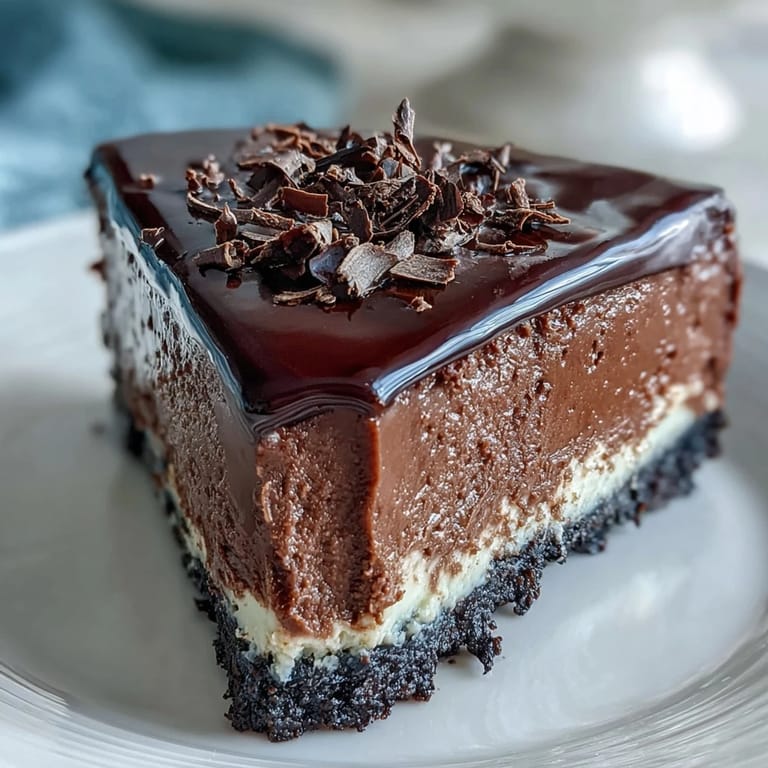
Save There's something quietly satisfying about serving a dessert that tastes indulgent but actually nourishes you. My colleague mentioned she brought this to a potluck and watched people reach for seconds, then thirds, completely unaware they were eating something high in protein. That shift—from viewing lighter food as a compromise to seeing it as genuinely delicious—feels worth celebrating.
The Magic of Cottage Cheese in Baking
Cottage cheese seemed like an odd choice the first time I considered it, but once blended, it becomes something entirely different. Its mild flavor disappears completely once combined with cocoa and vanilla, leaving only its most valuable gift: creaminess without the heaviness of full-fat cream cheese. I've since used this trick in brownies and tiramisu, always with the same surprised reaction from people who taste them.
Why This Cheesecake Doesn't Taste "Light"
The secret lies in layering flavors and textures rather than cutting corners. The dark chocolate isn't just for taste—it adds depth and richness that makes your brain register "indulgence" even though the numbers are lighter. The Greek yogurt brings tang that balances sweetness, and cornstarch ensures the filling sets properly without needing extra fat. These choices mean you're not sacrificing anything except the guilt.
Make It Your Own
Once you understand the basic structure, this recipe becomes wonderfully flexible. I've experimented with swapping cocoa powder for instant espresso powder, adding a tablespoon of bourbon, or layering crushed chocolate cookies into the crust. The cottage cheese and Greek yogurt base is stable enough to handle these variations, as long as you don't change the egg or starch ratios.
- Pair slices with fresh raspberries or strawberries for brightness and extra nutrients.
- Store leftovers covered in the refrigerator for up to 5 days, or freeze whole slices for up to a month.
- Bring it to room temperature for 15 minutes before serving if you prefer a softer, more mousse-like texture.
 Save
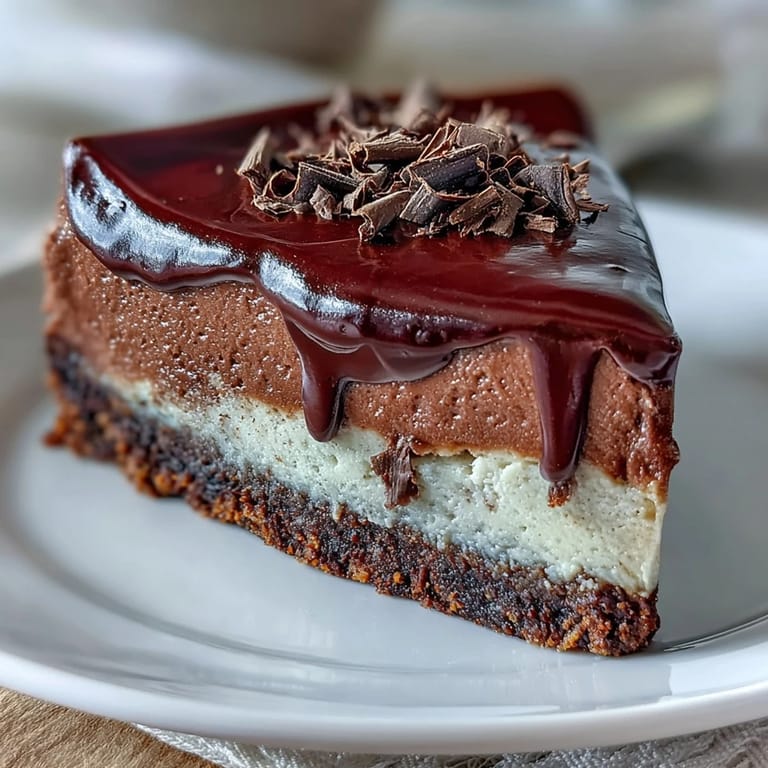
Save This cheesecake proved to me that lighter doesn't mean lesser—it just means smarter choices that respect both your body and your cravings. Make it once, and it'll become the dessert you return to whenever you want something that feels celebratory without the aftermath.
Recipe FAQ
- → Why use cottage cheese instead of cream cheese?
Cottage cheese creates a lighter, higher-protein alternative to traditional cream cheese while maintaining a creamy, smooth texture when blended thoroughly. It reduces fat content significantly while boosting protein to 11g per serving.
- → Do I need to strain the cottage cheese before blending?
No straining is necessary if you blend the cottage cheese for 1-2 minutes until completely smooth. A high-speed blender or food processor will break down any curds for a silky filling.
- → Can I make this gluten-free?
Yes, simply swap the graham cracker crumbs for gluten-free graham crackers or certified gluten-free cookie crumbs for the crust. All other ingredients are naturally gluten-free.
- → Why does the cheesecake need to cool in the oven with the door cracked?
This gradual cooling method prevents the cheesecake from sinking or cracking as it cools too quickly. The residual heat allows the structure to set gently for a smooth, crack-free surface.
- → How long should I chill the cheesecake before serving?
Refrigerate for at least 3 hours, but overnight chilling yields the best texture and flavor. The filling firms up beautifully for clean slices and the flavors meld together.
- → Can I freeze this cheesecake?
Yes, wrap individual slices tightly in plastic and freeze for up to 2 months. Thaw overnight in the refrigerator for best results. The texture remains remarkably smooth after freezing.