 Save
Save I stumbled upon the idea for this terrine while staring at photographs of the Grand Canyon at midnight, struck by how the layers of red rock seemed to tell a thousand stories. My kitchen doesn't usually inspire such grand ambitions, but something about recreating those cliff walls in meat and cheese felt like the right kind of challenge. The blue cheese river running through the center came to me like a daydream—what if food could be as visually dramatic as a landscape? That's when I knew I had to attempt it, even if it meant a full day of planning and precision.
I made this for a dinner party where my friend Marcus had just returned from Arizona, eyes still full of canyon stories. When I brought out the platter and made the first slice, the room went absolutely quiet—then someone whistled. Marcus laughed and said it reminded him of standing at the rim at sunset, and honestly, that moment made every minute of assembly worth it.
Ingredients
- Beef sirloin, 300 g, thinly sliced: Choose a quality cut and ask your butcher to slice it thin; this creates the elegant, dramatic layers you'll see in each bite.
- Turkey breast, 250 g, thinly sliced: The leaner meat balances the richness of beef and pork while keeping the terrine from feeling too heavy.
- Smoked ham, 200 g, thinly sliced: This brings a subtle smokiness that echoes through the whole dish and prevents it from tasting one-note.
- Pork loin, 200 g, thinly sliced: The most delicate of the meats; it catches the light when sliced and adds a tender note to the texture.
- Blue cheese, 150 g, crumbled: This is your river—use a cheese with character that isn't afraid to be bold and tangy.
- Cream cheese, 100 g, softened: It smooths the blue cheese into a spreadable consistency without diluting its flavor.
- Heavy cream, 30 ml plus 60 ml: The first amount goes into the cheese river, the second into your binding custard; both are essential for texture.
- Fresh chives and parsley, 1 tbsp each, finely chopped: Add these just before using so their brightness doesn't fade into the mousse.
- Eggs, 4 large: These bind everything together—don't skip this step or your terrine will crumble.
- Whole milk, 120 ml: Combined with cream and eggs, it creates the gentle custard that holds the layers.
- Salt and black pepper, to taste: Season the binding layer generously; the flavors mute slightly after cooking.
Tired of Takeout? 🥡
Get 10 meals you can make faster than delivery arrives. Seriously.
One email. No spam. Unsubscribe anytime.
Instructions
- Prepare your stage:
- Preheat your oven to 160°C and line a loaf pan with plastic wrap—let it drape over the sides generously so you can seal it later. This low temperature is crucial; rushing with high heat will cook the outside before the center sets properly.
- Mix your binding custard:
- Whisk together the eggs, milk, heavy cream, salt, and pepper in a bowl until completely smooth. This mixture will seep between the meat layers, gently holding everything together without overpowering the flavors.
- Create your blue cheese river:
- In another bowl, blend the crumbled blue cheese, softened cream cheese, and heavy cream until you have a smooth, spreadable mousse. Fold in the chives and parsley at the last moment, then taste for seasoning—this is where you fine-tune the dish.
- Layer the canyon walls:
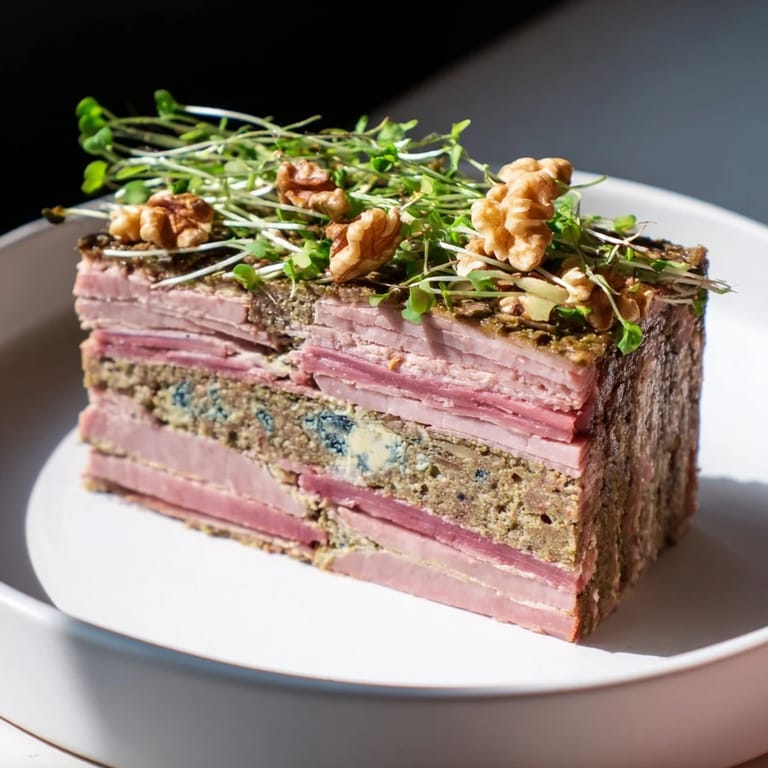
- Start arranging your meat slices in the loaf pan, overlapping them slightly like fallen leaves. Begin with the beef along one side, then add layers of turkey, ham, and pork in a descending pattern—imagine the meats sloping downward as canyon walls do.
- Bind and build:
- After every two or three meat layers, use a pastry brush to lightly coat with the binding custard. This gentle step prevents the terrine from collapsing while respecting the integrity of each layer.
- Introduce the river:
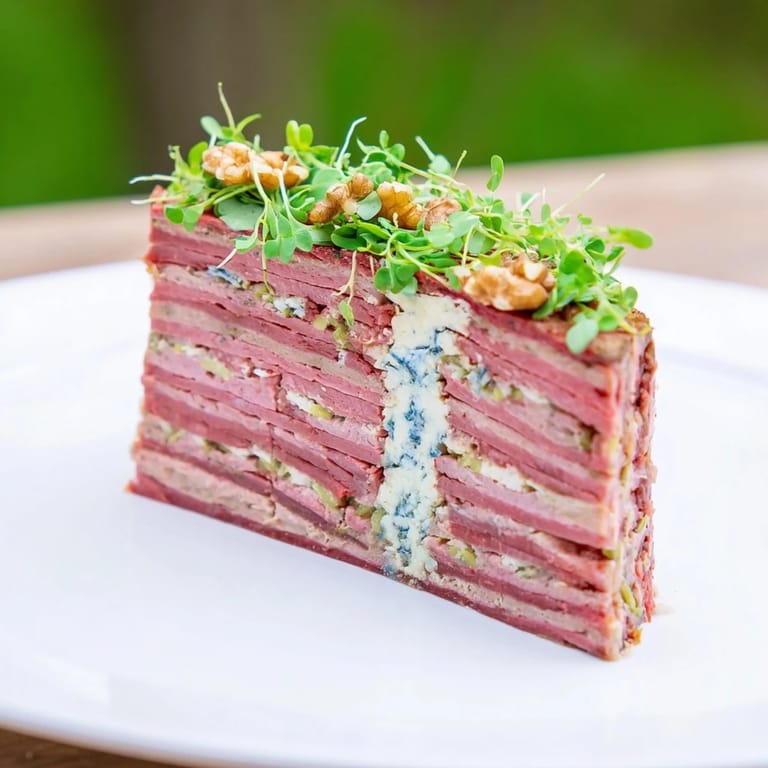
- About halfway up the pan, spoon your blue cheese mousse down the center in a thick ribbon, leaving space on the sides for meat. This is your moment to be artistic—make it flow naturally, like water finding its path.
- Complete the composition:
- Continue layering meats around and over the blue cheese river, maintaining that angled cliff pattern. Finish with a final meat layer, then fold the plastic wrap over the top to seal everything in.
- Bake in a water bath:
- Cover the pan with foil and place it inside a larger roasting dish. Pour hot water into the outer dish until it reaches halfway up the sides—this gentle, humid heat ensures even cooking without drying the meats.
- Cook and cool:
- Bake for 1 hour 15 minutes; the custard should set but remain tender. Remove from the oven and let it cool to room temperature on the counter, a process that takes patience but allows the flavors to settle.
- Chill for time:
- Refrigerate for at least 4 hours, though overnight is ideal. This rest period lets the terrine firm up completely, making slicing clean and revealing.
- Unmold and slice:
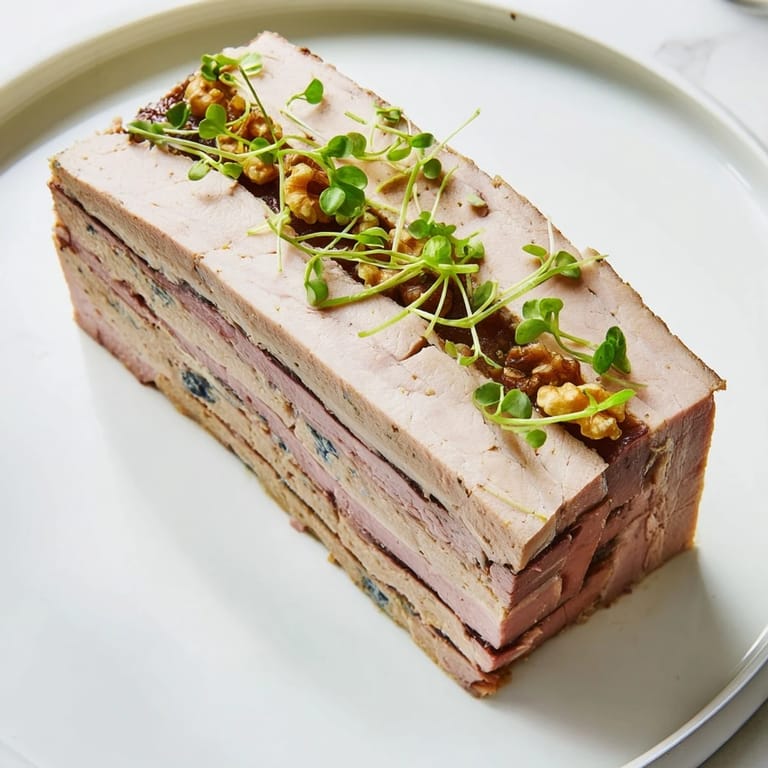
- Turn the terrine out onto a serving platter and use a sharp, warm knife to cut thick slices. Each cross-section should reveal the canyon layers and that stunning blue cheese river.
- Garnish if inspired:
- Scatter microgreens, edible flowers, and toasted walnut pieces across the platter for color and texture, though the terrine is beautiful enough to stand alone.
 Save
Save There's something almost meditative about arranging these layers, knowing that all this care will be hidden until the moment someone at your table takes the first bite. I realized halfway through making this that cooking isn't always about feeding people quickly—sometimes it's about crafting an experience they'll remember, a story told in taste and texture.
Understanding the Architecture
This terrine works because it respects hierarchy and balance. The meats provide structure and substance, the eggs bind without overwhelming, and the blue cheese mousse adds a bold punctuation mark. Think of it like building—you need a strong foundation, careful placement, and something unexpected to catch the eye. Each layer should slightly overlap the one below, creating a subtle angle that mimics how canyon walls lean and shift over millennia.
Choosing Your Meats Wisely
The interplay between beef, turkey, ham, and pork creates a conversation of flavors rather than a solo voice. Beef brings richness, turkey adds lightness, ham whispers smoke, and pork provides subtle sweetness. Ask your butcher to slice everything thin and evenly; this small detail transforms the eating experience because each layer becomes a defined note in the composition. If you want to experiment, smoked duck or prosciutto can replace any of these meats, though I'd recommend keeping at least three varieties for visual contrast.
Timing, Temperature, and Patience
The entire magic of this dish lives in gentle cooking and unhurried chilling. I used to think that lowering the oven temperature was somehow lazy, but I've learned it's actually respect for the ingredients. At 160°C, the custard sets evenly, the meats stay pink and tender, and everything melds without any component overwhelming the others. The chilling phase isn't downtime either—it's when the flavors deepen and the structure solidifies, making every hour in the refrigerator an investment in a better final result.
- If your oven runs hot, use an oven thermometer to verify the actual temperature inside.
- Cold meats slice more cleanly than room-temperature ones, so consider chilling your platter before turning out the terrine.
- Leftover slices taste even better the next day as the flavors continue to meld and deepen.
 Save
Save Making this terrine taught me that sometimes the most impressive dishes are born from patience and precision rather than complexity. When you place a slice in front of someone and watch their face light up at the sight of those layers and that blue cheese river, you'll understand why it was worth every careful step.
Recipe FAQ
- → What cuts of meat are used for layering?
Beef sirloin, turkey breast, smoked ham, and pork loin are thinly sliced and layered to create the terrine's structure.
- → How is the blue cheese mousse prepared?
Blue cheese is blended with cream cheese, heavy cream, chives, parsley, and black pepper until smooth, creating a creamy mousse for the center.
- → What baking method is used for this dish?
The terrine is baked gently in a bain-marie at 160°C (320°F) to ensure even cooking and a delicate texture.
- → Can the blue cheese mousse be substituted?
Yes, a herbed goat cheese mousse can replace the blue cheese for a milder flavor profile.
- → How long should the terrine chill before serving?
Chill for at least 4 hours, preferably overnight, to allow the terrine to set and flavors to meld.
- → What garnishes complement this terrine?
Microgreens, edible flowers, and toasted walnut pieces add color, texture, and flavor contrasts.