 Save
Save There's something magical about the moment when everyone leans in toward a sprawling board of pasta, unsure where to start but absolutely certain they're about to create their perfect bite. I discovered this dish during a chaotic Tuesday when I had three boxes of different pasta in my pantry, some leftover sauces in the fridge, and zero energy for plating individual portions. What emerged was gloriously low-pressure and endlessly entertaining—a way to cook for people without feeling like I was performing in the kitchen.
My sister visited last summer and I threw this together on short notice, nervous it would feel too casual for company. Instead, she spent twenty minutes building different pasta-sauce combinations, trying one bite, laughing at herself, and trying again. That's when I realized this dish isn't just about feeding people—it's about giving them permission to play with their food without apology.
Ingredients
- Spaghetti, penne, and farfalle (100 g each): Three different shapes mean different sauce cling and textural surprises; the variety keeps each bite interesting and lets guests match their mood to their pasta.
- Boneless, skinless chicken breasts (2): Mild and reliable, they won't fight for attention but provide the protein anchor everyone needs.
- Olive oil (1 tbsp for chicken, plus extra-virgin for drizzling): The cooking oil seasons the chicken; the finishing oil adds a whisper of luxury right before serving.
- Italian seasoning (1 tsp): This is your shortcut to restaurant-level flavor without fussing with individual herbs.
- Salt and pepper, to taste: Season boldly—the chicken needs enough to stand up against the richness of the sauces.
- Marinara, Alfredo, and pesto sauces (1 cup each): Store-bought is perfectly acceptable here; this is about assembly, not sauce-making from scratch.
- Grated Parmesan cheese (½ cup): The salty, umami hit that makes every combination feel complete.
- Cherry tomatoes, halved (½ cup): Their burst of acidity balances the richness and adds a pop of color that feels intentional.
- Fresh basil leaves (¼ cup): Tear them gently by hand just before serving so they stay fragrant and don't bruise.
- Black olives, sliced (¼ cup): A salty punctuation mark that nobody expects but everyone gravitates toward.
Tired of Takeout? 🥡
Get 10 meals you can make faster than delivery arrives. Seriously.
One email. No spam. Unsubscribe anytime.
Instructions
- Cook your pastas with intention:
- Bring a pot of salted water to a rolling boil and cook each pasta shape separately according to package timing. As soon as they're tender, drain them and toss each type with a light drizzle of olive oil so they don't clump together like old friends who've forgotten how to stand alone.
- Season and sear the chicken:
- While water heats, pat your chicken breasts dry (this matters for browning), rub them generously with olive oil, Italian seasoning, salt, and pepper. Heat a grill pan or skillet over medium-high heat until it's hot enough that a drop of water sizzles on contact, then lay the chicken in with confidence and let it cook undisturbed for 5–7 minutes per side.
- Rest your protein:
- Once the chicken is cooked through and the juices run clear, pull it from heat and let it sit for five minutes before slicing. This rest period is non-negotiable—it keeps the meat juicy instead of tough.
- Warm your sauces gently:
- Pour each sauce into its own small saucepan and warm over low heat, stirring occasionally. You want them warm enough to taste their best, not hot enough to break or separate.
- Build your board like you're arranging art:
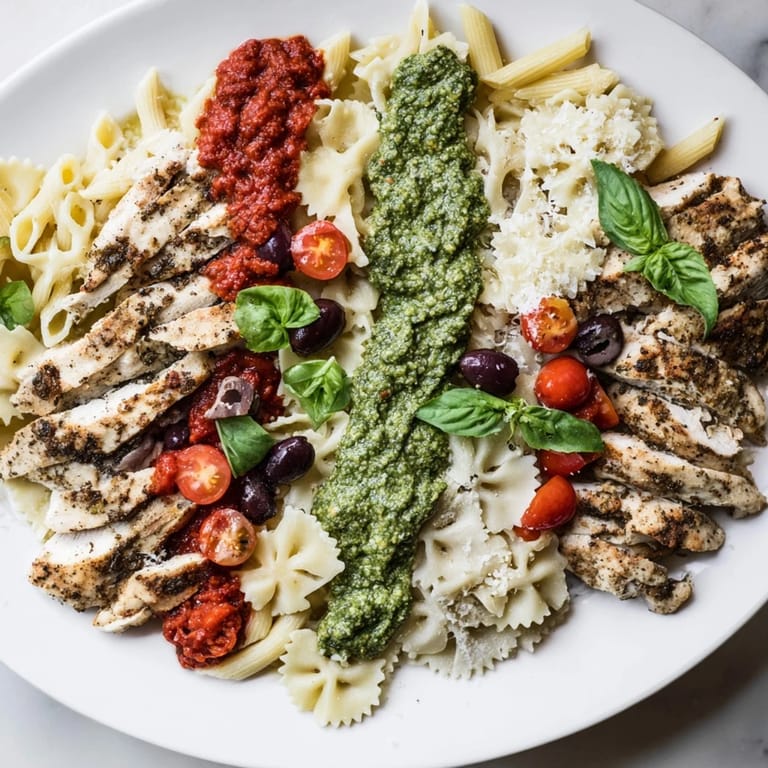
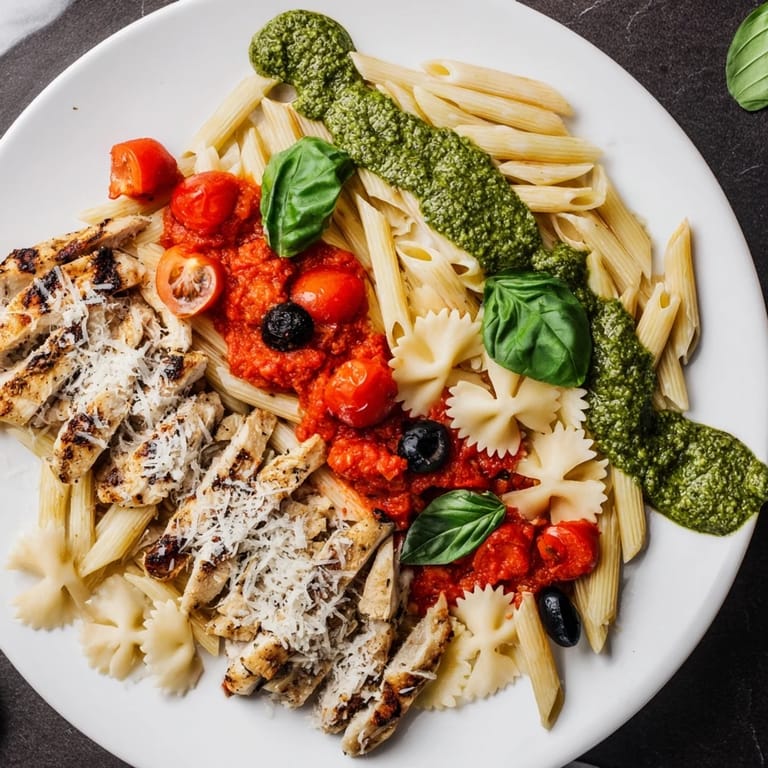
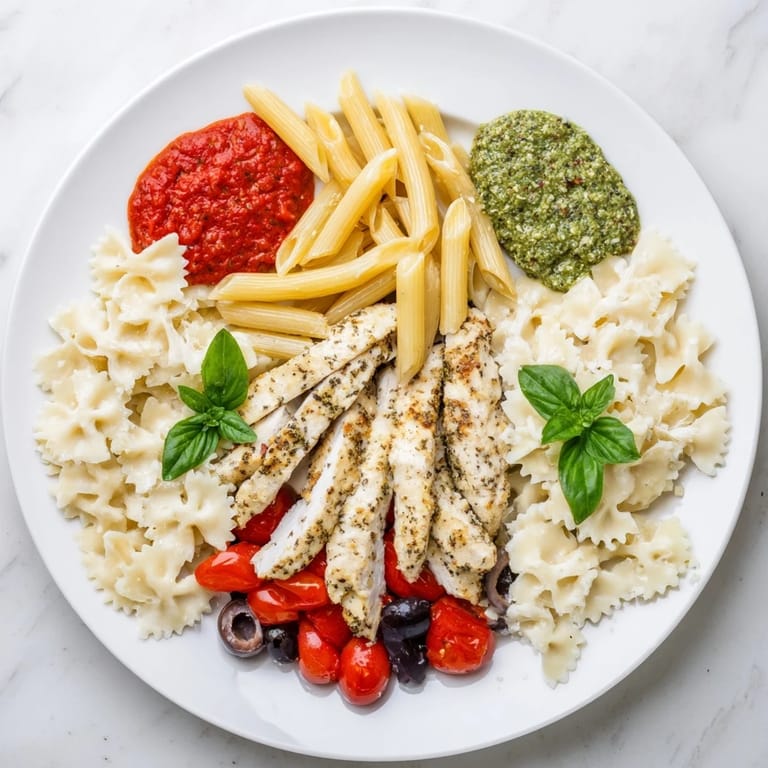
- Start with a large serving board or platter and section off distinct areas for each pasta shape. Group the chicken strips together, nestle small bowls of sauce around the board, and scatter Parmesan, tomatoes, basil, and olives in pockets and corners.
- Invite everyone to play:
- Just before people arrive, drizzle extra-virgin olive oil over the entire setup, then step back and watch as everyone creates their own perfect combination.
 Save
Save The best part happened when my friend's five-year-old daughter reached the board, mixed penne with marinara and chicken, took one bite, and announced, "I made this myself!" She'd finally found a way to engage with dinner without negotiation. That's the real magic of this dish—it gives everyone agency.
The Art of Mixing and Matching
There are no rules here, which is exactly the point. Some people will create a delicate plate with one pasta, one sauce, and strategic toppings. Others will pile everything together and call it a masterpiece. The beauty is that both approaches work because the ingredients were chosen to complement each other in any combination. Watch people's faces as they discover which pairings they prefer—you'll learn something about how they approach food and life.
Making It Your Own
This board is endlessly adaptable, which means it can live in your kitchen however you need it to. Vegetarians can skip the chicken entirely or swap it for grilled zucchini, mushrooms, or halloumi cheese. If your crowd is heartier, add crispy garlic bread or a simple arugula salad tossed with lemon and oil. The structure stays the same—it's the details that shift. I've made this in summer with fresh tomatoes and basil, in winter with roasted vegetables, and everything in between.
Timing and Flow
The beauty of this dish is that everything comes together in waves rather than all at once. Start water boiling while you prep chicken, sear the chicken while pasta cooks, and warm sauces during the chicken's rest. By the time you're arranging the board, the timing feels almost effortless. On busier nights, this meal teaches you that impressive doesn't have to mean complicated—it just means intentional.
- Prep your ingredients before you start cooking so assembly feels smooth, not stressful.
- Taste each sauce before warming and adjust seasoning if needed; store-bought versions vary widely.
- Set out small plates and forks near the board so people can graze without hovering over the main platter.
 Save
Save This is a recipe for when you want to cook but not overextend, when you want to feed people but not perform for them. It's the ultimate low-stress, high-reward dinner that somehow always feels like an event.
Recipe FAQ
- → What types of pasta are included in the board?
Spaghetti, penne, and farfalle are used, each cooked separately to maintain texture and flavor.
- → How is the chicken prepared for this dish?
Chicken breasts are rubbed with olive oil and Italian seasoning, grilled until juices run clear, then sliced into strips.
- → What sauces accompany the pastas?
Marinara, Alfredo, and pesto sauces are warmed separately to offer a variety of flavors for mixing.
- → Are there suggestions for vegetarian variations?
The grilled chicken can be omitted or replaced with grilled vegetables to keep the dish plant-based.
- → What garnishes enhance the platter?
Grated Parmesan cheese, halved cherry tomatoes, fresh basil leaves, and sliced black olives add fresh and savory notes.