 Save
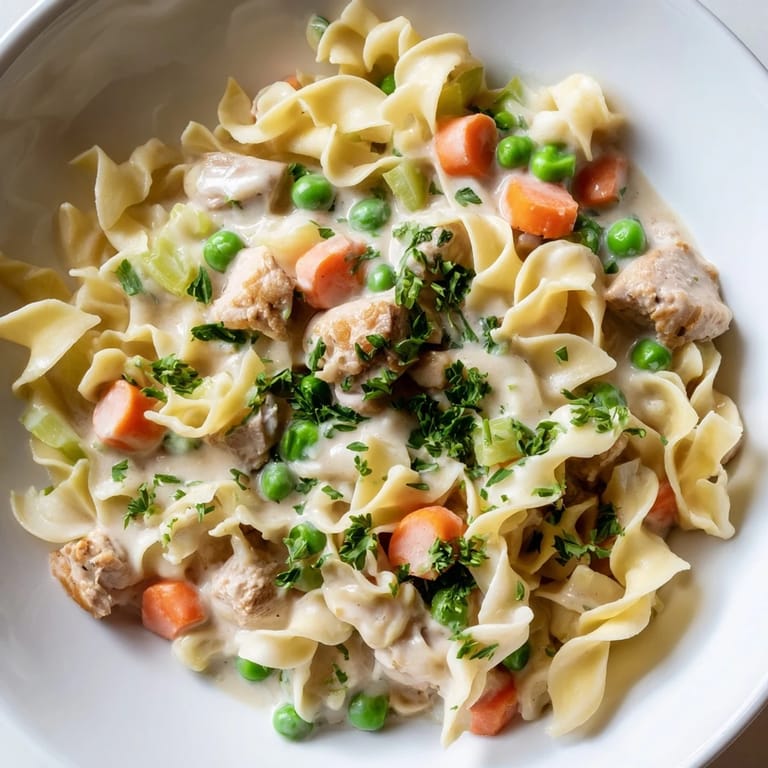
Save There's something about the smell of butter and chicken hitting hot oil that instantly pulls me back to my grandmother's kitchen on a rainy Wednesday afternoon. She was teaching me that comfort food doesn't need to be complicated—just good ingredients treated with patience and care. This creamy chicken and egg noodle dish became my go-to when I wanted to recreate that exact feeling: warm, unhurried, and deeply satisfying.
I made this for my friend Marcus on the first night he moved into his new place, when his kitchen was still mostly empty boxes. We ate it straight from the pot at his dining table that hadn't even been properly arranged yet, and he said it tasted like home. That's when I knew this recipe had something special—it bridges the gap between practical and memorable.
Ingredients
- Boneless, skinless chicken breasts or thighs (500 g): Thighs are more forgiving and stay juicier, but breasts work if you watch them carefully—I've learned the hard way that overcooking by even a minute dries them out.
- Unsalted butter (2 tbsp) and olive oil (1 tbsp): The combination gives you browning power without burning, and the butter adds flavor that water just can't match.
- Yellow onion (1 medium), garlic (2 cloves), carrots (2 medium), and celery (2 stalks): This is your flavor foundation—don't rush chopping them or skip the sauté step, it's where the magic happens.
- All-purpose flour (2 tbsp): Creates the roux that thickens everything beautifully; lumps are your enemy here, so whisk confidently.
- Chicken broth (480 ml), whole milk (240 ml), and heavy cream (120 ml): The holy trinity of creaminess—don't substitute water for broth or your sauce will taste thin and sad.
- Dijon mustard (1 tsp), dried thyme (1 tsp), dried parsley (1/2 tsp), and paprika (1/2 tsp): These seasonings add sophistication without being overwhelming; they're what makes this feel grown-up.
- Wide egg noodles (250 g): The width matters because it holds sauce better than thin pasta—trust me on this one.
- Frozen peas (60 g) and fresh parsley (2 tbsp): Peas add sweetness and texture, while fresh parsley at the end wakes everything up.
Tired of Takeout? 🥡
Get 10 meals you can make faster than delivery arrives. Seriously.
One email. No spam. Unsubscribe anytime.
Instructions
- Season your chicken and get it ready:
- Pat the chicken pieces dry with paper towels—this small step makes them brown instead of steam, which makes all the difference in flavor.
- Brown the chicken in a hot pot:
- Heat butter and oil together until the pan is almost smoking, then add chicken and don't move it around for the first minute or two; you want that golden crust. Once it's cooked through and lightly golden (about 5–6 minutes), transfer it to a plate.
- Build your aromatic base:
- In the same pot with all those browned bits still clinging to it, sauté onion, carrots, and celery for 4–5 minutes until they start to soften and smell incredible. Add minced garlic and stir for just 1 minute—garlic burns easily and turns bitter.
- Create the roux:
- Sprinkle flour over the vegetables and stir constantly for 1–2 minutes; this removes the raw flour taste and creates the base for your sauce. It'll smell a little nutty when it's ready.
- Add your cream mixture slowly:
- Gradually whisk in broth, milk, and cream to avoid lumps—rushing this part means lumpy sauce that no amount of stirring can fix. Add mustard, thyme, parsley, and paprika, then taste and adjust salt and pepper.
- Let the sauce simmer and thicken:
- Keep the heat at a gentle simmer and stir frequently for about 5 minutes until the sauce coats the back of a spoon. This is when you know it's reached its creamy potential.
- Cook the noodles separately:
- While the sauce thickens, boil water in a separate pot and cook egg noodles according to package directions—I usually aim for just shy of al dente since they'll continue cooking slightly in the sauce.
- Bring it all together:
- Return the chicken to the pot, add frozen peas, and simmer for 2–3 minutes until peas are heated through and chicken is warmed. Then add the cooked noodles and toss everything gently until coated in sauce.
- Finish with freshness:
- Sprinkle with fresh parsley right before serving—it adds brightness and reminds your palate that vegetables matter.
 Save
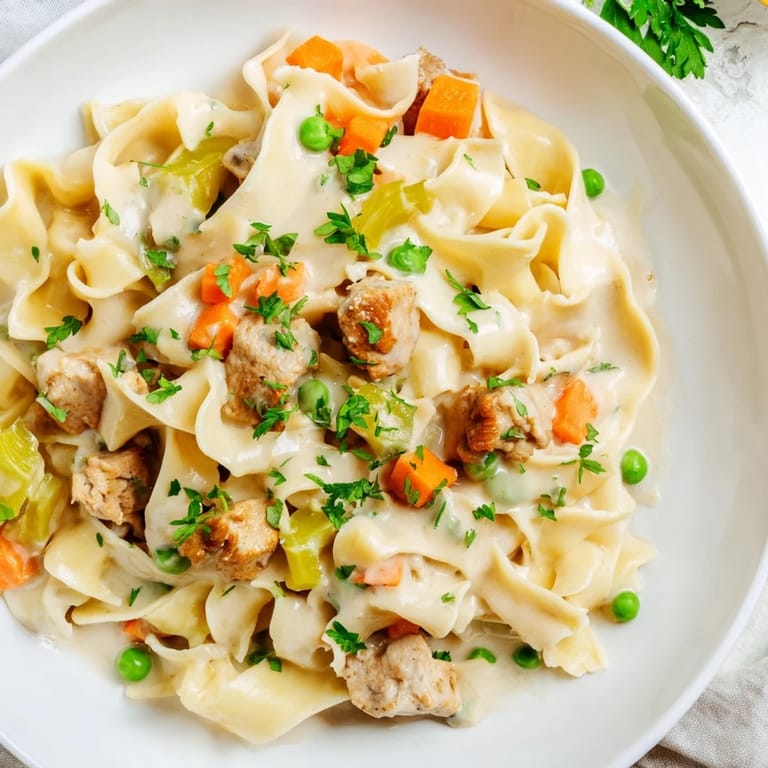
Save The first time my sister asked for the recipe, I realized I'd stopped writing things down and just cooked it from memory and feel. That's the moment I knew this dish had moved from something I made to something I knew in my bones, like humming a favorite song.
Timing and Temperature Matter More Than You'd Think
I used to think cooking was about following instructions perfectly, but this dish taught me it's actually about paying attention. Medium-high heat for browning chicken is not the same as medium heat for simmering sauce—one is aggressive and quick, the other is patient and gentle. The difference between a silky sauce and a broken one often comes down to temperature, not ingredients. I've learned to let my eyes and nose guide me more than the clock.
Why Fresh Herbs at the End Make a Real Difference
The dried herbs in the sauce do heavy lifting by infusing flavor throughout, but fresh parsley at the end feels like opening a window in the middle of dinner. It cuts through the richness and adds a brightness that makes you actually taste everything instead of just feeling full. I discovered this accidentally when I had fresh parsley left over from another recipe and threw it on at the last second. The difference was so obvious that now it's non-negotiable.
Making It Your Own
This recipe is a canvas more than a rulebook, and some of my best versions came from improvisation rather than precision. A splash of white wine when you sauté vegetables adds subtle sophistication, mushrooms bring earthiness, and leftover rotisserie chicken turns this into a 20-minute meal on busy nights. The foundation is solid enough to handle swaps and experiments.
- Try adding a splash of white wine or a teaspoon of Worcestershire sauce for extra depth you can't quite name.
- Sliced mushrooms cooked with the aromatics add earthiness and feel almost luxurious.
- Fresh thyme sprigs instead of dried herbs elevates this from weeknight to special occasion without extra effort.
 Save
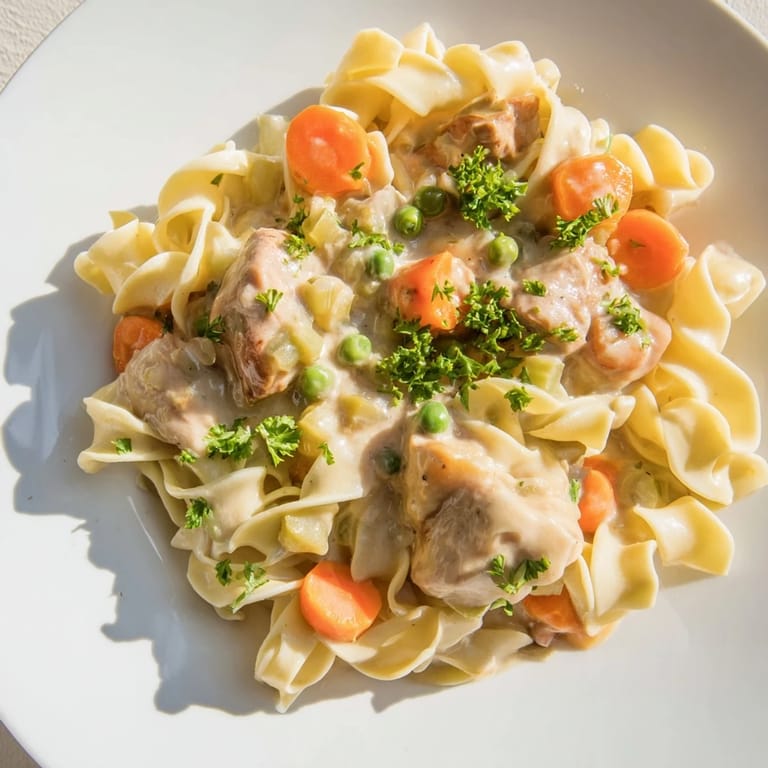
Save Cooking this reminds me that the best meals are the ones that feel effortless to eat but careful in their making. It's the kind of dish that bridges generations and fills kitchens with warmth.
Recipe FAQ
- → Can I use rotisserie chicken instead of fresh chicken?
Yes, rotisserie chicken works well for faster preparation. Add it towards the end to warm through without overcooking.
- → What type of noodles pairs best with this dish?
Wide egg noodles absorb the creamy sauce beautifully, but feel free to try fettuccine or pappardelle for similar results.
- → How can I make the sauce thicker?
The sauce is thickened by cooking flour into a roux before adding liquids. Ensure the roux is cooked adequately and simmer the sauce until it reaches your desired consistency.
- → Can I add mushrooms or other vegetables?
Yes, mushrooms can be sautéed with the onions and carrots to add earthiness. Other vegetables like peas and celery complement the dish well.
- → Is there a way to add extra flavor to the sauce?
Adding a splash of white wine when sautéing the vegetables adds depth and complexity to the sauce’s flavor.
- → What herbs are used in this dish?
Dried thyme and parsley provide herbal notes, while paprika adds a slight warmth and color to the creamy sauce.