 Save
Save I discovered the magic of a cheese platter the way most people do—by accident at a dinner party where I showed up empty-handed and desperate. My host, bless her, had arranged cheeses on a board with such casual confidence that I spent the whole evening studying how she'd done it. Years later, I learned she was simply following the Celtic cross pattern, that ancient symbol of balance and harmony, and something clicked: a platter arranged with intention tastes better than one thrown together. Now whenever I set one out, I feel like I'm creating something more than just food.
I remember setting this platter out for my sister's book club, and two women who'd never met before bonded over whether the Manchego or the Brie was better. They picked at it for an hour, debating, laughing, and suddenly the cheese platter had done more work than any icebreaker game ever could. That's when I understood: a good cheese board isn't decorative—it's a conversation starter with edible charisma.
Ingredients
- Irish cheddar: Sharp and assertive, it needs to hold its own against the softer cheeses—cube it generously so people want to reach for it.
- Brie: The gentle one, creamy and forgiving, but bring it to room temperature or it'll taste like nothing at all.
- Blue cheese: Crumble it by hand if you can; it tastes less aggressive that way, more like a flavor accent than a challenge.
- Manchego: The elegant Spanish voice in the mix, mild enough to bridge gaps between the aggressive and the soft.
- Sour cream or Greek yogurt: The dip base—Greek yogurt keeps things lighter, but sour cream tastes richer if you have the appetite for it.
- Fresh chives: They wake up the dip with just a whisper of onion; never use the frozen ones for this.
- Lemon juice: A small squeeze prevents the dip from tasting flat and heavy.
- Seedless red grapes: They're your color pop and your palate cleanser rolled into one.
- Dried apricots: Sweet and chewy, they remind everyone that fruit and cheese are made for each other.
- Walnuts: Toasted if you have time, raw if you don't—they add texture and anchor the whole arrangement.
- Honey: A light drizzle over the blue cheese creates a sweet-and-salty moment that surprises people.
- Rustic crackers and baguette: Use good ones; bad crackers can ruin even the finest cheese.
Tired of Takeout? 🥡
Get 10 meals you can make faster than delivery arrives. Seriously.
One email. No spam. Unsubscribe anytime.
Instructions
- Make the dip:
- Stir the sour cream or yogurt with chives and lemon juice, tasting as you go until it sings a little bit. Salt and pepper come last, and use a light hand—you can always add more.
- Center everything:
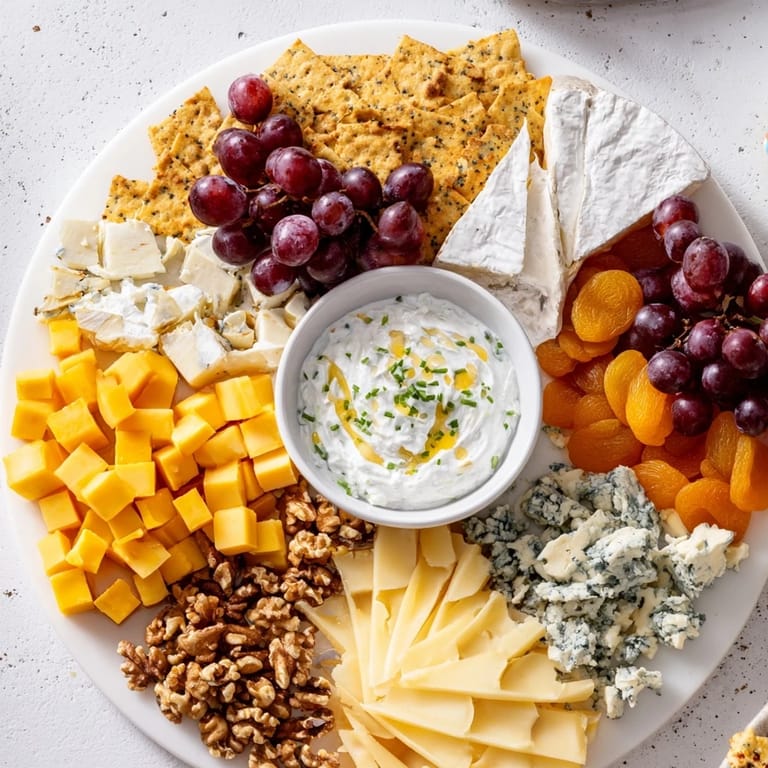
- Place the dip bowl in the middle of your platter like it's the heart of a compass. This is your anchor point, and everything else radiates from here.
- Create your quadrants:
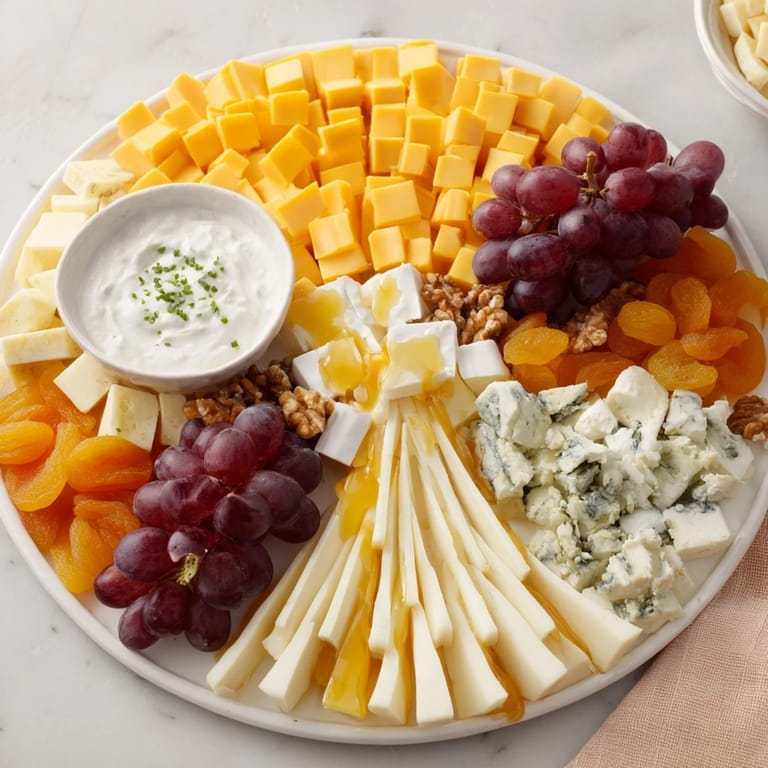
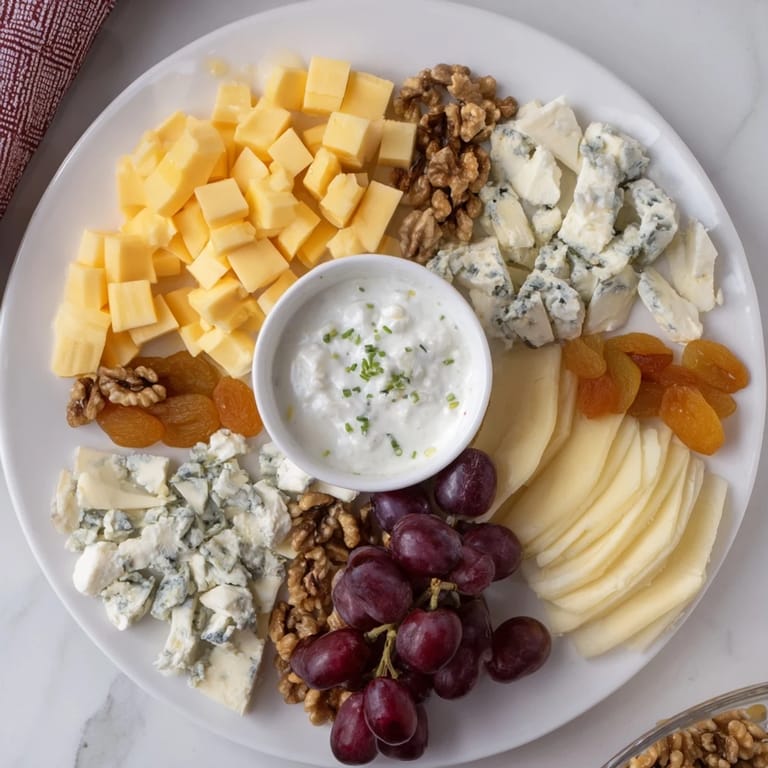
- Imagine the cross: one quadrant for cheddar, one for Brie, one for blue cheese, one for Manchego. Fan the slices artfully or group them in small piles, whichever feels right in your hands.
- Fill the gaps:
- Scatter grapes, apricots, and walnuts between the cheese sections, creating visual rhythm and texture contrast. The goal is organized enough to look intentional, loose enough to feel natural.
- Finish with honey:
- A light drizzle over the blue cheese adds sweetness and shimmer. Don't oversoak it; a touch is enough.
- Frame the platter:
- Arrange crackers and baguette slices around the outer edge, creating a welcoming boundary. Lean them slightly to show they're ready to use.
- Bring to life:
- Let everything sit at room temperature for ten minutes before serving so the cheeses can breathe and share their true flavor.
 Save
Save A friend once told me she'd never eaten blue cheese until she tried mine with that honey drizzle, and suddenly it made sense to her. That moment—when something clicks into place on someone's palate—is why I love this platter. It's not just about feeding people; it's about introducing them to flavors they didn't know they'd like.
The Celtic Cross Story
The ancient Celtic cross represents balance and harmony, with four equal arms radiating from a central point. Using that symbol as your platter guide isn't just pretty—it actually works. Each quadrant holds its own flavor profile, yet they're all equally important, just like the four directions of the cross. Guests instinctively understand the design without being told, and that intuitive navigation makes the whole experience feel less fussy and more natural.
Cheese at Room Temperature
This might sound like a small detail, but it's everything. Room-temperature cheese isn't just softer to bite into—it actually releases its flavor compounds in a way that cold cheese simply can't. When you taste a cold cheese, you're tasting a muted version, like listening to music with the volume turned down. Give it thirty minutes at room temperature, and suddenly you hear the whole song. This is especially true for the Brie, which can taste like sweet nothing when cold but becomes creamy and profound once it warms up.
Building Visual Drama
The secret to making this platter look effortlessly elegant is to think about contrast: color, texture, shape. Where you place the deep blue cheese matters because it needs a bright fruit nearby to pop. Where you lean the crackers affects how casual or polished the whole thing feels. I learned this by watching my mistakes—a platter that looked muddy and busy taught me more than any planner ever could. Now I step back frequently, squint at it, and ask myself if my eyes know where to land.
- Use odd numbers when scattering—three clusters of walnuts always look better than two or four.
- Fanning cheese slices shows more surface area and makes the platter feel more generous.
- Leave a little breathing room; a crowded platter feels anxious, while a spacious one feels confident.
 Save
Save A cheese platter is one of those rare things that gets better the more people gather around it, because shared tasting is always more interesting than eating alone. Set this one out and watch what happens.
Recipe FAQ
- → What cheeses are featured in the platter?
Irish cheddar, Brie, blue cheese, and Manchego are arranged for a balanced flavor and texture contrast.
- → How is the central dip prepared?
The dip combines sour cream or Greek yogurt with fresh chives, lemon juice, salt, and pepper for a creamy, tangy complement.
- → What accompaniments enhance the platter?
Seedless red grapes, dried apricots, walnuts, and a drizzle of honey add sweetness and texture variety.
- → Can the platter be adapted for different tastes?
Yes, you can swap cheeses with other regional favorites or add fruits like apple or pear slices for extra flavor.
- → How should the platter be served for best flavor?
Serve with cheeses at room temperature and pair with crisp white or light red wines such as Sauvignon Blanc or Pinot Noir.
- → Are there any allergen considerations?
This platter contains milk, gluten from crackers and bread, and tree nuts (walnuts). Check ingredient labels carefully for guests' allergies.