 Save
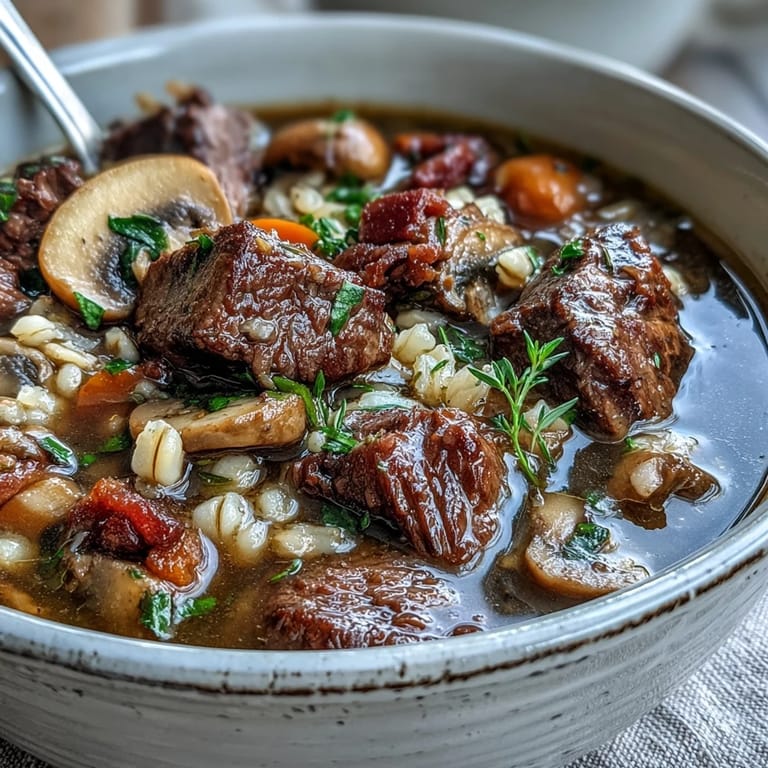
Save My neighbor dropped off a container of this soup on a particularly gray afternoon, and I remember standing in my kitchen, just breathing in the steam rising from the pot as it reheated. The smell of beef, mushrooms, and herbs filled every corner, and suddenly the whole day felt warmer. That's when I realized this wasn't just soup—it was the kind of dish that makes people want to take care of each other.
I made this for my book club last fall, and watching everyone slow down to really taste it, commenting on how the mushrooms had this deep, almost earthy richness—that's when I understood the power of a good, honest soup. No one rushed through their bowl. The conversation naturally drifted into comfortable silences between spoonfuls.
Ingredients
- Beef chuck roast, cut into 1/2-inch cubes (1 lb): Chuck has just enough marbling to stay tender through long cooking, and the fat renders into the broth, making it silky and rich.
- Pancetta, diced (4 oz): This brings a subtle smokiness that bacon can replace if needed, but pancetta's texture stays more intact and adds a sophisticated layer.
- Baby bella mushrooms, sliced (1 lb): They release an umami depth that regular button mushrooms can't match, and they hold their shape rather than turning to mush.
- Yellow onion, diced (1 large): The aromatic foundation that sweetens and mellows as it cooks down into the broth.
- Carrots, diced (2 medium): They add natural sweetness and a subtle vegetal body that balances the richness of the meat.
- Celery stalks, diced (2): This is your quiet hero—it adds complexity without announcing itself, rounding out the mirepoix foundation.
- Garlic cloves, minced (3): Added after the softer vegetables so it doesn't turn bitter, just fragrant and warm.
- Pearl barley, rinsed (3/4 cup): Rinsing removes excess starch and keeps the broth from becoming cloudy, plus the barley absorbs flavor beautifully.
- Beef broth, low sodium (8 cups): Low sodium lets you control the final seasoning and prevents the soup from becoming too salty as it reduces.
- Water (1 cup): This dilutes the broth slightly and gives the barley room to cook and absorb liquid without the soup becoming too concentrated.
- Tomato paste (2 tbsp): A spoonful of this adds body and a subtle acidity that brightens the broth without tasting like tomato sauce.
- Bay leaves (2): These steep quietly in the background, adding an herbaceous note that ties everything together.
- Dried thyme (1 tsp): Thyme's warmth pairs perfectly with beef and mushrooms, blooming as the soup simmers.
- Dried rosemary (1/2 tsp): Just a whisper of this piney herb prevents the soup from tasting too one-dimensional.
- Freshly ground black pepper (1/2 tsp): Freshly ground makes a real difference in soups because the flavor stays bright rather than fading into the broth.
- Kosher salt, plus more to taste (1 tsp): Start conservative and adjust at the end; the beef broth and pancetta already bring saltiness.
- Olive oil (2 tbsp): Two tablespoons split between searing the meat and sautéing the vegetables—one for high heat searing, one for the gentler vegetable cooking.
- Fresh parsley, chopped, for garnish (2 tbsp, optional): A sprinkle at the end adds color and a fresh note that cuts through the richness beautifully.
Tired of Takeout? 🥡
Get 10 meals you can make faster than delivery arrives. Seriously.
One email. No spam. Unsubscribe anytime.
Instructions
- Get the pancetta singing:
- Heat a tablespoon of olive oil in your pot over medium-high heat and add the pancetta. Listen for the sizzle and watch it brown and crisp up, about 3 to 4 minutes. This renders the fat and builds the foundation of flavor everything else will rest on.
- Sear the beef in batches:
- Pat the beef dry, season it generously with salt and pepper, then brown it on all sides in batches—don't crowd the pot or it'll steam instead of sear. Each batch takes about 5 to 6 minutes and develops a golden crust that seals in the juices.
- Build the aromatic base:
- Add the remaining olive oil and sauté your onions, carrots, and celery until they're softened and the onions turn translucent, roughly 5 minutes. Stir in the garlic and cook just until fragrant, about 1 minute—don't let it brown.
- Invite the mushrooms to the party:
- Add your sliced mushrooms and cook them, stirring occasionally, until they release their liquid and start to brown at the edges, about 6 to 8 minutes. This brings out their deep, earthy flavor.
- Deepen with tomato paste:
- Stir in the tomato paste and cook for 1 minute, letting it caramelize slightly against the bottom of the pot. This concentrated flavor becomes part of the broth's backbone.
- Bring it all together:
- Return the beef and pancetta to the pot, add the rinsed barley, bay leaves, thyme, and rosemary. Pour in the broth and water, then bring everything to a gentle boil.
- Let time do the work:
- Reduce the heat to low, cover the pot, and let it simmer for about 1.5 hours, stirring occasionally. The beef will become fork-tender, the barley will swell and soften, and all the flavors will meld into something greater than their parts.
- Finish and serve:
- Fish out those bay leaves, taste the soup, and adjust the seasoning with salt and pepper as needed. Ladle it into bowls and garnish with fresh parsley if you have it on hand.
 Save
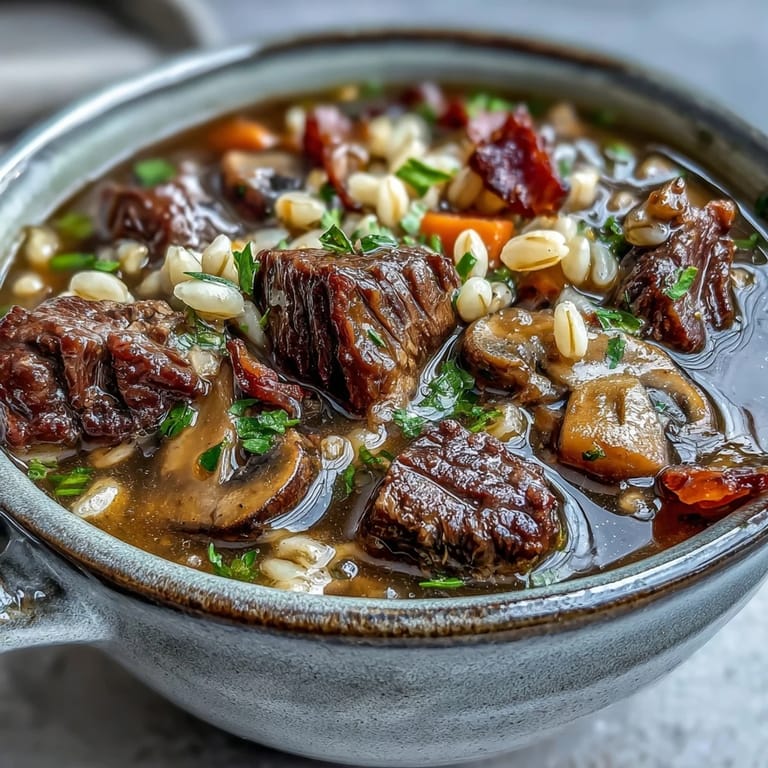
Save My daughter came home from soccer practice one evening while this was simmering, and she just stood at the stove with her backpack still on, asking if dinner was ready. We sat at the kitchen table with steaming bowls, and somewhere between the comfort of the warmth and the simple goodness of the food, she started talking about her day—the kind of conversation that only happens when you're not trying too hard. That's when I realized this soup isn't just nourishing the body.
The Magic of Resting and Reheating
There's something almost mystical about letting this soup sit overnight in the refrigerator. The flavors settle and marry, the broth becomes more unctuous, and the barley softens even further. When you reheat it gently on the stovetop—never a hard boil—it tastes noticeably better than on day one. I've learned to always make extra for this reason alone.
Customizing Without Losing the Heart
Once you understand the structure of this soup, you can play within it. A splash of dry red wine added before simmering adds a subtle complexity that deepens the beef flavor. Swapping half the beef broth for mushroom broth intensifies the earthiness. Even substituting the barley with farro or brown rice works, though you'll need to adjust the cooking time slightly since different grains drink in liquid at different speeds.
Making It Your Own and Keeping It Special
This is the kind of dish that actually improves when made ahead, so don't hesitate to cook it on a quiet Sunday afternoon and portion it out for the week. The beef stays tender, the vegetables don't fall apart, and the barley continues to soften gently in the fridge. When you need comfort food but don't have time to cook, you're already there.
- If you're short on time, cube the beef the night before and have your vegetables prepped so the cooking feels less rushed.
- A squeeze of fresh lemon juice at the end brightens everything without making the soup taste citrusy—just a teaspoon or two does the trick.
- This freezes beautifully for up to three months, so make a double batch and have a backup plan for future cold evenings.
 Save
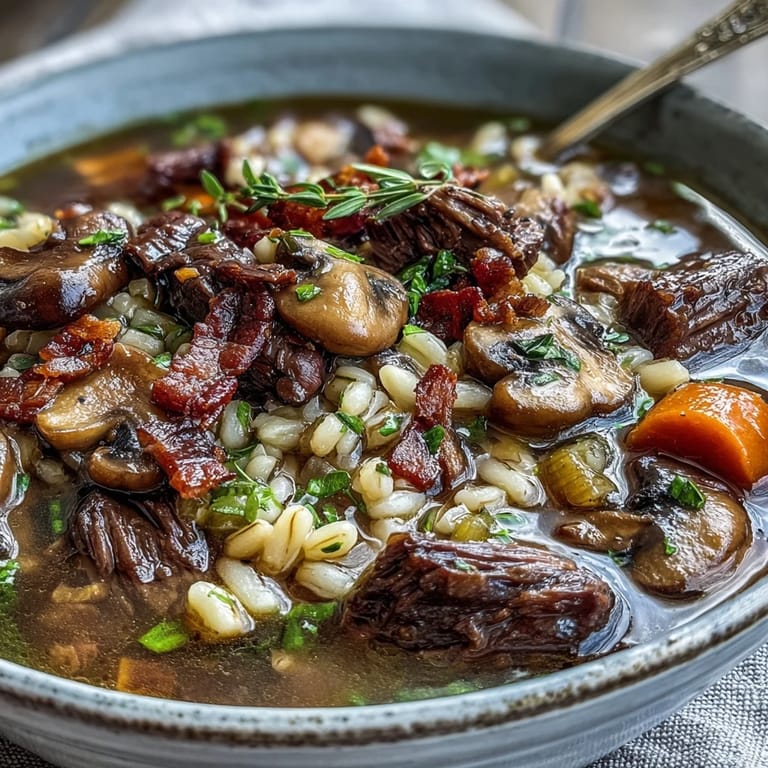
Save This soup has a way of showing up when it's needed most, whether you're making it for yourself on a tough day or sharing it with someone who needs reminding that good food and care are worth the time. That's its real gift.
Recipe FAQ
- → How long does the beef need to cook until tender?
The beef chuck requires about 1.5 hours of simmering on low heat to become fork-tender. This slow cooking breaks down the connective tissue, resulting in melt-in-your-mouth beef cubes.
- → Can I make this ahead of time?
Absolutely. The flavors actually improve after a day in the refrigerator. Store in an airtight container and reheat gently on the stove, adding a splash of broth if needed.
- → What can I substitute for pancetta?
Bacon makes an excellent substitute if pancetta isn't available. Both provide that smoky, savory depth that enhances the beef and mushroom flavors.
- → Is this gluten-free?
The pearl barley contains gluten. For a gluten-free version, substitute with brown rice or quinoa, though you'll need to adjust the cooking time accordingly.
- → Why sear the beef and pancetta separately?
Searing creates a flavorful crust through the Maillard reaction, adding depth to the final dish. Cooking separately prevents overcrowding the pan, ensuring proper browning.
- → Can I use other mushrooms?
Baby bella mushrooms work beautifully, but you can also use cremini, shiitake, or button mushrooms. Each variety brings slightly different earthy notes to the broth.