 Save
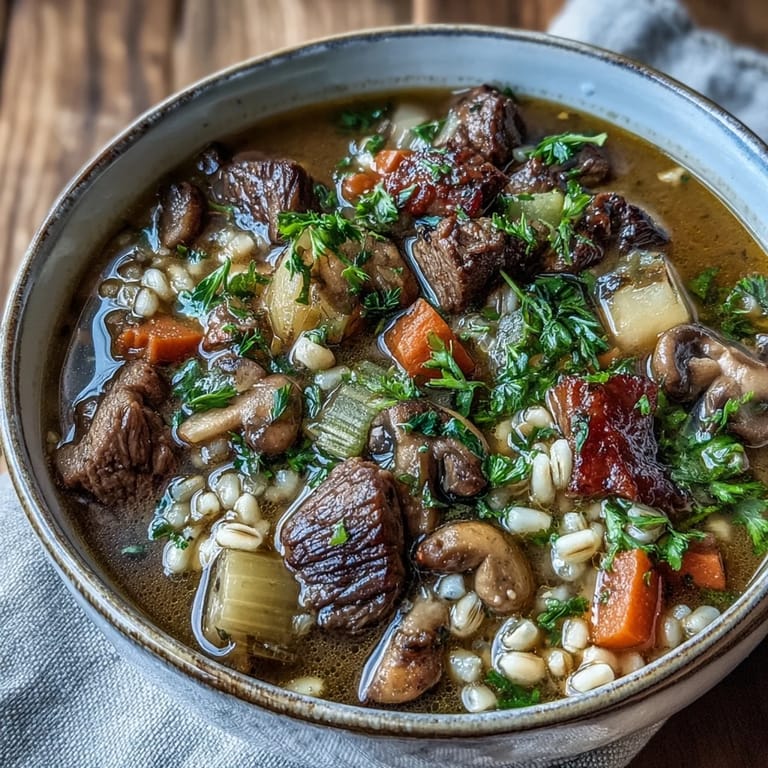
Save My neighbor stopped by on a freezing January afternoon with a bowl of beef and barley soup, and I remember thinking how something so simple could taste like pure comfort. The steam rising from the bowl fogged up my glasses, and I sat at the kitchen counter with my hands wrapped around the mug, watching the pearl barley catch the light. That first spoonful—tender beef, soft vegetables, that nutty grain—stayed with me long after she left. I've been making it ever since, usually on days when the kitchen feels too quiet or when someone I care about needs feeding.
I made this soup for my dad after his surgery, and watching him eat two bowls in a row told me everything I needed to know about whether I'd gotten it right. He kept saying something was different from how he remembered it, better somehow, and I realized it was because I'd actually taken time to brown the meat properly instead of rushing through. That moment taught me that cooking for someone you love isn't about perfection—it's about paying attention.
Ingredients
- Beef stew meat: Choose cubes with some marbling; they'll break down into tender morsels as the soup simmers, and the fat contributes deep flavor you can't replicate with lean cuts alone.
- Pearl barley: Rinse this thoroughly before adding to remove excess starch, which prevents the soup from becoming gluey and keeps each grain distinct and chewy.
- Carrots, celery, and onion: This trio forms the aromatic base of the soup, and dicing them roughly equal in size ensures they soften at the same pace.
- Garlic: Two cloves minced fine, added after the other vegetables have started to soften, so it doesn't burn and turn bitter.
- Potatoes: Cut them into half-inch cubes so they're soft but not falling apart by the time the soup is done.
- Mushrooms: Slicing them thin means they release their moisture into the broth, adding an earthy depth that no one will be able to identify but everyone will taste.
- Frozen peas: Add these at the very end so they stay bright green and slightly firm rather than turning to mush.
- Diced tomatoes: Optional, but they add a subtle acidity that brightens the rich, beefy flavors underneath.
- Beef broth: Use quality broth here; it's the foundation, and a good one makes the difference between a good soup and one people ask you to make again.
- Bay leaves, thyme, and parsley: This combination is classic for a reason—they anchor the flavors without overpowering, just whispering in the background.
- Olive oil: Use it to brown the meat properly, building flavor through that initial sear.
Tired of Takeout? 🥡
Get 10 meals you can make faster than delivery arrives. Seriously.
One email. No spam. Unsubscribe anytime.
Instructions
- Brown the beef properly:
- Heat the oil until it shimmers, then add the beef in batches so each piece touches the hot pan rather than steaming in its own moisture. Listen for the sizzle; that sound means the meat is developing a crust that will give the whole soup more depth. Don't skip this step even if you're in a hurry—it takes maybe five minutes and changes everything.
- Sauté the vegetables:
- Use the same pot without washing it, so the browned bits stick to the bottom and flavor the aromatics. Watch how the onions begin to turn translucent and the carrots soften at the edges, releasing their natural sweetness.
- Toast the garlic:
- Stir constantly for just a minute so it releases its aroma but doesn't brown, which would make it taste harsh and bitter. You want it to perfume the pot, not dominate it.
- Build the soup:
- Return the beef to the pot and add the potatoes, barley, tomatoes if using, broth, and herbs all at once. The barley will look like it's barely submerged at first, but trust that there's enough liquid.
- Simmer gently:
- Bring everything to a rolling boil, then lower the heat so it's just bubbling gently under the lid. This slow cooking is what makes the beef so tender that it nearly dissolves on your tongue, and the barley absorbs all those savory flavors without becoming mushy.
- Finish with peas and seasoning:
- After the first hour, stir in the frozen peas and taste the soup. Season carefully with salt and pepper—you can always add more, but you can't take it out.
- Final check:
- After another 20 to 30 minutes, a fork should slide through the beef and barley easily. Fish out the bay leaves, adjust the seasoning one last time, and serve while it's still steaming.
 Save
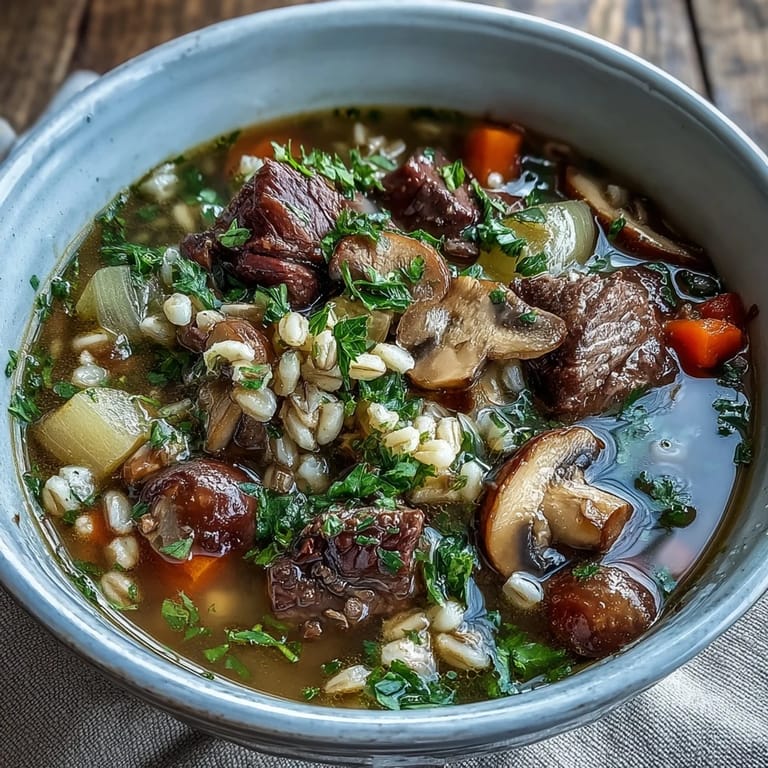
Save Last winter my daughter made this soup by herself for her school project, and I stayed in the background trying not to hover. She burned her finger slightly on the pot rim, tasted the broth three times to get the seasoning right, and ended up with something that tasted like her own version of love. Watching her ladle it into bowls for our family reminded me that these recipes are meant to be lived in, not just followed.
Variations to Keep It Interesting
This soup thrives on flexibility, so don't treat the ingredient list as gospel. I've made it with lamb instead of beef on cooler nights, which gives it a more herbaceous undertone that pairs beautifully with the thyme. Parsnips and turnips swap in easily for carrots or potatoes, each bringing their own subtle sweetness to the pot. Even the barley isn't fixed—I've used farro when I wanted something with more chew, and wild rice when I was feeling adventurous.
Storage and Make-Ahead Magic
This soup actually tastes better the next day or two, after everything has had time to get acquainted in the pot. I make it on Sunday evenings and portion it into containers for the week, knowing that a quick reheat will produce something that tastes freshly made. The barley will absorb more liquid over time, so don't panic if it seems thick when you open the container—just stir in a little broth or water until it's the consistency you want.
What to Serve Alongside
This soup deserves companions that won't compete for attention, so I stick with things that complement rather than complicate. A thick slice of sourdough bread is essential for soaking up every last bit of broth, and a simple green salad with a sharp vinaigrette cuts through the richness beautifully. If you're feeling a bit fancier, a glass of robust red wine like a Cabernet or Côtes du Rhône echoes the beef notes and feels like you've actually planned the meal.
- A crusty baguette toasted with butter and fresh thyme makes a perfect companion.
- A simple arugula salad with lemon dressing brightens the palate between spoonfuls.
- Finish with something warm to drink afterward—the soup itself is the main event, but these details make it feel like an experience.
 Save
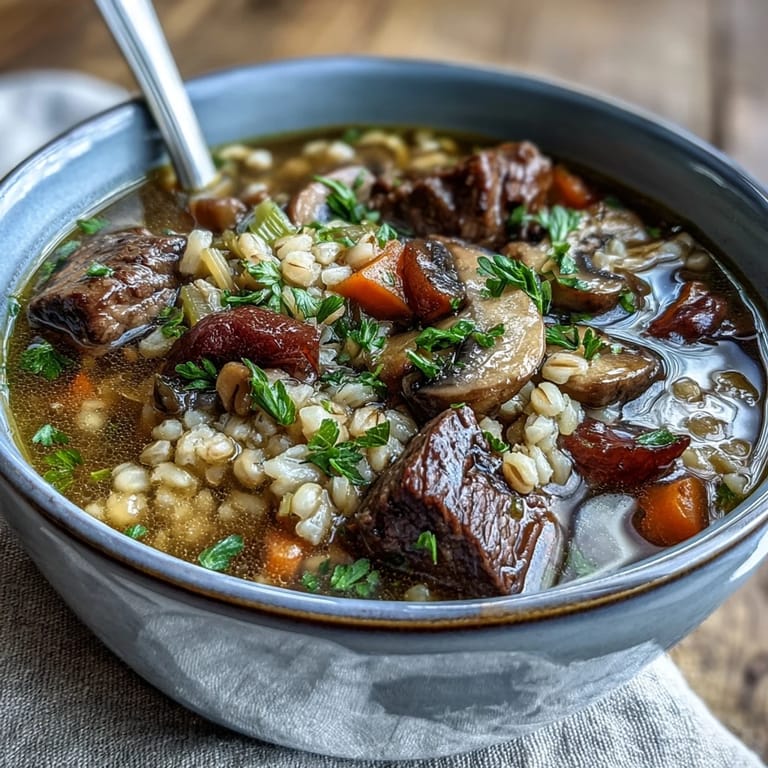
Save There's something about serving a hot bowl of soup that feels like offering someone a small piece of your own peace of mind. Make this when you need it most.
Recipe FAQ
- → What cuts of beef work best?
Chuck roast, stew meat, or round steak cut into 1-inch cubes work beautifully. These cuts become tender during long simmering and develop rich flavor.
- → Do I need to soak pearl barley first?
No soaking required. Just rinse before adding. Pearl barley cooks directly in the broth and absorbs flavors while becoming tender.
- → Can I make this in a slow cooker?
Brown the beef first, then add all ingredients to your slow cooker. Cook on low for 7-8 hours or high for 4-5 hours until barley is tender.
- → How do I store leftovers?
Refrigerate for up to 4 days or freeze for 3 months. The barley will continue absorbing liquid, so add more broth when reheating.
- → What can I serve with this?
Crusty bread for dipping, a simple green salad with vinaigrette, or roasted vegetables complement this hearty bowl perfectly.