 Save
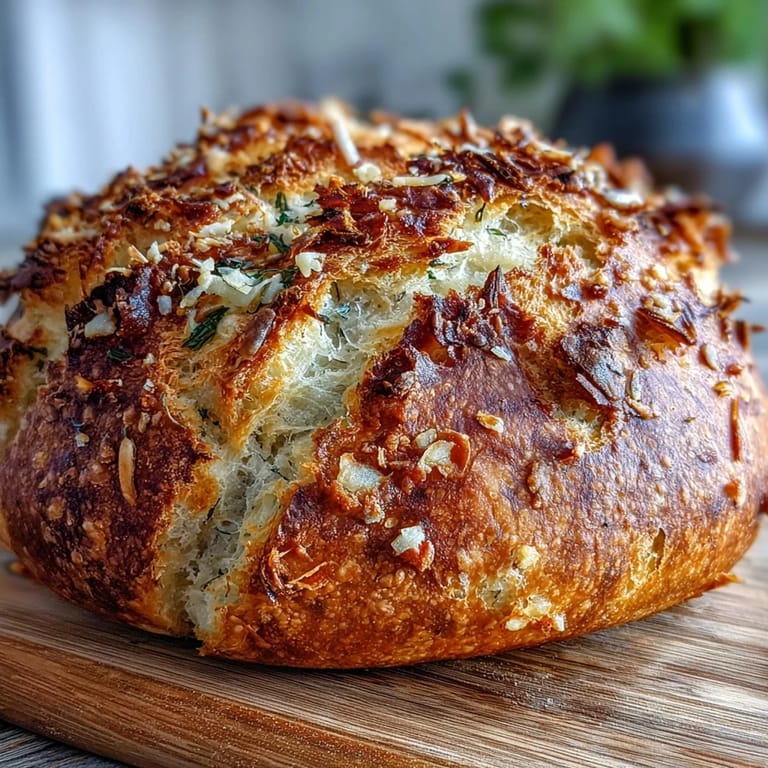
Save The smell of this bread baking fills the entire house with that incredible combination of roasting garlic and nutty Parmesan. I started making it on snowy weekends when nothing beats warming up the kitchen with oven work and filling the house with bread smells. My husband actually asked if I'd started buying bakery loaves the first time he walked through the door.
I once made three loaves for a dinner party and sent every guest home with a paper bag of warm bread. They were still talking about it months later, asking for the recipe like I'd revealed some family secret. The best part is how forgiving it is—my toddler once dumped an extra half cup of flour in during mixing and it still turned out beautifully.
Ingredients
- All-purpose flour: Bread flour works too but the regular stuff gives such a tender crumb that I stick with it
- Salt: Dont be tempted to reduce this—Parmesan needs that salt punch to really shine
- Granulated sugar: Just enough to feed the yeast and help with that golden crust color
- Active dry yeast: Make sure your water feels like warm bath temperature, anything hotter kills the yeast
- Warm water: The right temperature makes or breaks your rise before you even start
- Olive oil: Adds such richness to the crumb and helps keep it tender
- Freshly grated Parmesan cheese: Pre grated cheese has anti caking agents that prevent proper melting so grate it yourself
- Garlic: Minced fresh garlic distributes better than powder for pockets of flavor
- Fresh rosemary or parsley: Totally optional but rosemary pairs so beautifully with garlic and Parmesan
Tired of Takeout? 🥡
Get 10 meals you can make faster than delivery arrives. Seriously.
One email. No spam. Unsubscribe anytime.
Instructions
- Whisk the dry base:
- In a large mixing bowl combine the flour salt and sugar until everything feels evenly distributed
- Wake up the yeast:
- Dissolve the yeast in warm water and let it get foamy for about 5 minutes—if nothing happens your yeast might be dead
- Bring it together:
- Pour the yeast mixture and olive oil into the dry ingredients and mix with a wooden spoon until you have a shaggy sticky dough
- Add the good stuff:
- Fold in the Parmesan garlic and herbs until theyre speckled throughout—resist the urge to knead
- Let it work overnight:
- Cover the bowl with a clean towel and let it rise in a warm spot for 12 to 18 hours until its bubbly and doubled
- Shape gently:
- Turn the dough onto a floured surface and lightly form it into a round loaf without deflating all those precious air bubbles
- Rest and preheat:
- Place the loaf on parchment paper and let it rest for 30 minutes while your oven and Dutch oven heat to 450°F
- Score with confidence:
- Use a sharp knife to make a few decorative slashes on top which helps the bread expand beautifully
- Bake covered:
- Transfer the dough with parchment into the hot Dutch oven cover and bake for 30 minutes to create steam
- Reveal the crust:
- Remove the lid and bake another 15 minutes until the loaf is deeply golden and sounds hollow when tapped
- Patience pays off:
- Cool on a wire rack for at least 30 minutes because cutting into hot bread turns the crumb gummy
 Save
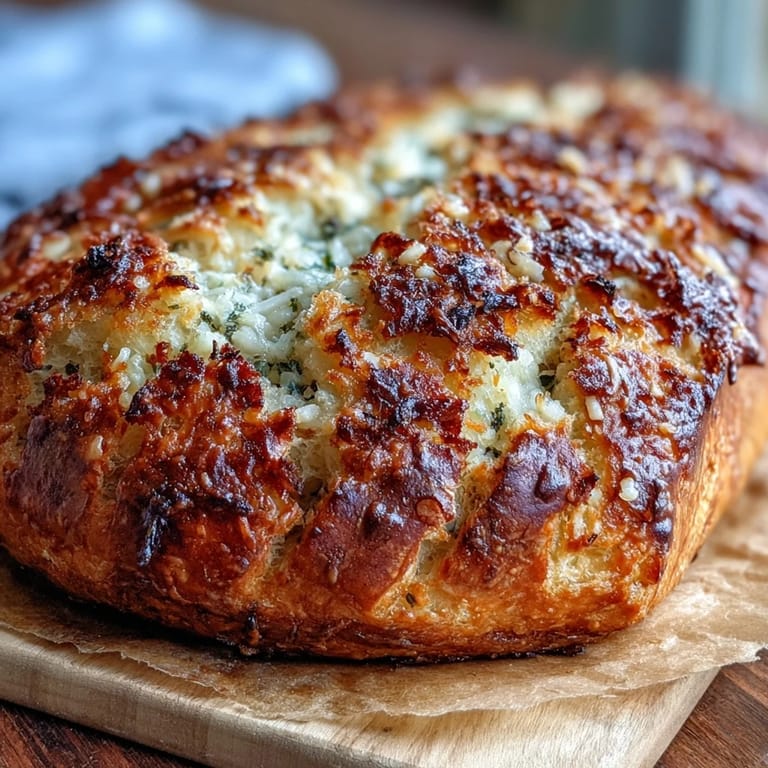
Save My neighbor started texting me whenever she smelled this baking asking if she should come over with butter. We've developed this little routine now where I make a loaf and she brings wine and we stand in the kitchen breaking off pieces while it's still too hot to eat properly.
Making It Your Own
Asiago creates these gorgeous salt pockets and melts differently than Parmesan giving you stretchy cheese moments throughout the crumb. Gruyère adds this subtle nuttiness that pairs so beautifully with the garlic.
Timing Secrets
The longer fermentation transforms the dough into something complex with subtle tang notes you just cant get from a quick rise. Winter evenings mean slower rises so your dough might need extra time compared to summer heat.
Serving Ideas
Thick slices toasted and rubbed with raw garlic become an instant appetizer that disappears faster than you can replenish the basket. Cubed and stale this bread makes the most incredible croutons for Caesar salad.
- Freeze whole baked loaves wrapped tightly and thaw at room temperature
- Revive day old bread with a quick sprinkle of water and 10 minutes in a warm oven
- Slice leftover loaves before freezing for toast ready to pop straight in the toaster
 Save
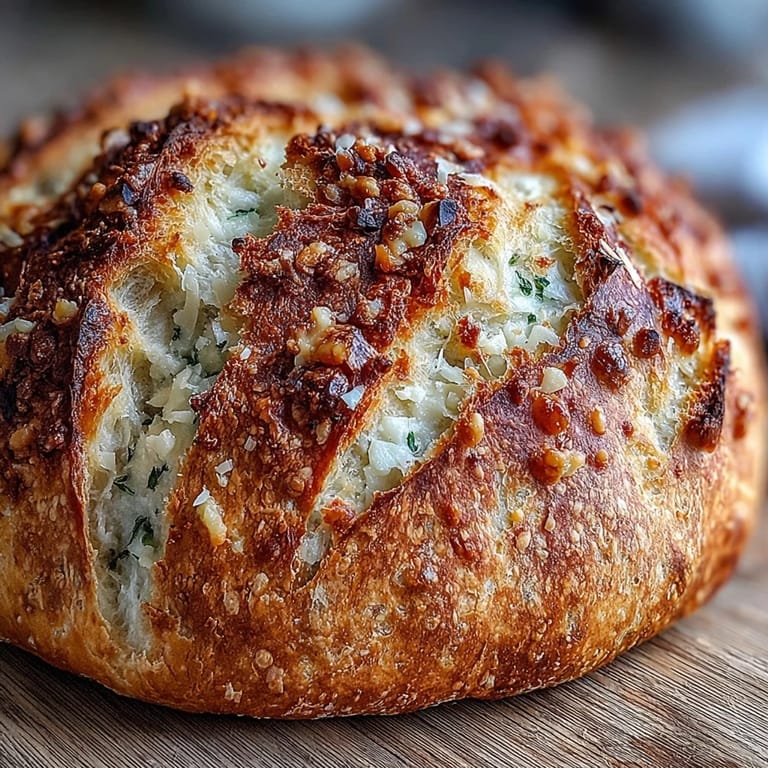
Save There's something so satisfying about pulling a golden crackly loaf from the oven you mixed up the night before. This bread has a way of making any dinner feel special.
Recipe FAQ
- → Why does the dough need to rise overnight?
The extended fermentation develops complex flavors and creates the characteristic airy texture. Long, slow fermentation breaks down starches naturally, resulting in better taste and digestibility compared to quick-rise methods.
- → Can I use dried herbs instead of fresh?
Absolutely. Substitute fresh rosemary or parsley with 1 teaspoon dried herbs. Dried herbs are more concentrated, so use sparingly. Add them directly to the dough with other ingredients.
- → What if I don't have a Dutch oven?
Any heavy oven-safe pot with a tight-fitting lid works. Cast iron, enameled cast iron, or even a heavy stainless steel pot with lid creates the steam environment needed for that perfect crust. Ensure it can withstand 450°F.
- → Can I substitute the Parmesan cheese?
Yes. Try aged Asiago, Gruyère, or Pecorino Romano for similar salty, nutty profiles. Hard aged cheeses work best as they melt without making the dough too wet. Grate fresh for optimal texture.
- → How do I know when the loaf is fully baked?
The crust should be deep golden brown, and tapping the bottom produces a hollow sound. Use an instant-read thermometer inserted into the center—200-210°F indicates doneness. Cool completely before slicing.
- → Why is my dough too sticky to handle?
Sticky dough is intentional and desirable for this style. Avoid adding extra flour, which creates a dense crumb. Flour your hands and work surface generously when shaping. The Dutch oven contains the initial spread.